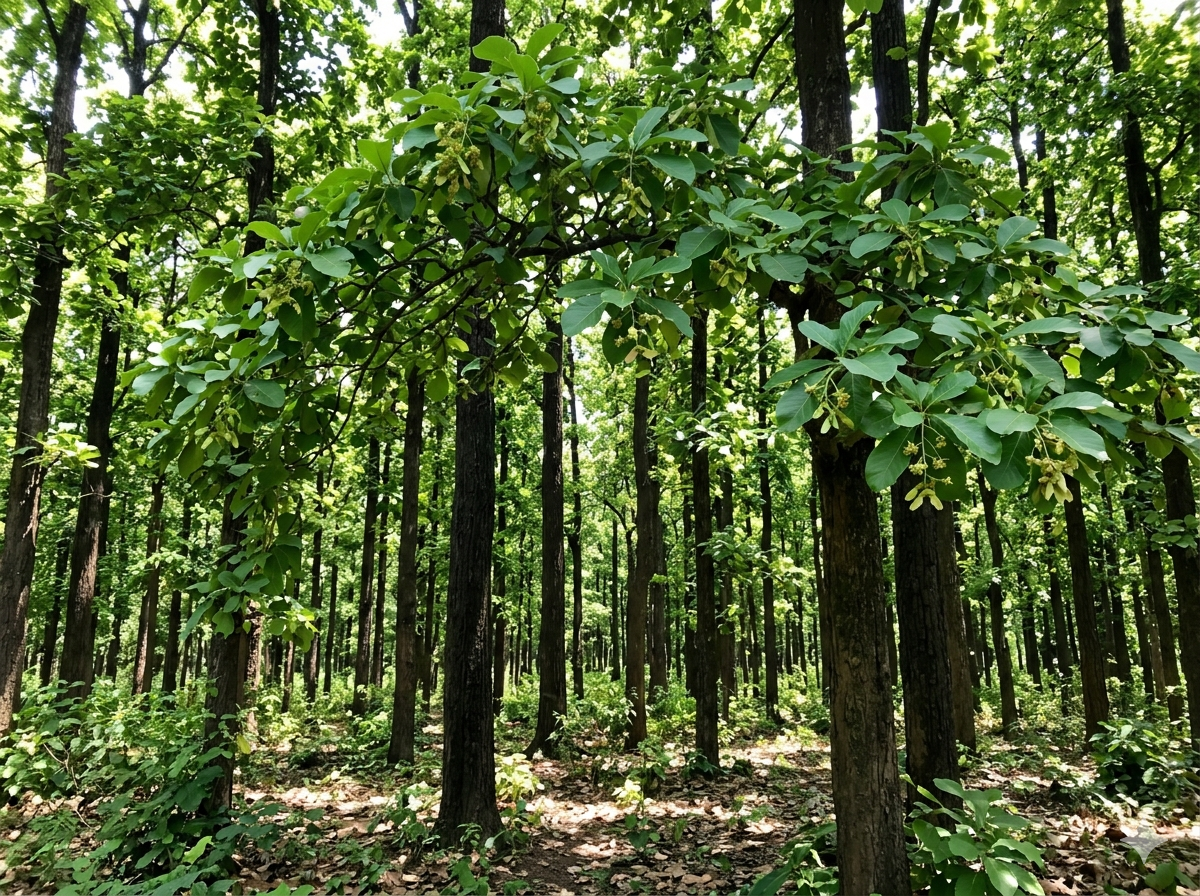
साल — Buddha का जन्म वृक्ष (Lumbini)। India का most widespread forest (11-13%)। Sal butter = cocoa butter equivalent (chocolate industry!)। Dona-pattal leaf plates tribal livelihood। Sal dhoop temple incense। Seeds 2-week viability — IMMEDIATELY sow!
Sal (Shorea robusta) — Sal / Sakhua / Shal / Shala / Sakhu — is one of India's most ecologically dominant and economically important native trees, forming vast mono-dominant forests across Central and Eastern India that are among the most productive natural forests on earth. Sal forests cover approximately 11-13% of India's total forest area — making it the single most widespread forest type in India — and they stretch from the Himalayan foothills in Uttarakhand and Himachal Pradesh east through UP, Bihar, Jharkhand, West Bengal and Assam, and southward through Odisha, MP and Chhattisgarh. The tree is sacred in Hinduism and Buddhism — the Buddha was born under a Sal tree in Lumbini (Nepal), and the tree is associated with Vishnu and various forest deities. Sal timber is one of India's most commercially important timbers — extremely hard, heavy, durable, with natural resin resistance — used extensively for railway sleepers, heavy construction, bridge building and heavy furniture. The tree also produces sal seeds (used for edible fat — sal butter/mowah/kokum substitute), sal resin (dammar/sal dhoop — used in incense, varnishes), and sal leaves that form the most widely used natural disposable plates (dona-pattal) across Central and Eastern India. Sal is the tribal communities' most important forest resource — providing food, medicine, fodder, leaves for income, and cultural identity.
Sal (Shorea robusta) — साल / सखुआ / शाल — India के most ecologically dominant और economically important native trees में। Vast mono-dominant forests — Central + Eastern India। India के total forest area का 11-13% — single most widespread forest type। Himalayan foothills (Uttarakhand, HP) से east UP, Bihar, Jharkhand, WB, Assam और southward Odisha, MP, CG। Hindu + Buddhist में sacred — Buddha का जन्म Sal tree के नीचे Lumbini में। Extremely hard, heavy, durable timber — railway sleepers, heavy construction, bridge building। Sal seeds: edible fat (sal butter)। Sal resin: incense, varnishes। Sal leaves: most widely used natural disposable plates (dona-pattal)। Tribal communities का most important forest resource।
🌳 Overview & Quick Facts / परिचय और मुख्य तथ्य
| 🔬 Scientific Name | Shorea robusta — Family: Dipterocarpaceae |
| 📏 Height / ऊंचाई | 25–40 metres | Straight tall trunk — excellent timber form | Buttressed base old trees |
| ⏳ Lifespan / आयु | 100–500+ years — genuinely ancient forests documented |
| 📈 Growth Rate / वृद्धि दर | Slow-moderate — 1–2 ft/year (slow for quality, valuable because of this) |
| 🌸 Flowers / फूल | Feb–April — creamy-white fragrant clusters. SPECTACULAR honey production! / Feb-April — creamy-white fragrant. Spectacular honey! |
| 🌡️ Climate / जलवायु | Tropical moist to dry deciduous. 1,000-2,000mm rainfall. Eastern + Central India primary. NOT for arid or very cold. |
| ⚖️ Legal Status / कानूनी | Strictly protected in most Sal-belt states. Natural forest: protected under IFA. Plantation: complex state rules. FRA 2006: tribal collection rights for sal seeds, leaves, resin. |
| 💰 Value / मूल्य | Timber: Rs.1,000–2,500/cubic ft | Sal seed: Rs.15-30/kg | Sal butter: Rs.80-150/kg | Resin (dhoop): Rs.20-40/kg | Honey: Rs.400-800/kg |
🌿 Parts & Their Uses — हर अंग का उपयोग
Extremely hard, heavy (900-1,000 kg/cubic metre), durable Class I। Natural resin — termites + decay resistant। Uses: railway sleepers (historically primary), bridge construction, heavy building, mine props। Market: Rs.1,000-2,500/cubic foot। Forest Dept strict permit। Most = government forest auctions।
Seeds: 14-20% edible fat — Sal butter। Stearic + oleic acids (cocoa butter similar)। Uses: tribal cooking fat, chocolate industry substitute, cosmetics (body butter, lip balm), pharmaceutical। Market: Rs.15-30/kg seeds, Rs.80-150/kg butter। Jharkhand, CG, Odisha major MFP।
Sal dhoop (resin/dammar) — trunk tapping से collect। Fragrant white-yellowish। Uses: incense (East India Hindu temples का THE incense resin), varnishes, waterproofing, traditional medicine। Market: Rs.20-40/kg। FRA 2006 tribal rights। Important tribal income — NTFP।
Large leathery — East-Central India में dona + pattal primary source। Stitched with bamboo/grass splints। 100% biodegradable। Major tribal livelihood — FRA 2006। Market: Rs.40-80/100 leaves। Wedding + festival + pilgrimage peak demand। Plastic ban = demand significantly increase। One mature sal forest = thousands of tribal families।
Creamy-white fragrant (Feb-April) — SPECTACULAR honey production। Sal honey = India के most prized forest honeys — rich, complex। Dense sal forest nectar से। Enormous quantities। Market: Rs.400-800/kg premium। Traditional: flower extract mild medicinal। Feb-April pollinator food critical।
Bark: astringent, anti-inflammatory, wound healing। Traditional: gonorrhoea, skin diseases, diarrhea। Bark tannin: leather industry। MFP: Rs.10-20/kg। Bark paste: wounds, burns। Tannins, flavonoids, catechins। Anti-oxidant confirmed। Tribal: fever + respiratory।