Mahogany Tree India Plantation Timber Swietenia — PlantCare
📷 PlantCare
🪵 Timber, Shade & Agroforestry Trees

Mahogany / Indian Mahogany / Big-leaf Mahogany महोगनी / इंडियन महोगनी

Swietenia macrophylla (primary) / S. mahagoni Family: Meliaceae

Mahogany — global cabinet timber + acoustic guitar standard (Gibson/Martin). Grows 30-40% FASTER in India than native Caribbean! Rs.2.4 crore/ha 25yr. ⚠️ CITES Appendix II export permit. ⚠️ Tip moth (Hypsipyla) = manage or forking. Simpler than Teak legally.

📏 20–40 metres | Straight trunk | Buttressed base old trees ⏳ 100–300+ years | Commercial harvest 20-30 years India 📈 Fast in India — 3–4 ft/year | 30-40% faster than native Caribbean! 📍 Tropical humid — Kerala, Karnataka, TN, AP, Assam. 1,000-2,500mm rainfall. ✅ Private cultivation FREELY ALLOWED. Transit permit for movement. Export: CITES Appendix II certificate needed. No state ownership (unlike Teak Karnataka). 💰 Rs.1,200–3,500/cubic foot | Export with CITES: premium | Guitar sets: Rs.2,000-8,000/set
📤 WhatsApp
Mahogany Guitar Standard Gibson Martin 30-40% Faster India Than Caribbean Rs2.4Cr 25yr Plantation CITES Appendix II Export Tip Moth Hypsipyla Manage Simpler Than Teak Legal Limonoid Anti-Cancer Research

महोगनी — global cabinet timber + acoustic guitar standard। India में native Caribbean से 30-40% FASTER! Rs.2.4 crore/ha 25yr। ⚠️ CITES Appendix II export permit। ⚠️ Tip moth (Hypsipyla) manage करें। Teak से simpler legally।

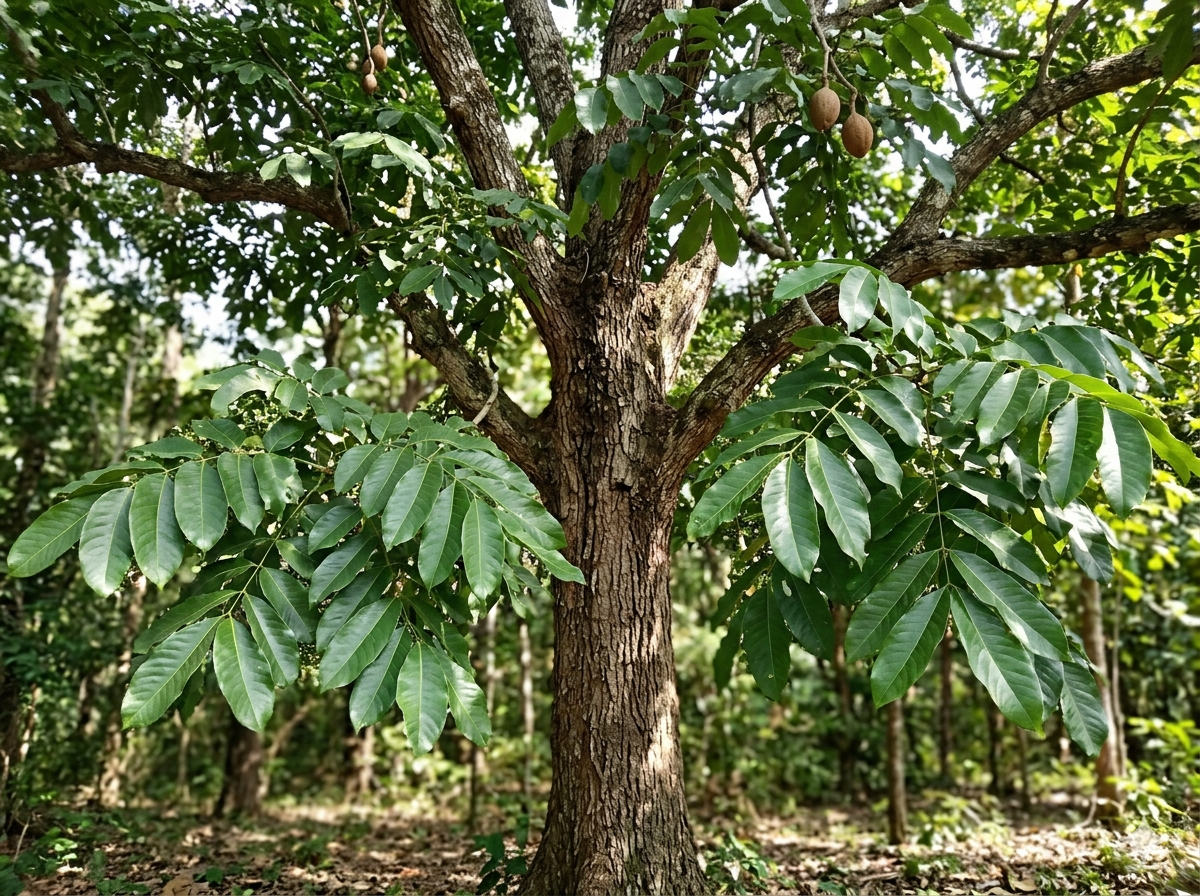
Mahogany (Swietenia mahagoni / Swietenia macrophylla) — Mahogany / Indian Mahogany — is one of the world's most famous and valuable cabinet timbers, imported from the Americas but now successfully grown in Indian plantations across tropical India. There are two species planted in India: Swietenia mahagoni (Small-leaf Mahogany, West Indian Mahogany) and the more commonly planted Swietenia macrophylla (Big-leaf Mahogany, Honduras Mahogany). Both produce the quintessential reddish-brown, fine-grained, lustrous timber that defined European and American cabinet-making for centuries and is still one of the most sought-after furniture woods globally. In India, mahogany has been planted extensively in plantation forestry since the 1960s — particularly in Kerala (where it has naturalized in some areas), Karnataka, Tamil Nadu, Andhra Pradesh and Assam. The Kerala Forest Department, KFDC, and private plantation companies have established significant mahogany plantations. Indian-grown mahogany (grown on private land) is a highly profitable plantation timber — the trees grow faster in India's tropical climate than in their native Caribbean habitat, and the resulting timber, while somewhat softer than wild-grown mahogany, commands premium prices in Indian and export furniture markets. The seeds are also used in traditional medicine, and the bark has documented pharmacological applications.

Mahogany (Swietenia mahagoni / macrophylla) — महोगनी — दुनिया का most famous cabinet timber। Americas से import लेकिन अब Indian plantations में successfully grown। Two species India में: Swietenia mahagoni (Small-leaf) + Swietenia macrophylla (Big-leaf — more commonly planted)। Quintessential reddish-brown, fine-grained, lustrous timber। European + American cabinet-making में centuries। Kerala (naturalized कुछ areas में), Karnataka, TN, AP, Assam में extensively planted। India में faster grow (tropical climate) than native Caribbean। Indian-grown private plantation = highly profitable। Seeds: traditional medicine। Bark: pharmacological applications।

🌳 Overview & Quick Facts / परिचय और मुख्य तथ्य

🔬 Scientific NameSwietenia macrophylla (primary India) / S. mahagoni — Family: Meliaceae
⚠️ CITES AlertSwietenia macrophylla: CITES Appendix II — international trade regulated! Check export rules. Indian-grown: CITES certificate needed for export.
📏 Height / ऊंचाई20–40 metres | Straight trunk, spreading crown | Buttressed base in old trees
Lifespan / आयु100–300+ years | Commercial harvest 20-30 years India plantation
📈 Growth Rate / वृद्धि दरFast in Indian conditions — 3–4 ft/year (faster than native Caribbean habitat!)
🌡️ Climate / जलवायुTropical humid — Kerala, Karnataka, TN, AP, Assam ideal. 1,000-2,500mm rainfall. NOT for dry Rajasthan/UP or cold Himalayan.
⚖️ Legal Status / कानूनीPrivate cultivation: FREELY ALLOWED in India. Transit permit for movement. Export: CITES Appendix II certificate needed. No state-ownership issue (unlike Teak in Karnataka).
💰 Timber Value / लकड़ी मूल्यRs.1,200–3,500/cubic foot | Export grade: premium | CITES documentation adds value

🌿 Parts & Their Uses — हर अंग का उपयोग

🪵
Wood / लकड़ी (Global Cabinet Timber)
THE primary value. Heartwood: rich reddish-brown, fine straight grain, moderate hardness. Beautiful lustrous finish. Class II durability. Uses: premium furniture, cabinet-making, musical instruments (acoustic guitars — mahogany is standard back/sides wood), boat building, architectural paneling, veneer. Market India: Rs.1,200-3,500/cubic foot. Export: premium with CITES certification.

Primary value। Heartwood: rich reddish-brown, fine straight grain। Beautiful lustrous। Class II। Uses: premium furniture, cabinet-making, musical instruments (acoustic guitars — standard back/sides), boat building, paneling, veneer। Market India: Rs.1,200-3,500/cubic foot। Export: CITES certification के साथ premium।
🌱
Seeds / बीज
Large winged seeds (samaras) — 5-7cm, dispersed by wind. Seeds contain tetranortriterpenoids (limonoids) — anti-cancer, anti-inflammatory, anti-malarial research. Traditional medicine: seed extract for fever, malaria (Caribbean traditional, adopted in India). Seeds also yield fixed oil. Market: seeds Rs.50-150/kg for nursery, research, and pharmaceutical interest.

Large winged seeds (samaras) — 5-7cm। Tetranortriterpenoids (limonoids) — anti-cancer, anti-inflammatory, anti-malarial research। Traditional: fever, malaria (Caribbean, India में adopted)। Fixed oil। Market: Rs.50-150/kg nursery + research + pharmaceutical।
🟫
Bark / छाल
Bark: anti-malarial, anti-diarrheal, anti-pyretic traditional. Contains swietenine, swietenolide (limonoids). Anti-malarial activity confirmed — inhibits Plasmodium growth in laboratory. Traditional Caribbean and African medicine. India: limited traditional use — recently established. Research interest for pharmaceutical development. MFP: Rs.15-25/kg.

Anti-malarial, anti-diarrheal, anti-pyretic। Swietenine, swietenolide (limonoids)। Anti-malarial activity confirmed — Plasmodium inhibit laboratory। Caribbean + African traditional। India: limited (recently established)। Pharmaceutical research interest। MFP: Rs.15-25/kg।
🍃
Leaves / पत्ते
Pinnate compound leaves. Leaf extract: anti-inflammatory, anti-diabetic research. Traditional: leaf decoction for fever, hypertension (Caribbean). Cattle fodder (moderate palatability). Fallen leaves: good mulch. Important food plant for certain moth caterpillars. Leaf litter contributes to soil organic matter under plantation.

Pinnate compound। Leaf extract: anti-inflammatory, anti-diabetic research। Traditional: fever, hypertension (Caribbean)। Cattle fodder moderate। Good mulch। Moth caterpillars food plant। Leaf litter soil organic matter।
🎵
Guitar Wood / गिटार लकड़ी
Mahogany is THE standard tonal wood for acoustic guitar backs and sides (necks also). Properties: warm, full midrange tone, good sustain. Famous guitar brands (Gibson, Martin, Taylor) use mahogany. Indian plantation mahogany increasingly supplying guitar manufacturers. Indian-grown mahogany guitar sets: Rs.2,000-8,000/set. Export opportunity for Indian mahogany as guitar wood to global manufacturers.

Acoustic guitar backs + sides का THE standard tonal wood। Warm, full midrange tone, good sustain। Gibson, Martin, Taylor use। Indian plantation mahogany increasingly guitar manufacturers supply। Guitar sets: Rs.2,000-8,000/set। Indian mahogany as guitar wood global manufacturers को export opportunity।
🌸
Flowers & Ecology / फूल और पारिस्थितिकी
Small cream-yellow flowers (March-May). Honey source — bees attracted. In Kerala, mahogany plantations support significant bee populations. The large winged seeds (when falling) create a distinctive "helicopter" rotation as they descend. Natural seed dispersal: wind carries up to 100m. In Kerala: some naturalization occurring near plantations — monitored for ecological impact.

Small cream-yellow flowers (March-May)। Honey source। Kerala plantations में significant bee populations। Large winged seeds = distinctive "helicopter" rotation। Wind dispersal up to 100m। Kerala: some naturalization near plantations — ecological impact monitored।

🌍 Cabinet Timber & CITES Regulations / Cabinet Timber और CITES

⚡ Key Facts / मुख्य तथ्य
🌍 Global Cabinet
THE quintessential furniture timber globally since 18th century. Gibson guitar, Chippendale furniture — both mahogany.
18th century से THE global furniture timber। Gibson guitar, Chippendale furniture — both mahogany।
⚠️ CITES II
Swietenia macrophylla: CITES Appendix II. Indian-grown export needs CITES certificate. Plan before exporting.
Swietenia macrophylla: CITES Appendix II। Indian-grown export = CITES certificate needed। Export से पहले plan।
✅ Easy Legal
Unlike Teak — NO state ownership of private mahogany trees. Farmer owns, sells, with just transit permit.
Teak unlike — private mahogany trees पर NO state ownership। Farmer owns + sells, just transit permit।
⚡ Faster India
Grows 30-40% faster in India's tropical climate than native Caribbean. Commercial harvest in 20-25 years.
India tropical climate में native Caribbean से 30-40% faster। 20-25 years commercial harvest।
🎵 Guitars
Standard acoustic guitar wood — backs, sides, necks. Indian plantation mahogany entering global guitar supply chain.
Standard acoustic guitar wood — backs, sides, necks। Indian plantation mahogany global guitar supply chain में।
🔬 Anti-Cancer
Seed limonoids — anti-cancer, anti-malarial preliminary research. Pharmaceutical interest growing.
Seed limonoids — anti-cancer, anti-malarial preliminary। Pharmaceutical interest growing।

🌱 Plantation Guide / Mahogany plantation कैसे करें

1 ha, 278 trees Year 25: 278 × 1.2 cubic metre × 35.3 × Rs.2,000 = Rs.2.36 crore gross. Net Rs.1.7-2.0 crore. Comparable to Teak, simpler legal process.
ParameterEnglishHindi / हिंदी
🌱 Planting materialSeeds (fresh winged samaras, sow immediately). Germination 15-30 days. Nursery-raised 6-month-old seedlings best. Buy from Kerala Forest Dept nurseries, KFDC, or certified nurseries.Seeds (fresh winged samaras, immediately sow)। 15-30 days germination। 6-month nursery seedlings best। Kerala Forest Dept, KFDC, certified nurseries।
🌡️ ClimateTropical humid — Kerala, Karnataka, TN, AP, Assam primary. 1,000-2,500mm rainfall. Min temperature: 15°C. Tolerates dry season if well-established.Tropical humid — Kerala, Karnataka, TN, AP, Assam। 1,000-2,500mm। Min 15°C। Established होने पर dry season tolerate।
🪴 SoilDeep well-draining loamy to laterite. pH 5.5–8.0. High organic matter preferred. Avoid waterlogged — root rot sensitive.Deep well-draining loamy to laterite। pH 5.5-8.0। High organic matter preferred। Waterlogged avoid — root rot sensitive।
📏 Spacing3×3m initial (1,111/ha). Thin Year 8 → 6×6m (278/ha). Final at 6×6m for timber quality. Agroforestry: 8-10m rows with crops.3×3m initial। Thin Year 8 → 6×6m (278/ha)। Final 6×6m। Agroforestry: 8-10m rows, crops।
✂️ ManagementAnnual lower branch pruning Years 1-8 for clear bole. Tip-moth (Hypsipyla robusta) is major pest — attacks growing tips, causes forking. Management: systemic insecticide, biological control.Annual lower branch pruning Years 1-8 clear bole। Tip-moth (Hypsipyla robusta) major pest — growing tips attack, forking cause। Systemic insecticide, biological control।
💰 Returns1 ha, 278 trees Year 25: 278 × 1.2 cubic metre × 35.3 × Rs.2,000 = Rs.2.36 crore gross। Net Rs.1.7-2.0 crore। Teak comparable, simpler legal।

💰 Market Value & Legal Status / बाज़ार मूल्य और कानूनी स्थिति

Product / उत्पादValue / मूल्यLegal / कानूनी
🪵 Plantation TimberRs.1,200–3,500/cubic foot | Export with CITES: premiumTransit permit + CITES certificate for export (Appendix II). Private: farmer owns and sells.
🎵 Guitar Wood SetsRs.2,000–8,000/set | Growing guitar industry demandTransit permit. CITES if exported / transit + CITES export
🌱 Seeds (nursery)Rs.50–150/kg | Pharmaceutical research interestFreely traded from own trees / freely
🍯 Honey / शहदRs.350–600/kg mahogany plantation honeyFreely traded / freely
❓ Frequently Asked Questions / अक्सर पूछे जाने वाले सवाल
CITES and mahogany export from India: CITES (Convention on International Trade in Endangered Species) is an international treaty that regulates trade in wildlife and plants to prevent over-exploitation. Swietenia macrophylla (Big-leaf Mahogany) is listed in CITES Appendix II — meaning international trade is permitted but requires documentation to ensure it's from legal (plantation) sources. For Indian mahogany plantation owners wanting to export: (1) CITES Appendix II means: trade is NOT banned but requires a CITES export permit from India's CITES Management Authority (Wildlife Crime Control Bureau under MoEF&CC). (2) To get CITES export permit: you need to prove the timber is plantation-grown (not from wild natural forests). Documents needed: plantation registration, land ownership, forest department approval, transit permit. (3) Application: apply to the Regional Office of Wildlife Crime Control Bureau or the Chief Wildlife Warden of your state. (4) Once certified: your shipment gets CITES export permit (valid for specific consignment). The importing country must also issue a CITES import permit. (5) Value addition: CITES-certified Indian plantation mahogany commands significant premium in European and North American markets — buyers prefer legal, documented timber. Price premium: 20-40% over uncertified. Practical reality: most Indian mahogany is sold domestically (furniture industry) without needing CITES. CITES only comes into play for export. For domestic sale: just transit permit from Forest Department, same as other timber species. The legal framework for private mahogany is MUCH simpler than for Teak (where Karnataka government owns the trees) — the farmer owns the mahogany, can sell domestically with transit permit, and export with CITES certification.

CITES mahogany export: CITES = international treaty, wildlife + plants trade regulate। Swietenia macrophylla = CITES Appendix II — trade permitted but documentation required। Export करने के लिए: (1) Appendix II = NOT banned, but CITES export permit needed। India CITES Management Authority = Wildlife Crime Control Bureau (MoEF&CC)। (2) Permit के लिए: plantation-grown prove करना। Documents: plantation registration, land ownership, FD approval, transit permit। (3) Application: Regional Wildlife Crime Control Bureau या state Chief Wildlife Warden। (4) Once certified: specific consignment CITES export permit। Importing country भी CITES import permit। (5) Value addition: CITES certified Indian plantation mahogany = 20-40% price premium European + North American markets। Practical: most Indian mahogany domestic sale। CITES = only export। Domestic: transit permit only। Private mahogany = Teak (Karnataka) से MUCH simpler। Farmer owns + sells।
Hypsipyla robusta (Mahogany Tip Moth) management: The mahogany tip moth (Hypsipyla robusta) is the most serious pest of mahogany worldwide — it attacks the growing tips of young mahogany trees, killing the apical bud and causing the tree to fork (develop multiple competing leaders instead of one straight trunk). Forked trees produce poor quality timber with no market value. This pest is why mahogany cultivation in its native range (Caribbean, Central America) was historically difficult. Understanding the pest: Female moths lay eggs near the growing tip. Larvae bore into the growing shoot, destroying the apical bud. Infested shoot dies and turns brown. Tree then sprouts multiple side shoots — resulting in forking. A heavily infested plantation can have 80%+ trees forked — commercial failure. Management strategies: (1) Regular inspection: check tips weekly. Look for dead/wilted growing tips, frass (excreta) on shoots. (2) Chemical control: systemic insecticides applied as foliar spray — lambda-cyhalothrin (0.5ml/litre), chlorpyrifos (2ml/litre) at 2-week intervals during monsoon (peak attack season). (3) Biological control: Beauveria bassiana (entomopathogenic fungus) — spray on tips. Natural enemy. (4) Physical: remove and destroy infested shoots immediately. Do not leave on ground — larvae complete development. (5) Species mixing: interplant mahogany with non-host species (Teak, Neem) in rows — pest has difficulty spreading between mahogany rows. Research has shown mixed planting reduces Hypsipyla damage by 40-60%. (6) Resistant varieties: some mahogany provenances show better Hypsipyla resistance — seed from resistant parent trees preferred. Kerala Forest Research Institute (KFRI) has been testing resistant varieties. Best management: combination approach — regular inspection + chemical when needed + mixed planting + resistant varieties. Hypsipyla is manageable — but requires vigilance, especially Years 1-6 when trees are most vulnerable.

Hypsipyla robusta management: Mahogany tip moth — worldwide most serious pest। Growing tips attack → apical bud kill → forking (multiple leaders instead of straight trunk)। Forked trees = poor timber, no market। Understanding: eggs near growing tip। Larvae bore into shoot → apical bud destroy। Multiple side shoots = forking। Heavy infestation: 80%+ trees forked = commercial failure। Management: (1) Weekly inspection — dead/wilted tips, frass। (2) Chemical: lambda-cyhalothrin (0.5ml/L) या chlorpyrifos (2ml/L) foliar spray। 2-week intervals monsoon peak। (3) Biological: Beauveria bassiana spray on tips। (4) Physical: infested shoots immediately remove + destroy। Ground पर मत छोड़ें। (5) Mixed planting: Teak, Neem के साथ। 40-60% damage reduce। (6) Resistant varieties: KFRI Kerala testing। Best: combination approach। Years 1-6 most vulnerable — vigilance।
Indian mahogany as guitar wood — the supply chain opportunity: Mahogany (Swietenia macrophylla) is the standard tonewood for acoustic guitar backs, sides, and necks. It produces a warm, balanced tone with good sustain — the reason it has been used in virtually every major guitar brand's flagship models since the 1930s. Global supply situation: traditional mahogany sources (Caribbean, Central America) are severely restricted due to CITES regulations and forest depletion. Guitar manufacturers globally are actively seeking alternative legal sources. Indian plantation mahogany is one of the most promising alternatives. Requirements for guitar-grade mahogany: (1) Straight grain (quartersawn preferred for backs/sides). (2) Low figure/interlocked grain percentage (too much figure makes wood structurally weak for thin guitar plates). (3) Specific density range: 500-650 kg/cubic metre — too dense or too light affects tone. (4) No knots in usable length. (5) Properly seasoned (air-dried or kiln-dried to 6-8% moisture content). Processing for guitar sets: quarter-saw logs (cuts perpendicular to growth rings). Cut into bookmatched sets (two pieces from same log, mirrored for back/top). Air-dry minimum 2 years (kiln-dry accelerated option). Cut to standard guitar dimensions (back: 500mm × 200mm × 4mm pre-thicknessing). Current market: Indian plantation mahogany guitar sets Rs.2,000-8,000/set. Export to small luthier suppliers in EU/USA: $25-75/set — approximately Rs.2,000-6,000. Volume market: Indian guitar-grade mahogany exports small but growing. Companies like Grover, Hobner, and Indian guitar manufacturers increasingly using Indian-grown mahogany. Opportunity: for Indian plantation owners with well-managed mahogany, premium guitar-grade certification adds significant value over standard furniture mahogany. Requires wood quality documentation and relationship with guitar wood dealers.

Indian mahogany guitar wood: Mahogany = acoustic guitar backs, sides, necks का standard tonewood। Warm balanced tone + good sustain → every major brand 1930s से। Global: traditional Caribbean/Central America sources severely restricted (CITES + forest depletion)। Indian plantation = most promising alternative। Guitar-grade requirements: (1) Straight grain (quartersawn preferred)। (2) Low figure/interlocked grain। (3) Density 500-650 kg/cubic metre। (4) No knots usable length। (5) Properly seasoned (6-8% moisture)। Processing: quarter-saw logs। Bookmatched sets। Air-dry minimum 2 years। Standard guitar dimensions cut। Market: Indian plantation guitar sets Rs.2,000-8,000/set। Export EU/USA: $25-75/set। Indian guitar manufacturers (Grover, Hobner) increasingly use। Opportunity: guitar-grade certification = significant value add over furniture mahogany। Wood quality documentation + guitar wood dealers relationship needed।
Indian mahogany vs genuine mahogany — clarifying the confusion: "Mahogany" in India is applied to several different species, creating significant confusion in the timber market. TRUE MAHOGANY (genus Swietenia): (1) Swietenia macrophylla (Big-leaf Mahogany): most commonly planted in India. THIS is genuine mahogany. Reddish-brown, fine grain, moderate hardness. (2) Swietenia mahagoni (Small-leaf Mahogany / West Indian Mahogany): smaller leaves, considered finest quality. Less commonly planted India. ALSO genuine mahogany. Often sold as "Indian mahogany" when grown in India: These are genuine Swietenia — authenticated commercial mahogany. What is NOT genuine mahogany (despite being called "mahogany" in Indian markets): (1) Toona ciliata (Red Cedar / Toon / Indian Mahogany): called "Indian Mahogany" in many parts of India. This is NOT a Swietenia species. Lighter, softer than true mahogany, different grain pattern. Red-pink when fresh, lightens with age. Used for low-cost furniture, doors. (2) Khaya species (African Mahogany): imported from Africa. Different genus but in same family (Meliaceae). Similar in appearance but less valuable. Sometimes sold as "African mahogany" or just "mahogany." (3) Calophyllum species: sometimes called mahogany in some regions. Completely different. Identifying genuine Swietenia mahogany: (1) Weight: moderate-heavy (density 500-600 kg/cubic metre). Toona is lighter. (2) Color: freshly cut = rich golden-reddish brown. Toona = more pinkish-red initially. (3) Grain: mahogany has distinctive ribbon figure when quartersawn — interlocked grain creates alternating light-dark stripes. (4) Smell: mahogany has faint cedar-like scent when freshly cut. (5) Scientific test: any wood identification lab. For buyers: specify Swietenia macrophylla or Swietenia mahagoni when purchasing. Ask for species documentation with purchase.

Indian mahogany vs genuine: "Mahogany" India में several species = confusion। TRUE MAHOGANY (genus Swietenia): (1) Swietenia macrophylla (Big-leaf): India में most commonly planted। THIS = genuine mahogany। Reddish-brown, fine grain। (2) Swietenia mahagoni (Small-leaf): finest quality। Less common India। Both = genuine। NOT genuine (लेकिन "mahogany" called): (1) Toona ciliata (Red Cedar/Toon): "Indian Mahogany" कहते। NOT Swietenia। Lighter, softer, different grain। Red-pink fresh, lightens with age। Low-cost furniture। (2) Khaya species (African Mahogany): imported Africa। Different genus। Similar appearance। (3) Calophyllum: completely different। Identifying genuine Swietenia: (1) Weight: 500-600 kg/cubic metre। Toona lighter। (2) Color: rich golden-reddish brown fresh। Toona = pinkish-red। (3) Grain: ribbon figure quartersawn — alternating light-dark stripes। (4) Smell: faint cedar-like। (5) Wood ID lab। Buyers: Swietenia macrophylla या mahagoni specify। Species documentation request।
Mahogany seed medicinal properties — the limonoid story: Swietenia species seeds contain a class of compounds called limonoids (specifically tetranortriterpenoids) — the most studied being swietenine and swietenolide. These compounds have shown remarkable biological activity in research: Anti-malarial activity: multiple in-vitro studies show Swietenia seed limonoids inhibit the growth of Plasmodium falciparum (the most dangerous malaria parasite). The mechanism involves interference with the parasite's protein synthesis and digestive vacuole function. Some limonoids show activity comparable to chloroquine in lab tests. Anti-cancer activity: several Swietenia limonoids have shown cytotoxic activity against cancer cell lines in laboratory studies — including leukemia, breast cancer, colon cancer cell lines. The mechanism involves induction of apoptosis (programmed cell death). Anti-inflammatory: limonoids inhibit COX-2 enzyme and pro-inflammatory cytokines. Anti-diabetic: seed extract improves glucose tolerance in animal models. Important caveats: all current research is in-vitro (test tube) or animal studies. No human clinical trials have been conducted specifically for mahogany seed extracts. Do NOT self-medicate with mahogany seeds for malaria — seek medical treatment (artemisinin-based combination therapy as prescribed). The seeds should not be eaten raw — concentrated limonoids are toxic at higher doses (same compounds that make mahogany pest-resistant also have toxicity). This research area is promising for future pharmaceutical development — several companies are investigating Swietenia-derived compounds. For now: clinically unproven for human use. Plant mahogany for timber and ornamental value — the medicinal potential is a research interest, not a current therapeutic application.

Mahogany seed medicinal: Limonoids (tetranortriterpenoids) — swietenine + swietenolide। Biological activity: Anti-malarial: Plasmodium falciparum growth inhibit in vitro। Protein synthesis + digestive vacuole interference। Some = chloroquine comparable lab tests। Anti-cancer: leukemia, breast, colon cancer cell lines cytotoxic। Apoptosis induction। Anti-inflammatory: COX-2 + pro-inflammatory cytokines inhibit। Anti-diabetic: glucose tolerance improve animal models। Caveats: ALL research = in vitro/animal। No human clinical trials। Malaria के लिए self-medicate NEVER — medical treatment seek (artemisinin ACT)। Seeds raw eat नहीं — concentrated limonoids toxic (pest resistance = toxicity)। Pharmaceutical development research area। Clinically unproven human use। Timber + ornamental के लिए plant — medicinal = research interest, not current therapeutic।
⚠️
AI-Assisted Content — Please Read
AI-सहायता से बनाई गई सामग्री — कृपया पढ़ें

All tools, plant encyclopedias, edible growing guides and blog content on PlantCare are created with the assistance of AI (Artificial Intelligence) and are intended for general informational and educational purposes only. While we strive for accuracy, the information provided may not be complete, current or suitable for every situation, region or individual plant variety.

For health, medical or serious agricultural decisions — always consult a qualified horticulturist, agronomist, Ayurvedic practitioner, medical professional or relevant expert. PlantCare does not take responsibility for outcomes arising from use of this information. Identification results from AI tools (plant identifier, pest identifier etc.) should be verified before taking any action.

इस वेबसाइट पर सभी tools, plant encyclopedias, edible guides और blog content AI (Artificial Intelligence) की सहायता से बनाए गए हैं और केवल सामान्य जानकारी और शिक्षा के उद्देश्य से हैं। स्वास्थ्य, चिकित्सा या गंभीर कृषि निर्णयों के लिए कृपया किसी योग्य विशेषज्ञ से संपर्क करें। PlantCare इस जानकारी के उपयोग से होने वाले परिणामों के लिए जिम्मेदार नहीं है।