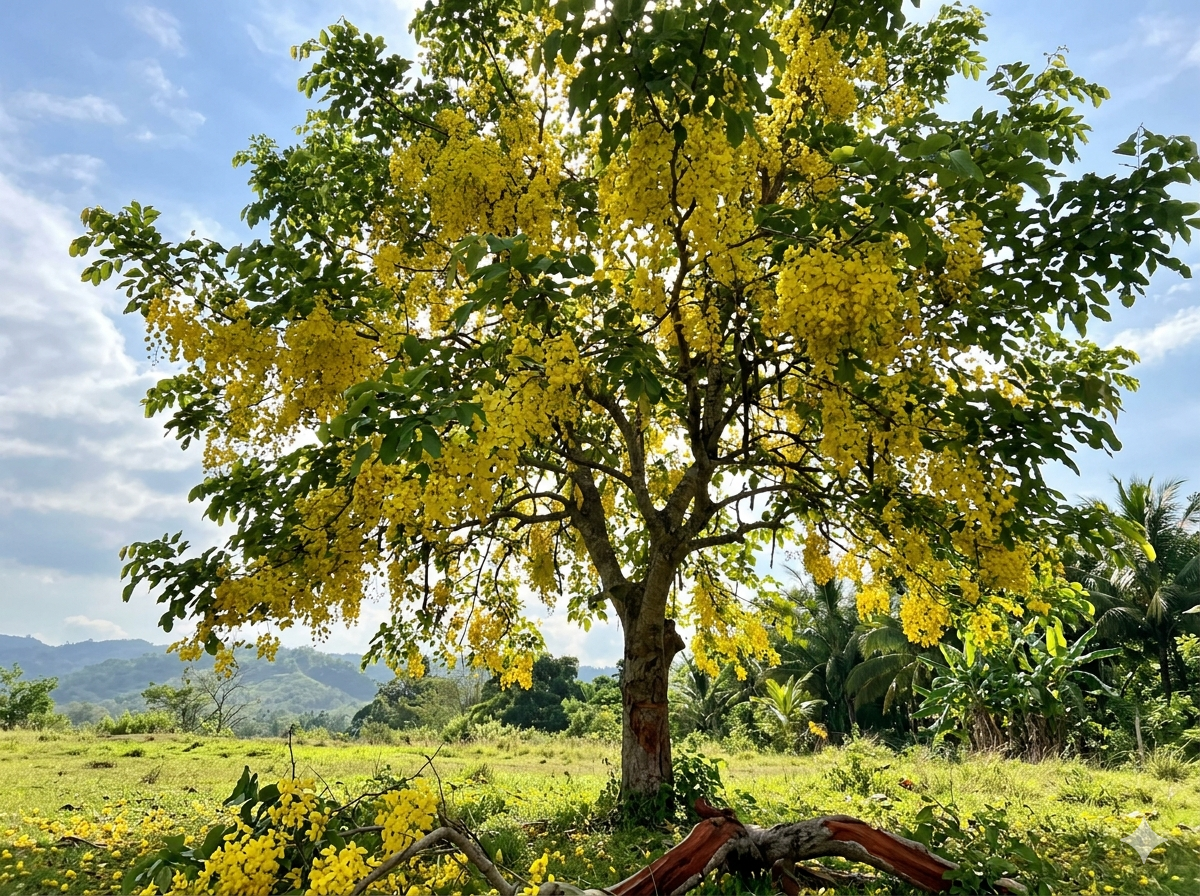
नार्रा — Philippines का National Tree, India के Andaman Islands में native! Golden-yellow flowers HOURS में fall → golden carpet। Reddish-gold heartwood + INTOXICATINGLY SWEET FRAGRANCE — Rs.2,500-8,000+/cubic foot। IUCN Vulnerable — wild trees protect।
Narra (Pterocarpus indicus) — Narra / Padauk / Angsana / Sena / Indian Padauk / Satin Wood — is one of Southeast Asia's and the Pacific's most prized and beautiful timber trees, known for its extraordinary wood — rich reddish-gold to deep rose-red heartwood with an intoxicatingly sweet fragrance, spectacular golden-yellow flowers, and significant Ayurvedic medicinal properties. Narra is the National Tree of the Philippines, where it holds deep cultural and ecological significance. In India, Narra (or Indian Padauk) is found naturally in the Andaman and Nicobar Islands and the northeastern states (Assam, Meghalaya, Manipur), and is also planted as an ornamental and timber tree in South India and Kerala. The tree produces one of the most beautiful flowering spectacles of any tropical timber tree — in April-May, Narra covers itself in masses of golden-yellow fragrant flowers that fall within hours of opening, carpeting the ground in gold — a display that has made it beloved across Southeast Asia. The wood is among the world's finest — a rosewood equivalent with exceptional fragrance, beautiful grain, excellent working properties, and high durability. In Ayurveda, the bark produces a red astringent kino (dried exudate) known as "Bijayasal" that has significant medicinal properties, particularly for diabetes management — Pterocarpus marsupium (Indian Kino Tree) is the more famous Ayurvedic species, but Pterocarpus indicus has related medicinal compounds.
Narra (Pterocarpus indicus) — नार्रा / पडौक / अंगसाना — SE Asia + Pacific का most prized + beautiful timber tree। Extraordinary wood — rich reddish-gold to deep rose-red heartwood, intoxicatingly sweet fragrance। Spectacular golden-yellow flowers। Significant Ayurvedic medicinal। Philippines का National Tree। India: Andaman + Nicobar Islands, Assam, Meghalaya, Manipur naturally। South India + Kerala में planted। April-May में masses of golden-yellow fragrant flowers — hours में fall, ground carpeted in gold। SE Asia में beloved। World's finest woods में — rosewood equivalent, exceptional fragrance, beautiful grain। Bark: red astringent kino (Bijayasal) — significant medicinal, particularly diabetes। Pterocarpus marsupium (Indian Kino) = more famous Ayurvedic, but P. indicus = related compounds।
🌳 Overview & Quick Facts / परिचय और मुख्य तथ्य
| 🔬 Scientific Name | Pterocarpus indicus — Family: Fabaceae (N-fixing legume) |
| 🏆 Status | NATIONAL TREE OF THE PHILIPPINES | India: Andaman endemic + NE India | IUCN: Vulnerable |
| 📏 Height / ऊंचाई | 15–35 metres | Broad spreading crown | Buttressed base old trees |
| ⏳ Lifespan / आयु | 100–300+ years | Commercial value increases dramatically with age |
| 📈 Growth Rate / वृद्धि दर | Moderate — 2–3 ft/year in humid tropical conditions |
| 🌸 Flowers / फूल | April–May — SPECTACULAR golden-yellow fragrant masses. Fall within hours! Golden carpet! / April-May — golden-yellow spectacular. Golden carpet! |
| 🌡️ Climate / जलवायु | Tropical humid — Andaman Islands, Kerala, Karnataka, TN coastal, NE India. High rainfall 1,500-3,000mm. |
| ⚖️ Legal Status / कानूनी | IUCN Vulnerable. Andaman Islands: Forest Dept strictly controls. Private land: plantation allowed. CITES: currently not listed but monitoring. FD transit permit. |
| 💰 Value / मूल्य | Timber: Rs.2,500–8,000+/cubic foot premium | Kino (medicinal): Rs.200-500/kg | Ornamental very high |
🌿 Parts & Their Uses — हर अंग का उपयोग
Primary value। Heartwood: reddish-gold to deep rose-red, sweet fragrance। Fine interlocked grain। Class I। Extremely hard (Janka 1725 lbf)। Natural oils। Uses: premium furniture (SE Asian royal/traditional), musical instruments, decorative panels, boat building, carving। Market India: Rs.2,500-8,000+/cubic foot। FD transit permit mandatory।
Golden-yellow fragrant masses (April-May)। SPECTACULAR — entire tree covered in gold। Morning open → afternoon fall → evening golden carpet। SE Asia का most beloved flowering events में। Honey source। Traditional garlands। Edible — mild।
Red astringent exudate — "kino।" Pterostilbene, pterocarpol (P. marsupium related)। Anti-diabetic, anti-inflammatory, anti-oxidant। Traditional: diabetes, diarrhea, skin। Market: Rs.200-500/kg। P. marsupium kino से less researched लेकिन related compounds। Timber value compared commercially significant नहीं।
Pinnate — moderate shade। Leaf extract: anti-inflammatory। Cattle fodder moderate। N-fixing leaf litter। SE Asian medicine: wound poultices। Philippines: young leaves vegetable (traditional)। Leaf decoction: fever, rheumatism।
Red astringent kino bark + heartwood interface से। Bark decoction: anti-inflammatory, anti-diarrheal, wound healing। Tannins, flavonoids। SE Asia + Philippines traditional: fever, rheumatism, post-partum। Pterocarpol — anti-fungal। MFP: Rs.15-25/kg। Natural red dye fabrics।
N-fixing legume — forest soil improve। Andaman humid tropical forests important timber। IUCN Vulnerable — globally over-harvested। N-fixing root bacteria। Hornbills + fruit bats fallen flowers + fruits Andaman forests में। Andaman coastal + inland forests important। Old-growth Narra: extraordinary ecological value।
🌍 Philippines National Tree & Golden Carpet / Philippines National Tree और Golden Carpet
🌱 Plantation Guide / Narra plantation कैसे करें
| Parameter | English | Hindi / हिंदी |
|---|---|---|
| 🌱 Propagation | Seeds from winged fruits (samaras). Fresh seeds germinate 15-30 days. Cuttings: air-layering (gooti) more reliable than stem cuttings. Nursery-raised 6-month seedlings preferred for field planting. | Winged fruits (samaras) से seeds। Fresh seeds 15-30 days। Air-layering (gooti) stem cuttings से more reliable। 6-month nursery seedlings field planting preferred। |
| 🌡️ Climate | Tropical humid — Andaman Islands, Kerala coast, Karnataka coast, TN coast, NE India (Assam, Meghalaya). High rainfall 1,500-3,000mm. NOT for dry arid or cold. | Tropical humid — Andaman, Kerala coast, Karnataka coast, TN coast, NE India। High rainfall 1,500-3,000mm। Dry arid या cold: NOT। |
| 🪴 Soil | Deep well-draining loamy to laterite. pH 5.5-7.5. High organic matter. Coastal humid conditions ideal. Avoid waterlogged. | Deep well-draining loamy to laterite। pH 5.5-7.5। High organic matter। Coastal humid ideal। Waterlogged avoid। |
| ⏳ Timber timeline | Year 15-20: significant heartwood development begins. Year 25-30: commercial quality timber. Year 30+: premium high-value timber. Patience pays exponentially — 30yr tree worth 5x the 20yr tree. | Year 15-20: significant heartwood begin। Year 25-30: commercial quality। Year 30+: premium। Patience exponentially pays — 30yr = 5x the 20yr। |
| 🌸 Best for | Andaman Islands plantation (most suitable), Kerala coastal estates, Karnataka coastal agroforestry, NE India humid forests. Also planted as avenue tree in South India for ornamental value. | Andaman plantation (most suitable), Kerala coastal estates, Karnataka coastal agroforestry, NE India humid forests। South India avenue ornamental। |
| 💰 Returns | 50 trees Year 30: 50 × 2.0 × 35.3 × Rs.5,000 = Rs.1.77 crore। Premium old-growth: Rs.3-5 crore। Long game but extraordinary value। |
💰 Market Value & Legal Status / बाज़ार मूल्य और कानूनी स्थिति
| Product / उत्पाद | Value / मूल्य | Legal / कानूनी |
|---|---|---|
| 🪵 Timber (premium) | Rs.2,500–8,000+/cubic foot | Old growth: premium | FD transit permit. Andaman: very strict. Private plantation: complex state + central rules. IUCN Vulnerable status. |
| 🔴 Kino (medicinal) | Rs.200–500/kg dried | Research interest growing | Own trees sustainably from natural exudate / sustainably |
| 🍯 Honey / शहद | Rs.400–700/kg Narra forest honey premium | Freely traded / freely |
| 🌱 Nursery seedlings | Rs.100–500/plant | Limited availability | Check Forest Dept for Andaman/Kerala/NE India sources |
Narra Philippines National Tree: Executive Order No. 652 (1934) declared, multiple times reaffirmed। Why: (1) Beauty: golden-yellow flower spectacle — trees covered in fragrant gold, hours में fall → golden carpets। Annual "golden shower" = seasonal landmark। (2) Wood quality: finest Philippine timber। Reddish-gold heartwood, sweet fragrance, extreme hardness, beautiful grain। "Antique narra" Filipino furniture internationally valued। (3) Ecological: Philippine lowland tropical forests dominant। N-fixation, wildlife habitat। (4) Cultural: Narra = strength (Kaharian ng Kalikasan), resilience, longevity। Filipino poetry, art, stories। (5) IUCN Vulnerable: conservation signal — over-harvested, legal protection needed। India connection: Philippines Narra celebration के साथ — India Andaman + NE India Pterocarpus populations similar conservation attention deserve। Same pressures (premium timber) threaten। Andaman FD: Narra-containing forest areas protected designated। Private landowners: own estates grow कर सकते।
Narra wood identification: (1) Color: light golden-orange to rich rose-red to deep brick-red, darker streaks। Sapwood: cream-white। Dramatic contrast। (2) Fragrance: THE most distinctive। Intensely sweet, slightly rose-like। "Sweet sandalwood" / "floral rosewood।" Old furniture में भी detectable। Rub lightly = intensify। (3) Grain: interlocked ribbon-like stripe figure quartersawn। Rich complex 3D when polished। (4) Weight: very heavy (Janka 1725 lbf, 700-800 kg/cubic metre)। Most tropical furniture woods से heavier। (5) Surface: oily feel। (6) UV fluorescence: heartwood = green fluorescence under UV (distinctive Pterocarpus)। Look-alikes: Mahogany: less golden, no characteristic fragrance। African Padauk (Pterocarpus soyauxii): more orange। Burma Padauk (macrocarpus): related, slightly different fragrance। Authentic Narra/Angsana: golden-red + sweet rose fragrance + heavy + UV fluorescence — all four = high confidence। Furniture purchasing: hidden spot rub test = quickest authenticator।
Narra Andaman: Primary natural habitat India। Humid tropical forests, P. indicus most prized। Where: (1) Middle Andaman forests: largest contiguous undisturbed tract। FD trekking permits। Large buttressed trunks + compound leaves + winged fruits। (2) Baratang Island: boat + road accessible। Mixed tropical forest excellent specimens। (3) Little Andaman: most forested। Pristine old-growth Narra। FD eco-tourism permits। (4) Mount Harriet National Park: tropical timber species recorded। April-May flowering: best time। Golden-yellow flowers from forest paths visible। Golden carpets fallen flowers। Photography 7-9 AM exceptional। Forest identification: compound pinnate leaves, large buttressed trunks, winged samaras (circular papery single-seeded fruits)। April-May: bright yellow flowers giveaway। Conservation: IUCN Vulnerable globally। Andaman pressure legal + illegal logging। FD या Wildlife Crime Control Bureau report। Andaman NGOs Narra conservation — support।
P. marsupium vs P. indicus: Both Pterocarpus genus, Fabaceae। Related characteristics: reddish wood, kino exudate, N-fixing। Distinct identities: P. marsupium (Indian Kino / Vijayasal / Bijasal / Malabar Kino): Western Ghats, Eastern Ghats, Central India। PRIMARY Ayurvedic medicinal Pterocarpus। Bark kino: epicatechin, marsupin, pterosupin — anti-diabetic (GLUT4 activation) confirmed। Vijayasal tumblers: overnight water storage → kino compounds leach → anti-diabetic benefit। Traditional diabetes management। Wood: reddish-brown, good quality (P. indicus से less premium)। P. indicus (Narra/Angsana): Andaman Islands, NE India। More spectacular ornamental (golden flowers)। More premium wood (deeper color, stronger fragrance, harder)। Kino: pterostilbene। P. marsupium से less researched diabetes। Ayurvedic diabetes use: P. MARSUPIUM (Vijayasal) = classical texts specific। Vijayasal tumblers/powder से specifically। Vijayasal diabetes tradition: wooden tumbler में raat को water fill → morning empty stomach drink। Clinical studies: 15-25% fasting blood glucose reduce confirmed। Ayurveda के most validated traditional treatments में।
Narra wood fragrance chemistry: Described as: sweet, floral, rose-like, sandalwood-like + floral, violets-reminiscent। Chemistry: heartwood volatile organic compounds complex mixture। Primary compounds: Pterocarpol (sesquiterpene alcohol) — primary fragrance। Oxidized = aldehydes sweet-floral character। Pterocarpin (pterocarpan/isoflavonoid) — distinctive character। Various terpenoids + phenylpropanoids — complexity। Fragrance: highly persistent। Fresh-cut = intensely। Decades-old furniture = still detectable — pterocarpol stable molecules, slow evaporation। Why special: most wood fragrances = simple monoterpenes (quickly volatile, weeks dissipate)। Pterocarpol = sesquiterpene (higher molecular weight, much slower)। Complex mixture = multi-layered fragrance, slightly evolves। Traditional: SE Asia में fragrance = healing + purity associated। Floors + furniture = purifying, health-promoting। Modern: artisanal fragrance makers = Narra sawdust extract woody base note।
All tools, plant encyclopedias, edible growing guides and blog content on PlantCare are created with the assistance of AI (Artificial Intelligence) and are intended for general informational and educational purposes only. While we strive for accuracy, the information provided may not be complete, current or suitable for every situation, region or individual plant variety.
For health, medical or serious agricultural decisions — always consult a qualified horticulturist, agronomist, Ayurvedic practitioner, medical professional or relevant expert. PlantCare does not take responsibility for outcomes arising from use of this information. Identification results from AI tools (plant identifier, pest identifier etc.) should be verified before taking any action.
इस वेबसाइट पर सभी tools, plant encyclopedias, edible guides और blog content AI (Artificial Intelligence) की सहायता से बनाए गए हैं और केवल सामान्य जानकारी और शिक्षा के उद्देश्य से हैं। स्वास्थ्य, चिकित्सा या गंभीर कृषि निर्णयों के लिए कृपया किसी योग्य विशेषज्ञ से संपर्क करें। PlantCare इस जानकारी के उपयोग से होने वाले परिणामों के लिए जिम्मेदार नहीं है।
🌐 Explore DotIAM Network
Our other free platforms you'll love