Elephant Apple Chalta Dillenia indica Assam Sour Fruit India — PlantCare
📷 PlantCare
🪵 Timber, Shade & Agroforestry Trees

Elephant Apple / Chalta / Chulta हाथी सेब / चालता / चुल्टा

Dillenia indica Family: Dilleniaceae

Elephant Apple / Chalta — India's LARGEST naturally edible wild fruit (8-12cm, 300-800g!). Assamese "Ou Tenga" sour curry essential. Enormous 10-15cm white flowers open ONE DAY → white carpet on ground. Leaves = natural sandpaper for polishing. Elephants + sloth bears eat fruits. Exceptional underutilized native!

📏 8–15 metres | Spreading | LARGE LEAVES 20-45cm | Peeling reddish bark ⏳ 50–100+ years | Fruiting from Year 5-7 📈 Moderate — 2–3 ft/year humid tropical 📍 Tropical humid — Assam, WB, Odisha, Kerala, Karnataka, Andaman. High rainfall 1,500-3,500mm. ⚠️ Native. Not protected. Freely planted. Freely traded. Deserves more cultivation! 💰 Not significant timber — fruit + ornamental + ecology primary value.
📤 WhatsApp
Elephant Apple Chalta India Largest Edible Wild Fruit 8-12cm Assamese Ou Tenga Sour Curry 10-15cm One-Day White Flower Carpet Natural Sandpaper Leaves 20-45cm Elephant Bear Wildlife Food Corridor Peeling Reddish Bark Ornamental

हाथी सेब — India का LARGEST naturally edible wild fruit (8-12cm, 300-800g!)। Assamese "Ou Tenga" sour curry essential। Enormous 10-15cm white flowers ONE DAY open → ground पर white carpet। Leaves = natural sandpaper polishing। Elephants + sloth bears fruits खाते। Exceptional underutilized native!

Elephant Apple (Dillenia indica) — Elephant Apple / Chalta / Chulta / Karambel / Hular — is one of India's most spectacular large-leaved flowering trees and an extraordinary multipurpose native tree that is dramatically underutilized despite its remarkable properties. The tree produces India's largest naturally edible wild fruit — the huge (8-12cm diameter) ribbed green apple-like fruits that are too sour to eat raw but are the essential ingredient in curries, chutneys, jams, and the famous Assamese "Tenga" sour curry. The tree's flowers are extraordinary — enormous pure white blooms (10-15cm diameter) with a mass of golden stamens that are among India's most spectacular wild flowers, opening for just one day each. The leaves are also exceptional — very large (20-45cm), stiff, prominently veined, and were traditionally used as natural plates and sandpaper (the rough leaf surface was used for polishing). Elephant Apple is native to tropical India and Southeast Asia, growing naturally in the forests of Assam, West Bengal, Odisha, Kerala, Karnataka and the Andaman Islands. In Assam, it is perhaps the most culturally important tree after bamboo — "Ou tenga" (Elephant Apple sour curry) is one of Assamese cuisine's most distinctive flavors. The tree also has significant Ayurvedic and ethnobotanical applications — the fruit pulp is anti-inflammatory, the bark is astringent, the leaves have anti-bacterial properties. Elephants, bears, and many birds eat the large fruits — giving the tree its "elephant apple" name.

Elephant Apple (Dillenia indica) — हाथी सेब / चालता / चुल्टा / Chalta — India के most spectacular large-leaved flowering trees + extraordinarily underutilized native tree। India का largest naturally edible wild fruit — huge (8-12cm) ribbed green apple-like fruits। Raw eat करने के लिए too sour — curries, chutneys, jams, famous Assamese "Tenga" sour curry के लिए essential। Flowers: enormous pure white blooms (10-15cm diameter) + mass of golden stamens — India's most spectacular wild flowers में। Single day each। Leaves: very large (20-45cm), stiff, prominently veined — natural plates + sandpaper (polishing)। Assam, WB, Odisha, Kerala, Karnataka, Andaman में native। Assam में culturally most important (bamboo के बाद) — "Ou tenga" Assamese cuisine's distinctive flavor। Ayurvedic: fruit pulp anti-inflammatory, bark astringent, leaves anti-bacterial। Elephants, bears, birds fruits खाते — "elephant apple" name।

🌳 Overview & Quick Facts / परिचय और मुख्य तथ्य

🔬 Scientific NameDillenia indica — Family: Dilleniaceae
📏 Height / ऊंचाई8–15 metres | Spreading crown | Large leaves distinctive | Peeling bark ornamental
Lifespan / आयु50–100+ years | Fruiting from Year 5-7 | Evergreen in humid conditions
📈 Growth Rate / वृद्धि दरModerate — 2–3 ft/year in humid tropical conditions
🌸 Flowers / फूलMarch–June — ENORMOUS white blooms (10-15cm)! Each flower lasts ONE day only. Spectacular! / March-June — ENORMOUS white 10-15cm. ONE day only!
🍎 Fruits / फलIndia's LARGEST naturally edible wild fruit — 8-12cm diameter green ribbed. June-November. / India's LARGEST wild edible fruit — 8-12cm!
🌡️ Climate / जलवायुTropical humid — Assam, WB, Odisha, Kerala, Karnataka, Andaman. High rainfall 1,500-3,500mm. NOT for dry or cold areas.
⚖️ Legal Status / कानूनीNative. Not protected. Freely planted. Freely traded fruits. No restrictions. Deserves more cultivation promotion!
💰 Value / मूल्यFresh fruits: Rs.15–50/kg seasonal | Processed chutney/jam: Rs.80-200/kg | Ornamental: very high | Bark: Rs.10-18/kg

🌿 Parts & Their Uses — हर अंग का उपयोग

🍎
Fruits / फल (Sour Culinary Treasure)
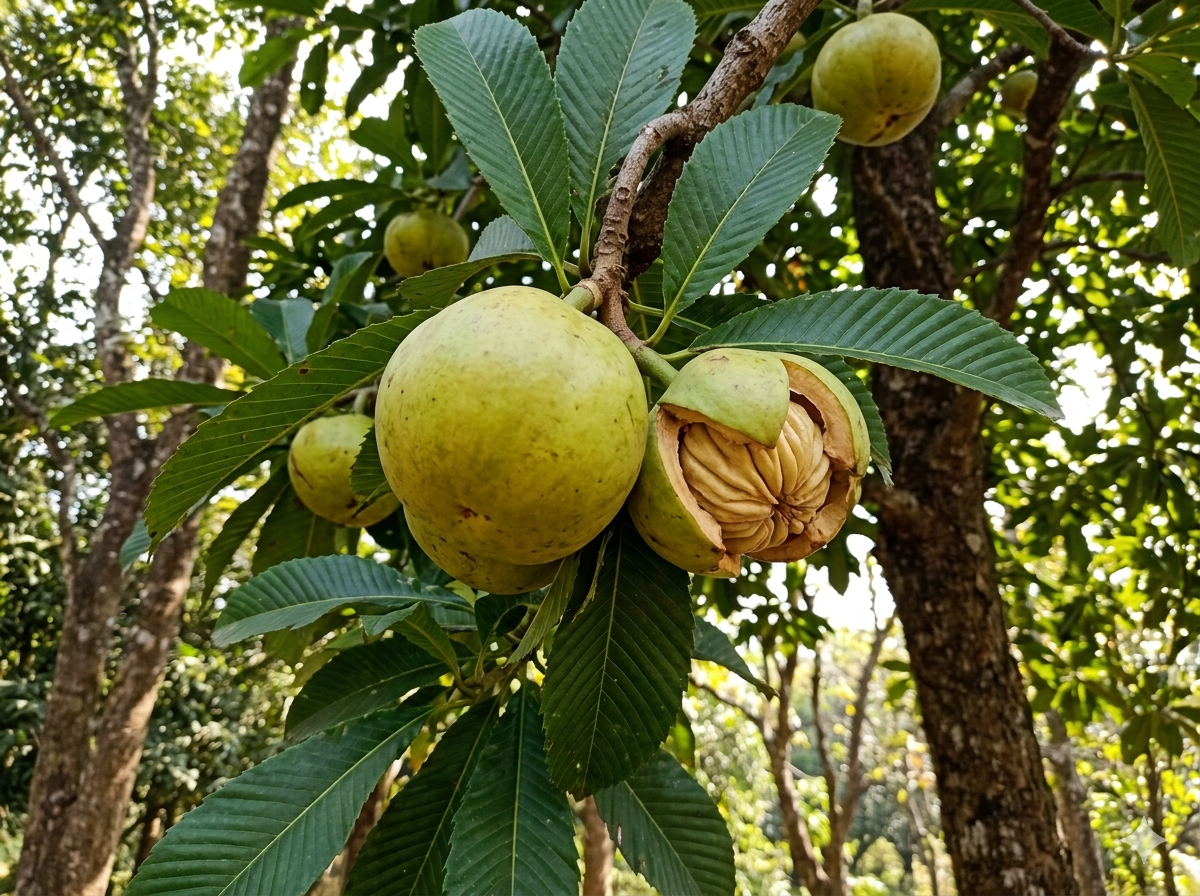
India's largest wild edible fruit. 8-12cm diameter, 300-800g weight. Green, strongly ribbed, with persistent fleshy sepals forming the outer "apple" surface. Flesh: sour, fibrous, white-cream. Too sour to eat raw. Culinary uses: (1) Assamese Tenga (sour curry) — the definitive use. (2) Bengali chutney + jam. (3) Ayurvedic digestive preparation. (4) Squash/syrup. Market: Rs.15-50/kg fresh. Value-added: Rs.80-200/kg. Elephants eat enthusiastically (hence the name).

India का largest wild edible fruit। 8-12cm, 300-800g। Green, strongly ribbed, fleshy sepals। Flesh: sour, fibrous, white-cream। Raw eat: too sour। Culinary: (1) Assamese Tenga sour curry — definitive। (2) Bengali chutney + jam। (3) Ayurvedic digestive। (4) Squash/syrup। Market: Rs.15-50/kg fresh। Value-added: Rs.80-200/kg। Elephants enthusiastically eat (hence name)।
🌸
Flowers / फूल (One-Day Spectacular)
Among India's most spectacular wild flowers. 10-15cm diameter pure white petals + mass of 200-300 golden stamens. Each flower opens in morning, is fully magnificent by noon, and falls by evening — lasting ONLY ONE DAY. The fallen petals create white carpet under tree. Honey source — bees swarm these enormous flowers. Flower petals: edible, mild sweet flavor, used in Assamese cuisine. Not commercially traded.

India के most spectacular wild flowers में। 10-15cm pure white petals + 200-300 golden stamens। Morning open → noon magnificent → evening fall — ONE DAY ONLY। Fallen petals = white carpet। Honey source — bees swarm। Flower petals: edible, mild sweet, Assamese cuisine। Commercially traded नहीं।
🍃
Leaves / पत्ते (Natural Sandpaper + Plates)
Very large (20-45cm), stiff, prominently ridged veins making upper surface rough (like fine sandpaper). Traditional: (1) Natural sandpaper — leaf used to polish wood, metal, ivory, horn. (2) Natural plates — large stiff leaves used as food plates and bowls in traditional forest communities. (3) Cattle fodder (good palatability). (4) Leaf extract: anti-bacterial, anti-inflammatory research. Traditional dentistry: leaf used for gum cleaning.

Very large (20-45cm), stiff, prominent ridged veins — upper surface rough (fine sandpaper जैसा)। Traditional: (1) Natural sandpaper — wood, metal, ivory, horn polish। (2) Natural plates — food plates + bowls forest communities। (3) Cattle fodder (good palatability)। (4) Leaf extract: anti-bacterial, anti-inflammatory। Traditional dentistry: gum cleaning।
🟫
Bark / छाल
Distinctive peeling reddish-brown bark (ornamental — similar to Arjuna bark). Bark: astringent (high tannin), anti-inflammatory, anti-diarrheal. Traditional: bark decoction for diarrhea, dysentery, wounds, fever. Bark tannin: leather industry. Bark gum: local adhesive use. MFP: Rs.10-18/kg dried. The peeling bark pattern makes Elephant Apple distinctive from a distance — orange-red inner bark revealed by peeling.

Distinctive peeling reddish-brown bark (ornamental — Arjuna जैसा)। Bark: astringent (high tannin), anti-inflammatory, anti-diarrheal। Traditional: diarrhea, dysentery, wounds, fever। Tannin: leather industry। Bark gum: local adhesive। MFP: Rs.10-18/kg। Peeling bark = Elephant Apple distinctive — orange-red inner bark reveal।
🐘
Wildlife / वन्यजीव
IMPORTANT wildlife food tree — elephants, bears (particularly sloth bears), monkeys, wild pigs, and many birds eat the large fruits. The tree's fruit size is specifically adapted to elephant seed dispersal (megafaunal dispersal syndrome). In Assam and Kerala elephant corridors: Elephant Apple trees indicate likely elephant movement paths. Bears climb trees for ripe fruits. Important for wildlife corridor planting.

IMPORTANT wildlife food — elephants, sloth bears, monkeys, wild pigs, birds। Fruit size = elephant seed dispersal adapted (megafaunal dispersal syndrome)। Assam + Kerala elephant corridors: Elephant Apple trees = likely elephant movement paths। Bears climb for ripe fruits। Wildlife corridor planting के लिए important।
🏡
Ornamental / शोभाकारी
Exceptional ornamental tree combining: spectacular white flowers (10-15cm), architectural large leaves, ornamental peeling bark, large decorative fruits hanging year-round, evergreen in humid conditions. Garden use: premium ornamental for large humid gardens in Kerala, Assam, WB. Avenue tree in wet tropical areas. Not widely cultivated as ornamental despite extraordinary visual qualities.

Exceptional ornamental: spectacular white flowers (10-15cm) + architectural large leaves + ornamental peeling bark + large decorative fruits year-round + evergreen humid। Garden: Kerala, Assam, WB large humid gardens premium ornamental। Wet tropical areas avenue। Extraordinary visual qualities के बावजूद widely cultivated as ornamental नहीं।

🌍 Assamese Tenga & One-Day Flower / Assamese Tenga और One-Day Flower

⚡ Key Facts / मुख्य तथ्य
🍎 Largest Wild Fruit
India's largest naturally edible wild fruit — 8-12cm, 300-800g. Sour culinary treasure.
India का largest naturally edible wild fruit — 8-12cm, 300-800g। Sour culinary treasure।
🌸 One-Day Wonder
Enormous 10-15cm white flowers open for ONE DAY only. Morning glory → evening fall. White carpet underneath.
Enormous 10-15cm white flowers = ONE DAY only। Morning glory → evening fall। White carpet underneath।
🥘 Tenga
Assamese "Ou tenga" = definitive sour curry. Cultural heart of Assamese cuisine. Irreplaceable sourness.
Assamese "Ou tenga" = definitive sour curry। Assamese cuisine का cultural heart। Irreplaceable sourness।
📄 Natural Sandpaper
Rough ridged leaf surface = natural sandpaper for polishing wood, metal, ivory. Traditional use.
Rough ridged leaf surface = natural sandpaper। Wood, metal, ivory polish। Traditional use।
🐘 Elephant Food
Elephants, sloth bears, monkeys eat large fruits. Megafaunal dispersal. Elephant corridor indicator.
Elephants, sloth bears, monkeys large fruits खाते। Megafaunal dispersal। Elephant corridor indicator।
🎨 Peeling Bark
Distinctive reddish peeling bark — ornamental like Arjuna. Orange-red inner bark revealed on old trees.
Distinctive reddish peeling bark — ornamental। Orange-red inner bark old trees पर reveal।

🌱 Growing Guide / Elephant Apple कैसे उगाएं

6-8m apart (large spreading tree). Give space for architectural form to develop. Excellent avenue tree for humid tropical roads. Plant near water bodies — loves moisture.10 trees at Year 8: 20 fruits/tree × 10 trees = 200 fruits × 500g = 100 kg × Rs.30 = Rs.3,000 fresh. OR processed: 100 kg → chutney/jam → Rs.12,000. Plus ornamental, flower, bark value. Growing Assam food diaspora demand.
ParameterEnglishHindi / हिंदी
🌱 PropagationSeeds from ripe fruits (extract seeds from fruit pulp, wash, sow fresh). Germination 3-6 weeks. Air-layering (gooti) for faster results. First fruits from seed: Year 5-7. Grafted plants: Year 3-4.Ripe fruits से seeds (pulp से extract, wash, fresh sow)। 3-6 weeks germination। Air-layering (gooti) faster। Seeds से first fruits: Year 5-7। Grafted: Year 3-4।
🌡️ ClimateTropical humid — Assam, WB, Odisha, Kerala, Karnataka, Andaman. High rainfall 1,500-3,500mm. Cannot tolerate prolonged drought. NOT for dry Rajasthan/UP or cold Himalayan.Tropical humid — Assam, WB, Odisha, Kerala, Karnataka, Andaman। 1,500-3,500mm। Prolonged drought tolerate नहीं। Dry Rajasthan/UP या cold Himalayan: NOT।
🪴 SoilDeep moist, well-draining loamy to alluvial. pH 5.5-7.5. High organic matter. Riverbank alluvial soil: ideal. Tolerates seasonal flooding briefly.Deep moist, well-draining loamy to alluvial। pH 5.5-7.5। High organic matter। Riverbank alluvial: ideal। Brief seasonal flooding tolerate।
📏 Spacing6-8m apart (large spreading)। Architectural form develop करने के लिए space। Humid tropical roads avenue excellent। Water bodies के near plant — moisture love।
🍎 Fruit harvestJune-November. Fruits mature when sepals are fully fleshy and fruit turns pale yellow-green. Too soft = overripe. Hard green = unripe for pickle. Medium ripe (yellow-green) for chutney/jam. Bears and elephants will harvest before you if in forest edge!June-November। Sepals fully fleshy + pale yellow-green = mature। Too soft = overripe। Hard green = unripe pickle। Medium ripe (yellow-green) = chutney/jam। Forest edge में: bears + elephants आपसे पहले harvest करेंगे!
💰 Income model10 trees Year 8: 200 fruits × 500g = 100 kg × Rs.30 = Rs.3,000 fresh। OR processed: Rs.12,000। Plus ornamental, flower, bark। Growing Assam food diaspora demand।

💰 Market Value & Legal Status / बाज़ार मूल्य और कानूनी स्थिति

Product / उत्पादValue / मूल्यLegal / कानूनी
🍎 Fresh fruitsRs.15–50/kg seasonal | Assam + WB local marketsFreely traded from own trees / freely
🥘 Tenga/Chutney/JamRs.80–200/kg processed | Premium diaspora marketFSSAI license commercial. Home: freely.
🟫 Bark / छालRs.10–18/kg Ayurvedic tanningOwn trees sustainably / sustainably
🌱 Ornamental nurseryRs.100–500/plant | Limited availabilityFreely traded / freely
❓ Frequently Asked Questions / अक्सर पूछे जाने वाले सवाल
Ou Tenga — Assamese sour fish curry: "Tenga" means sour in Assamese, and "Ou Tenga" (Elephant Apple sour curry) is one of the most distinctive and beloved recipes in Assamese cuisine. It is typically made with fish — the sourness of chalta balancing the fish flavor in a light, broth-based curry. Ingredients (for 4 servings): Fish (rohu/catla/singi/any freshwater fish): 500g pieces. Elephant apple (chalta): 1 medium fruit (or half large), peeled and cut into wedges. Mustard oil: 3 tbsp. Onion: 1 medium, sliced thin. Ginger: 1 inch piece, grated. Turmeric: 1 tsp. Green chili: 2-3, slit. Salt: to taste. Fenugreek seeds (methi): 1/4 tsp. Coriander powder: 1 tsp. Water: 300ml. Preparation of chalta: peel the outer tough green rind (the fleshy persistent sepals). The inner whitish fruit sections (like garlic cloves) are what you use. Cut into wedges, remove seeds. Slightly parboil in salted water for 10 minutes (reduces bitterness, softens). Method: heat mustard oil until smoking, reduce to medium. Fry fish pieces until golden brown. Remove fish. In same oil: fry fenugreek seeds (careful — burns fast). Add onion, fry until golden. Add ginger, turmeric, green chili, coriander powder. Mix. Add parboiled chalta pieces. Add water, bring to boil. Add fried fish pieces. Simmer 15-20 minutes. Adjust salt. A thin, clear, sour broth — NOT a thick gravy. The sourness of chalta is the hero flavor. Serve with plain steamed rice. Variants: vegetarian tenga (without fish, with tomato or bamboo shoots also), tenga with dried fish (interesting umami-sour combination). The "Tenga" character: Assamese cuisine has a sour element (tenga) in many dishes — achieved with chalta, tomato, lemon, or dried mangosteen. Chalta tenga is considered the most distinctive and authentic of these souring agents for fish curry.

Ou Tenga recipe: "Tenga" = sour Assamese। Distinctive Assamese cuisine। Fish के साथ typically — chalta sourness + fish flavor light broth-based। Ingredients (4 servings): Fish (rohu/catla/singi) 500g। Chalta 1 medium। Mustard oil 3 tbsp। Onion 1 medium। Ginger 1 inch grated। Turmeric 1 tsp। Green chili 2-3। Salt। Fenugreek seeds 1/4 tsp। Coriander powder 1 tsp। Water 300ml। Chalta prep: outer tough green rind peel (fleshy persistent sepals)। Inner whitish sections use। Wedges cut, seeds remove। Salted water 10 min parboil (bitterness reduce, soften)। Method: mustard oil smoking → reduce → fish golden fry → remove। Same oil: fenugreek seeds fry (burns fast)। Onion golden → ginger + turmeric + chili + coriander। Parboiled chalta add। Water + boil। Fish add। 15-20 min simmer। Salt adjust। Thin clear sour broth — NOT thick gravy। Chalta sourness = hero flavor। Plain steamed rice। Variants: vegetarian (no fish), dried fish (umami-sour)। Tenga character: Assamese cuisine में sour element — chalta, tomato, lemon, dried mangosteen। Chalta = most distinctive + authentic souring agent fish curry।
Dillenia indica identification — multi-season guide: Elephant Apple (Dillenia indica) is one of India's most distinctive trees once you know what to look for. The combination of features is unique and unmistakable. Leaves (year-round identification): enormous (20-45cm long, 10-20cm wide) — among India's largest tree leaves. Shape: oblong to elliptic. Surface: stiff, leathery, VERY prominently parallel-veined (like corrugated cardboard). Upper surface: ROUGH — like fine sandpaper — because of the prominent ridges of the leaf veins. Underside: slightly lighter. If you rub a leaf: the sandpaper texture is the instant identifier. Bark: distinctive on older trees — reddish-brown outer bark peeling away to reveal reddish-orange inner bark. Similar to Arjuna tree (Terminalia arjuna) but Elephant Apple's peeling is more irregular. This peeling bark pattern makes the tree distinctive in forest. Flowers (March-June): enormous (10-15cm) white flowers — largest white flowers of any common Indian tree. Five large rounded white petals surrounding a dense mass of golden-yellow stamens. The flower opens in morning and falls completely by evening — in morning, look for open white flowers; in evening, look for fallen petals on ground. Fruits (June-November): large (8-12cm) green globose fruits with prominent longitudinal ribs (like a deeply furrowed apple). The distinctive feature: the persistent fleshy green sepals tightly clasp the fruit — the "outer green apple" you see is actually the enlarged sepals, not the true fruit skin. When cut open: white-cream sour pulp with brown seeds inside segments. Habitat: wet tropical forests in Assam, WB, Odisha, Kerala, Karnataka, Andaman. Riverbanks and stream edges preferred. Simple identification: wet tropical + enormous corrugated sandpaper leaves + peeling reddish bark = Elephant Apple with high confidence. In season: add white giants flowers OR large ribbed green fruits = certain identification.

Dillenia indica identification: Leaves (year-round): enormous (20-45cm × 10-20cm) — India के largest tree leaves में। Oblong to elliptic। Stiff, leathery, VERY prominently parallel-veined (corrugated cardboard जैसा)। Upper surface: ROUGH (fine sandpaper) — vein ridges। Rub leaf = instant sandpaper texture identifier। Bark: older trees पर reddish-brown outer peel → reddish-orange inner। Arjuna जैसा लेकिन more irregular peeling। Forest में distinctive। Flowers (March-June): enormous (10-15cm) white — India's largest white flowers common tree। Five large rounded white petals + dense golden-yellow stamens। Morning open → evening fall completely। Morning: open white flowers। Evening: fallen petals ground। Fruits (June-November): large (8-12cm) green globose, prominent longitudinal ribs (deeply furrowed apple जैसा)। Distinctive: persistent fleshy green sepals fruit clasp — "outer green apple" = enlarged sepals, true fruit skin नहीं। Cut open: white-cream sour pulp + brown seeds segments। Habitat: wet tropical forests Assam, WB, Odisha, Kerala, Karnataka, Andaman। Riverbanks + stream edges preferred। Simple ID: wet tropical + enormous corrugated sandpaper leaves + peeling reddish bark = Elephant Apple high confidence। In season: white giant flowers OR large ribbed green fruits = certain।
Elephant Apple in Assamese culture — the food and folklore: Dillenia indica (locally called "Ou" or "Ou-tenga" in Assamese — "ou" = elephant apple, "tenga" = sour thing) occupies a special place in Assamese culture that extends far beyond its culinary use. Culinary identity: Assamese cuisine is characterized by its use of sour souring agents in curries — called "tenga" dishes. Among all souring agents (tomato, dried mangosteen/thekera, lime), "Ou tenga" (elephant apple) curry is considered the most authentic and distinctive Assamese sour dish. It is the flavor that Assamese people associate with home, tradition, and identity. Cultural seasonality: the appearance of elephant apple fruits in Assam (July-November) marks the season for "tenga" cooking. Families collect fruits from village trees, riverbank trees, or buy from weekly haats (markets). The sour smell of elephant apple pieces being prepared fills Assamese kitchens in monsoon and post-monsoon months. Traditional gathering: in Assam's rural areas, elephant apple trees near rivers and fields are community resources — families collect fallen and ripe fruits freely, similar to how coconut, jackfruit, and other village trees are shared resources. This community fruit-gathering tradition is part of social life in lower Assam districts (Kamrup, Dhubri, Barpeta, Goalpara). Wildlife connection: the Assamese people's awareness of elephants includes the knowledge that elephants specifically seek out elephant apple trees — stories of elephant visits to fruiting trees near villages are part of local oral tradition. Trees near villages serve as indicators of whether elephants are likely visiting the area. Medicinal knowledge: traditional Assamese knowledge includes using elephant apple bark for stomach ailments, the fruit pulp as a cooling digestive, and the leaves for skin treatments. This Assamese ethnobotanical knowledge is part of what makes the tree culturally multi-dimensional rather than merely a food resource.

Elephant Apple Assamese culture: Locally "Ou" या "Ou-tenga" (ou = elephant apple, tenga = sour thing)। Culinary identity: Assamese cuisine = sour souring agents (tenga dishes)। Among all souring agents (tomato, dried mangosteen/thekera, lime): "Ou tenga" = most authentic + distinctive Assamese sour dish। Home, tradition, identity का flavor। Cultural seasonality: fruits appearance July-November = tenga cooking season। Village trees, riverbank trees, weekly haats से collect। Sour smell kitchen fills monsoon + post-monsoon। Traditional gathering: Assam rural = community resources। Families freely collect fallen + ripe fruits। Kamrup, Dhubri, Barpeta, Goalpara districts social life। Wildlife connection: elephants specifically elephant apple trees seek — villages के near fruiting trees। Local oral tradition। Elephant visit indicator। Medicinal: bark = stomach ailments। Fruit pulp = cooling digestive। Leaves = skin treatments। Assamese ethnobotanical knowledge = culturally multi-dimensional।
Elephant Apple jam and chutney — processing guide: Dillenia indica fruits, while too sour to eat raw, process into excellent jams, chutneys, and preserves because of their high pectin content (natural gelling agent) and distinctive sour flavor. Selecting fruit: use medium-ripe fruits (yellow-green, slightly soft when pressed) for jam — unripe hard fruits are too astringent, over-ripe fruits lose pectin. Preparation: cut fruit in half. Remove the tough outer sections (the persistent fleshy sepals — these are edible but fibrous and very sour). Scoop out the inner pulpy sections (the true fruit — white-cream, arranged like garlic cloves). Discard large seeds. The usable pulp: approximately 30-40% of total fruit weight. Basic jam recipe (1 kg prepared pulp): elephant apple pulp: 1 kg. Sugar: 700-800g (adjust to taste — more sugar = milder sour). Lemon juice: 2 tbsp (pectin activation). Water: 100ml. Ginger (optional): 20g finely grated (complements the flavor). Method: combine pulp + water + lemon juice. Bring to boil. Cook covered 15-20 minutes until pulp softens completely. Mash or blend (partially — small pieces add texture). Add sugar, stir until dissolved. Continue cooking on medium heat (constant stirring) for 20-30 minutes until jam sets (wrinkle test: drop on cold plate — wrinkles when pushed = set). Hot fill into sterilized glass jars. Seal immediately. Yield: approximately 1.3-1.5 kg jam from 1 kg pulp + sugar. The jam: deep amber to ruby-red color. Sweet-sour flavor profile. Good shelf life (12-18 months sealed). Chutney variation: same process but with addition of garlic, chili, cumin, vinegar — savory condiment excellent with grilled meats and cheeses (international gourmet market potential). Marketing opportunity: "Indian Elephant Apple Preserve" marketed to diaspora communities and gourmet food market. The fruit's unusual name + distinctive flavor is a marketing advantage. Sell at Rs.150-300/300g jar for premium positioning.

Elephant Apple jam processing: Medium-ripe fruits (yellow-green, slightly soft) for jam। Unripe = too astringent। Over-ripe = pectin loss। Preparation: fruit halve। Outer sections remove (persistent fleshy sepals — fibrous + very sour)। Inner pulpy sections scoop (true fruit — white-cream, garlic clove arranged)। Large seeds discard। Usable pulp: ~30-40% total fruit weight। Basic jam recipe (1 kg pulp): pulp 1 kg + sugar 700-800g + lemon juice 2 tbsp (pectin activation) + water 100ml + ginger 20g (optional)। Method: pulp + water + lemon boil। Covered 15-20 min soften। Mash/blend (partially)। Sugar add + stir dissolve। Medium heat 20-30 min constant stir until set (wrinkle test: cold plate drop — wrinkles when pushed = set)। Hot fill sterilized glass jars। Seal। Yield: ~1.3-1.5 kg jam। Jam: deep amber to ruby-red। Sweet-sour। 12-18 months shelf life sealed। Chutney variation: + garlic + chili + cumin + vinegar। Savory = grilled meats + cheeses। International gourmet market। Marketing: "Indian Elephant Apple Preserve" diaspora + gourmet। Unusual name + distinctive flavor = marketing advantage। Rs.150-300/300g jar premium।
Dillenia flower — the one-day blooming strategy: Dillenia indica flowers have one of the most dramatic and fascinating life cycles of any Indian tree flower — each individual flower opens in the early morning and falls completely by evening, lasting only a single day. Why flowers last only one day: This is an evolutionary reproductive strategy (not a defect). Dillenia's enormous flowers (10-15cm, some of the largest white flowers of any Indian tree) are expensive to produce in terms of plant resources — large amounts of sugars, proteins, and pigments go into each flower. Making each flower last longer would require even more resources. Instead: produce enormous, maximally attractive flowers (highly visible to pollinators from great distance). Achieve maximum pollinator visits in a single day (fresh, fully open, maximum nectar production). Once pollinated, allow flower to fall (no point maintaining unpollinated or already-pollinated flower resource drain). This "boom-bust" strategy of opening enormous, intensely attractive flowers for one day achieves better pollination efficiency per unit resource than smaller, longer-lasting flowers. Pollinator efficiency: in the morning hours when Dillenia flowers are fresh, bees and other pollinators are extremely active around them. The mass of golden stamens produces abundant pollen and the large white petals provide a highly visible landing platform visible from 50-100m. By the time the flower falls in the afternoon, it has typically been visited dozens of times. The visual experience: because an individual tree produces many flowers in sequence over its blooming season (2-3 months), a Dillenia tree appears to have flowers at various stages continuously. But look carefully: you'll notice that some days the tree has dramatically more open flowers than others — these are "mass bloom" days when many buds synchronize their opening. On such days, the fallen petal carpet under the tree by evening is particularly beautiful — thick white carpet, still fragrant. Photography tip: photograph Dillenia flowers in early morning light (7-9 AM) when flowers are fresh and fully open. By noon the petals begin to wilt. By 3-4 PM they are falling. By sunset the ground is carpeted.

Dillenia flower one-day strategy: Evolutionary reproductive strategy (defect नहीं)। Enormous flowers (10-15cm) = expensive to produce (sugars, proteins, pigments)। Longer last = more resources। Instead: enormous maximally attractive flowers produce → single day maximum pollinator visits → once pollinated fall। "Boom-bust" strategy: large intensely attractive flowers 1 day = better pollination efficiency per unit resource than small longer-lasting flowers। Pollinator efficiency: morning hours fresh Dillenia flowers = bees extremely active। Mass golden stamens = abundant pollen। Large white petals = 50-100m से visible। Afternoon fall पर: dozens of visits typically। Visual experience: tree many flowers sequence 2-3 months → various stages appear continuously। But some days dramatically more open = "mass bloom" days (buds synchronize)। Evening fallen petal carpet thick white fragrant especially। Photography: 7-9 AM early morning light (flowers fresh, fully open)। Noon = petals wilt। 3-4 PM falling। Sunset = ground carpeted।
⚠️
AI-Assisted Content — Please Read
AI-सहायता से बनाई गई सामग्री — कृपया पढ़ें

All tools, plant encyclopedias, edible growing guides and blog content on PlantCare are created with the assistance of AI (Artificial Intelligence) and are intended for general informational and educational purposes only. While we strive for accuracy, the information provided may not be complete, current or suitable for every situation, region or individual plant variety.

For health, medical or serious agricultural decisions — always consult a qualified horticulturist, agronomist, Ayurvedic practitioner, medical professional or relevant expert. PlantCare does not take responsibility for outcomes arising from use of this information. Identification results from AI tools (plant identifier, pest identifier etc.) should be verified before taking any action.

इस वेबसाइट पर सभी tools, plant encyclopedias, edible guides और blog content AI (Artificial Intelligence) की सहायता से बनाए गए हैं और केवल सामान्य जानकारी और शिक्षा के उद्देश्य से हैं। स्वास्थ्य, चिकित्सा या गंभीर कृषि निर्णयों के लिए कृपया किसी योग्य विशेषज्ञ से संपर्क करें। PlantCare इस जानकारी के उपयोग से होने वाले परिणामों के लिए जिम्मेदार नहीं है।