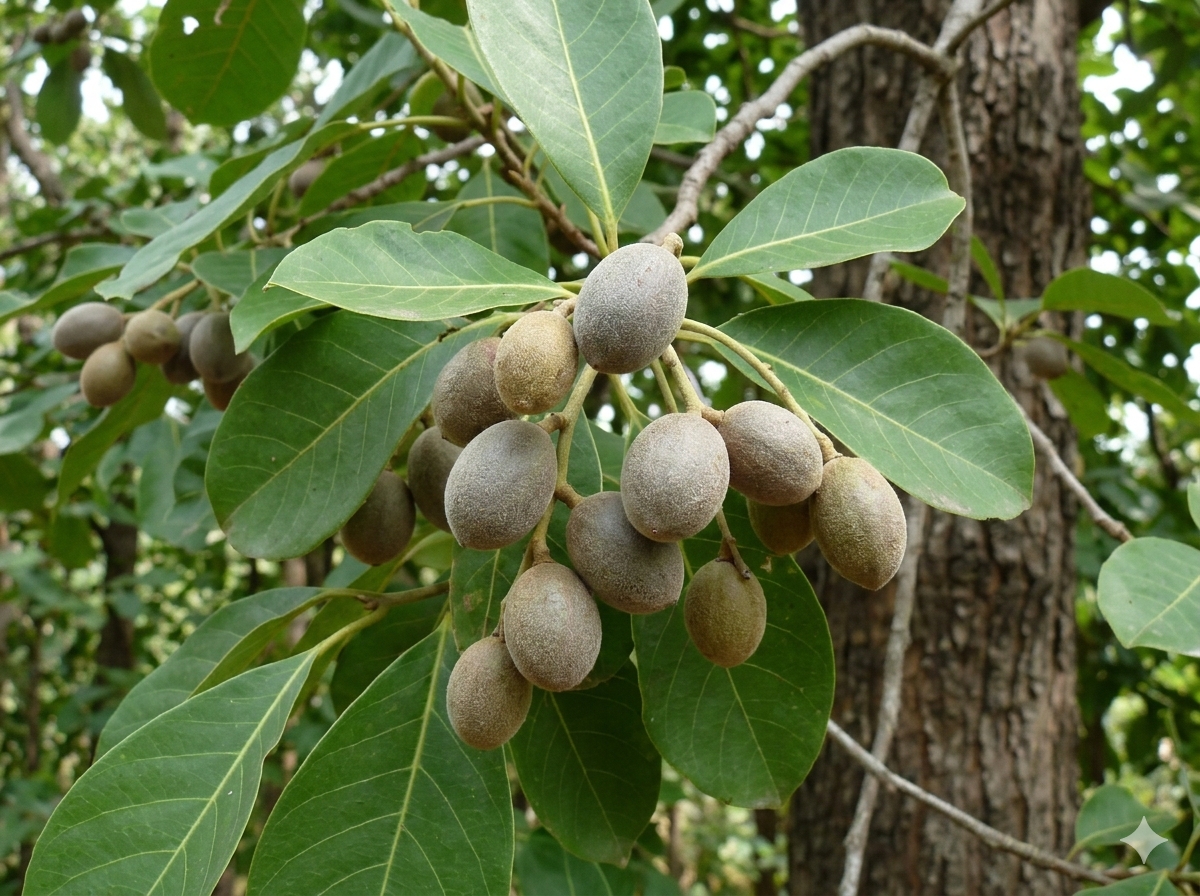
Baheda Tree Triphala Fruit India Beleric Myrobalan — PlantCare
📷 PlantCare
🕉️ Sacred & Medicinal Trees

Baheda / Beleric Myrobalan बहेड़ा / विभीतक

Terminalia bellirica Family: Combretaceae

Baheda — Triphala's Kapha fruit. Respiratory health, eye wash, anti-diarrheal. Bark: 20-40% tannin (leather industry). MSP Rs.15-30/kg. FRA 2006 tribal rights. Cultivation: Rs.1 lakh/hectare/year from Year 12.

📏 20–30 metres ⏳ 100–200+ years 📈 Moderate — 1.5–2 ft/year 📍 Pan-India — dry deciduous forests below 1,500m ✅ MFP — FRA 2006 tribal forest rights. Private: freely. Timber: FD permit. 💰 Rs.600–1,000/cubic foot
📤 WhatsApp
Baheda Triphala Kapha Balancing Respiratory Eye Health Bark Tanning 20-40% MSP Declared FRA 2006 Rights Leather Industry Pan-India Deciduous

बहेड़ा — Triphala का Kapha fruit। Respiratory health, eye wash, anti-diarrheal। Bark: 20-40% tannin (leather industry)। MSP Rs.15-30/kg। FRA 2006 tribal rights। Cultivation: Year 12 से Rs.1 lakh/hectare/year।

Baheda (Terminalia bellirica) — Bahera / Vibhitaka / Beleric Myrobalan — is one of the three sacred fruits of Triphala — India's most famous Ayurvedic formulation used for 5,000+ years. Along with Haritaki (Terminalia chebula) and Amla (Phyllanthus emblica), Baheda forms the "three fruits" that together constitute Triphala — a complete digestive tonic, anti-oxidant, anti-aging formula and gentle laxative that has more published clinical research behind it than any other Ayurvedic formulation. Baheda's role in Triphala: it is considered the "Kapha-balancing" fruit, responsible for the formula's mucous-reducing, respiratory-healing and eye-strengthening properties. The fruit pericarp (outer covering) is the primary medicine — extremely rich in tannins, gallotannins, chebulagic acid, and ellagic acid. Modern research has confirmed significant anti-microbial, anti-viral, anti-diabetic, hepatoprotective (liver protecting), and anti-oxidant activity. Baheda is a large magnificent deciduous forest tree found across India's deciduous forests, producing distinctive ribbed oval fruits that are one of India's most commercially important minor forest produce (MFP) items.

Baheda (Terminalia bellirica) — बहेड़ा / विभीतक — Triphala के तीन पवित्र फलों में से एक। Haritaki और Amla के साथ मिलकर बनता है Triphala — 5,000+ वर्षों से India का सबसे famous Ayurvedic formulation। Triphala में Baheda का role: "Kapha-balancing" fruit — mucous reduction, respiratory healing, eye strengthening। Fruit pericarp: tannins, gallotannins, chebulagic acid से भरपूर। Modern research: anti-microbial, anti-viral, anti-diabetic, hepatoprotective, anti-oxidant। India के deciduous forests में large magnificent tree।

🌳 Overview & Quick Facts / परिचय और मुख्य तथ्य

🔬 Scientific NameTerminalia bellirica — Family: Combretaceae
📏 Height / ऊंचाई20–30 metres | Large deciduous forest tree / बड़ा deciduous forest tree
Lifespan / आयु100–200+ years / 100-200+ वर्ष
📈 Growth Rate / वृद्धि दरModerate — 1.5–2 ft/year / मध्यम
🍎 Fruits / फलNovember–February — oval, ribbed, grey-brown. 5-angled. MFP. / November-February — oval, ribbed, grey-brown
🌡️ Climate / जलवायुTropical — dry to moist deciduous forests. Pan-India below 1500m. Drought tolerant.
⚖️ Legal Status / कानूनीMFP — tribal rights under FRA 2006 for forest land collection. Private cultivation: freely allowed. Timber: Forest Dept permit.
💰 Fruit Value / फल मूल्यRs.15–30/kg dried fruit | Rs.40–80/kg fruit powder | MSP declared by Govt / MSP घोषित

🌿 Parts & Their Uses — हर अंग का उपयोग

🍎
Fruit Pericarp / फल की बाहरी परत (Most Important)
The primary medicinal part. Dried pericarp (outer covering) — rich in gallotannins, chebulagic acid, ellagic acid. Uses: Triphala (primary ingredient), respiratory health, eye health, anti-oxidant. Market: Rs.15-30/kg dried fruit, Rs.40-80/kg powder. Available all Ayurvedic stores.

Primary medicinal हिस्सा। Dried pericarp — gallotannins, chebulagic acid, ellagic acid से भरपूर। Uses: Triphala, respiratory health, eye health, anti-oxidant। Market: Rs.15-30/kg dried fruit, Rs.40-80/kg powder।
🫚
Seed Oil / बीज का तेल
Seed kernel contains 35–40% fixed oil. Seed oil: traditionally used as hair oil (prevents premature greying, strengthens roots), massage oil. Contains oleic and linoleic acids. Not widely commercially traded — primarily local/tribal use. Seed cake after oil: animal feed and fertilizer.

Seed kernel में 35-40% fixed oil। Seed oil: पारंपरिक hair oil (premature greying prevent, roots strengthen), massage oil। Oleic और linoleic acids। Widely commercial नहीं — primarily local/tribal। Seed cake: animal feed और fertilizer।
🟫
Bark / छाल
Bark decoction: anti-diarrheal, anti-dysenteric, wound healing. Bark paste: applied to skin ulcers, boils. Bark contains high tannin (20-40%) — important tanning industry raw material. Commercial tanning: bark used in leather tanning. MFP rate: Rs.8-15/kg dried bark.

छाल काढ़ा: anti-diarrheal, anti-dysenteric, wound healing। Bark paste: skin ulcers, boils। High tannin (20-40%) — leather tanning industry। Commercial tanning: bark used। MFP: Rs.8-15/kg।
🍃
Leaves / पत्ते
Leaves cluster at branch ends. Food plates in tribal areas. Leaf extract: anti-inflammatory research. Young leaves: cattle fodder. Leaves are semi-deciduous — tree loses leaves in hot dry season (Feb-April) just before new flush. Leaf litter: natural mulch, improves soil organic matter.

Leaves branch ends पर cluster। Food plates tribal areas में। Leaf extract: anti-inflammatory। Young leaves: cattle fodder। Semi-deciduous — hot dry season में leaves खोता है। Leaf litter: natural mulch, soil organic matter improve।
🌸
Flowers / फूल
Small white/greenish-yellow fragrant spikes (March-May). Good honey source — bees attracted in large numbers. Flower extract: mild anti-oxidant. Not commercially traded independently. Important spring nectar source for honey bees in dry deciduous forests — supports forest honey industry.

Small white/greenish-yellow fragrant spikes (March-May)। Good honey source। Flower extract: mild anti-oxidant। Independently commercially nहीं traded। Spring nectar source for bees — forest honey industry support।
🪵
Wood / लकड़ी
Wood: hard, heavy, strong, grey-brown with dark streaks. Uses: construction, agricultural implements, furniture, railway sleepers historically. Moderate commercial value Rs.600-1,000/cubic foot. Tanning: wood also used in bark tanning. Forest Dept permit required for cutting.

लकड़ी: कठोर, भारी, strong, grey-brown dark streaks के साथ। निर्माण, कृषि औज़ार, furniture। Moderate commercial: Rs.600-1,000/cubic foot। Tanning: wood also used। Forest Dept permit required।

🌍 Triphala Science & Forest Ecology / Triphala विज्ञान और वन पारिस्थितिकी

⚡ Key Facts / मुख्य तथ्य
💊 Triphala Role
One of three Triphala fruits. Kapha-balancing — respiratory, eye health, mucous reduction.
Triphala के तीन फलों में एक। Kapha-balancing — respiratory, eye health, mucous reduction।
🧪 Tannin Industry
Bark tannin 20-40% — important commercial leather tanning raw material.
Bark tannin 20-40% — commercial leather tanning का महत्वपूर्ण raw material।
🌳 Deciduous Forest
Common in dry and moist deciduous forests — pan-India. Indicator species.
Dry और moist deciduous forests में common — pan-India। Indicator species।
📜 MFP Income
MSP declared. TRIFED procurement. Forest tribal communities' important income source.
MSP घोषित। TRIFED procurement। Forest tribal communities की महत्वपूर्ण income।
🌍 Export
Baheda fruit exported to USA, Europe for herbal supplement market. Growing demand.
USA, Europe herbal supplement market के लिए export। बढ़ती demand।
🐘 Wildlife
Elephants, deer, birds eat fruits. Important dry season wildlife food in deciduous forests.
Elephants, deer, birds fruits खाते हैं। Dry season wildlife food।

🌱 Growing Guide / बहेड़ा कैसे उगाएं

ParameterEnglishHindi / हिंदी
🌱 PropagationSeeds from dry ripe fruits (Feb-March). Hard seed coat — scarify or soak 48 hours. Germination 20-30 days.Dry ripe fruits से बीज (Feb-March)। Hard seed coat — scarify या 48 घंटे soak। 20-30 दिन germination।
🪴 SoilWell-draining loam to sandy loam. pH 5.5–8.0. Drought tolerant once established. Red soils of Deccan: ideal.Well-draining loam। pH 5.5-8.0। Drought tolerant। Deccan red soils: ideal।
📅 Best TimeMonsoon June-July. Establishes well in first monsoon — deep taproot develops.Monsoon June-July। पहले monsoon में deep taproot develop।
📏 Spacing8–10 metres for fruit production. 5-6 metres timber plantation.Fruit production: 8-10 मीटर। Timber plantation: 5-6 मीटर।
🍎 First FruitsYear 8–12 from seed. First commercial harvest Year 12-15.बीज से Year 8-12 में पहले फल। First commercial harvest Year 12-15।
💰 IncomeMature tree: 30-80 kg fruits/year × Rs.20/kg = Rs.600-1,600/tree. 100 trees = Rs.60,000-1,60,000/year.Mature tree: 30-80 kg fruits/year × Rs.20 = Rs.600-1,600/tree। 100 trees = Rs.60,000-1,60,000/year।

💰 Market Value & Legal Status / बाज़ार मूल्य और कानूनी स्थिति

Product / उत्पादValue / मूल्यLegal / कानूनी
🍎 Dried Fruit / सूखे फलRs.15–30/kg | MSP declared by GovtFRA 2006 tribal rights forest land. Private: freely. MSP through TRIFED.
💊 Fruit PowderRs.40–80/kg / Ayurvedic + exportFreely tradeable / freely
🟫 Bark (tanning) / छालRs.8–15/kg dry tannin industryOwn trees: allowed. Wild collection: FRA 2006 / FRA 2006 tribal
🪵 Timber / लकड़ीRs.600–1,000/cubic footForest Dept permit required / Forest Dept permit
❓ Frequently Asked Questions / अक्सर पूछे जाने वाले सवाल
Baheda's role in Triphala — the three-fruit formula: Triphala means "three fruits" — Haritaki (T. chebula) + Baheda (T. bellirica) + Amla (P. emblica). Each fruit addresses a different Dosha in Ayurveda and provides different therapeutic action: Haritaki: primarily Vata-balancing. Nervine, digestive, anti-aging, anti-constipation. Baheda: primarily Kapha-balancing. Mucous reduction, respiratory health, eye health, anti-fat, expectorant. Amla: primarily Pitta-balancing. Anti-inflammatory, vitamin C, anti-aging, immune. Together as Triphala: (1) Complete digestive support — all three organs (stomach, intestines, colon) addressed. (2) Antioxidant synergy — combined ellagic acid, gallotannins, Vitamin C from all three fruits create extraordinary free radical scavenging. (3) Anti-aging: research shows Triphala may inhibit telomere shortening — the cellular aging mechanism. (4) Gentle laxative — not harsh, not habit-forming. Unlike Senna which is habit-forming, Triphala improves gut motility permanently with regular use. (5) Eye health: regular Triphala water washing of eyes (Triphala netra dhavana) — traditional and research-supported for reducing eye inflammation and conjunctivitis. Baheda specifically contributes: bronchodilation (useful in asthma, COPD), expectorant action (loosens mucus in respiratory tract), anti-fat (reduces adipogenesis in research), eye health (flavonoids cross blood-retinal barrier). Research: Triphala has over 50 published clinical studies — one of the most studied Ayurvedic formulations. Evidence for IBS, constipation, dental plaque, diabetes, weight management, cancer adjunct.

Baheda Triphala में — three-fruit formula: Triphala = तीन फल — Haritaki + Baheda + Amla। Each fruit: different Dosha, different action। Baheda: primarily Kapha-balancing। Mucous reduction, respiratory health, eye health, expectorant। Triphala together: (1) Complete digestive support। (2) Antioxidant synergy — ellagic acid + gallotannins + Vitamin C। (3) Anti-aging: telomere shortening inhibit। (4) Gentle laxative — habit-forming नहीं। (5) Eye health: Triphala water eye wash। Baheda specifically: bronchodilation (asthma, COPD), expectorant, anti-fat, eye health। Research: Triphala के 50+ published clinical studies।
Baheda vs Haritaki — same Terminalia genus, different species, completely different fruits: Size: Baheda fruit LARGER — 2-4cm, oval, broader. Haritaki: SMALLER — 2-4cm, more elongated, thinner. Ribs: Baheda has 5 prominent ribs (5-angled cross-section). Haritaki: 5 ribs but less prominent, more rounded. Color: Baheda: grey-green to grey-brown when dried. Haritaki: yellow-brown to dark brown. Surface: Baheda: surface sometimes velvety/pubescent (slightly hairy). Haritaki: smooth or slightly wrinkled. Taste: Baheda: strongly astringent, slightly bitter. Haritaki: astringent, sour, sweet, bitter, pungent — the famous "five tastes" of Haritaki. Tree: Baheda: larger tree (20-30m), leaves clustered at branch ends. Haritaki: smaller tree (15-20m), leaves alternate along branches. Practical identification: Baheda is typically larger, greyer, more rounded with prominent ribs. Haritaki is more elongated, yellower, smoother. When buying in market: Baheda powder: light grey color. Haritaki powder: yellowish-brown. They are NOT interchangeable — different Ayurvedic applications. Baheda for: respiratory, eyes, Kapha. Haritaki for: digestion, nerves, Vata.

Baheda vs Haritaki — same genus, completely different fruits: Size: Baheda LARGER, oval, broader। Haritaki: SMALLER, more elongated। Ribs: Baheda 5 prominent। Haritaki: 5 but less prominent। Color: Baheda: grey-brown। Haritaki: yellow-brown। Surface: Baheda: slightly hairy। Haritaki: smooth। Taste: Baheda: strongly astringent, bitter। Haritaki: five tastes (astringent, sour, sweet, bitter, pungent)। Tree: Baheda: larger (20-30m), leaves branch ends पर clustered। Haritaki: smaller (15-20m), leaves alternate। Practical: Baheda = grey, rounded, prominent ribs। Haritaki = yellow-brown, elongated। Interchangeable नहीं — different applications।
Baheda for eye health — traditional and modern evidence: Ayurvedic tradition: Baheda is one of the primary eye health herbs. Charaka Samhita specifically mentions Baheda for "chakshushya" (eye-beneficial) use. The fruit flavonoids (quercetin, rutin) are known to cross the blood-retinal barrier and protect retinal cells. Methods of use: (1) Triphala netra dhavana (eye wash): Dissolve 1 tsp Triphala powder (Baheda + Haritaki + Amla equal parts) in 200ml clean water. Let stand 15-20 minutes. Strain through fine cloth multiple times until completely clear. Use as eye wash — pour over open eye or use eye cup. Morning routine. (2) Triphala ghee (Triphala ghrita): Triphala processed with ghee — taken internally for eye health. Available as classical formulation from Ayurvedic pharmacies. (3) Baheda seed oil on eyelids: traditionally applied around eyes (not in eyes) for strengthening eye muscles — similar to kajal tradition. Research evidence: (1) Quercetin and rutin (found in Baheda) — reduce oxidative damage to lens, reduce cataract progression risk in animal models. (2) Ellagic acid: anti-angiogenic (reduces abnormal blood vessel growth — relevant to diabetic retinopathy). (3) Triphala eye wash: clinical study in children with allergic conjunctivitis showed significant improvement vs placebo. Caution: eye wash must be strained very thoroughly — any particle in eye causes irritation. Use only boiled and cooled, strained water. Do not use unprescribed drops or direct application of concentrated extracts in eyes.

Baheda eye health — traditional और modern evidence: Charaka Samhita: "chakshushya" (eye-beneficial)। Flavonoids (quercetin, rutin) blood-retinal barrier cross करते हैं। Methods: (1) Triphala netra dhavana (eye wash): 1 tsp Triphala powder + 200ml पानी, 15-20 min, strain carefully, eye wash। (2) Triphala ghrita: internally। (3) Baheda seed oil: eyelids के around (eyes में नहीं)। Research: Quercetin + rutin: lens oxidative damage reduce, cataract protection। Ellagic acid: anti-angiogenic (diabetic retinopathy relevant)। Triphala eye wash: allergic conjunctivitis में clinical improvement। Caution: eye wash thoroughly strain — कोई particle irritation। Boiled + cooled + strained water only।
Baheda cultivation income — realistic projection: Market context: Baheda fruit demand is driven by Triphala manufacturing (massive domestic Ayurvedic industry), herbal supplement export (USA, Europe), tanning industry (bark). Demand consistently exceeds supply from wild collection — making cultivation attractive. Income model (per hectare, 100 trees at 10m spacing): Investment: Seedlings (100 × Rs.30): Rs.3,000. Land preparation + planting: Rs.8,000. First 12 years maintenance (minimal after Year 3): Rs.30,000 total. Total investment: ~Rs.41,000/hectare over 12 years. Income from Year 12 onward: Fruit: 100 trees × 50 kg/tree = 5,000 kg/year × Rs.20/kg = Rs.1,00,000/year. Bark (sustainable collection, every 3-4 years): 100 trees × 5 kg bark = 500 kg × Rs.12 = Rs.6,000 per collection. Timber (50 years+): significant value Rs.10-20 lakh/hectare one-time. Value addition opportunities: (1) Dry and clean fruits yourself: add Rs.5-8/kg margin over raw fresh fruit. (2) Simple powder making: grind dried fruits, pack in 100g bags for Ayurvedic market. Rs.40-60/kg vs Rs.20/kg raw fruit. (3) FPO collective: 10 farmers pool, invest in small processing unit, sell directly to Ayurvedic manufacturers at Rs.30-50/kg instead of Rs.15-20/kg through middlemen. Govt support: TRIFED MSP support. State tribal welfare departments provide free seedlings for MFP plantation in forest fringe areas. National Medicinal Plants Board (NMPB): scheme for Baheda cultivation — subsidy support.

Baheda cultivation income: Market: Triphala manufacturing + herbal export + tanning। Demand consistently exceeds wild supply — cultivation attractive। Income model (100 trees, 10m spacing): Investment: ~Rs.41,000/hectare over 12 years। Income Year 12 से: Fruit: 5,000 kg/year × Rs.20 = Rs.1,00,000/year। Bark: Rs.6,000 per collection। Timber (50 years+): Rs.10-20 lakh। Value addition: (1) Dry + clean: Rs.5-8/kg margin। (2) Powder: Rs.40-60/kg vs Rs.20 raw। (3) FPO collective: direct Ayurvedic manufacturers को। Govt: TRIFED MSP, free seedlings, NMPB subsidy।
Baheda for respiratory health — one of its strongest applications: Why Baheda for respiratory: Kapha dosha in Ayurveda corresponds broadly to mucus production and respiratory function. Baheda is the primary Kapha-reducing fruit. Modern research confirms: (1) Bronchodilatory activity: Baheda extract reduces bronchial constriction — useful in asthma. (2) Expectorant: loosens and helps expel mucus from respiratory tract. (3) Anti-microbial: active against respiratory pathogens including Staphylococcus, Streptococcus. (4) Anti-tussive: reduces cough reflex. Traditional preparations: (1) Baheda cough syrup: 5g dried Baheda pericarp decoction + honey + ginger juice + long pepper (pippali) + rock salt. Strain, add honey, take 2 tbsp 3x daily. (2) Roasted Baheda with honey: roast dried Baheda fruit on flame until slightly charred outside. Cool, peel outer charred layer, mix inner part with honey. Lick slowly — coats throat. Traditional remedy for sore throat. (3) Vibhitaka churna: Baheda powder 3g + warm water + honey — for chronic respiratory conditions. (4) Triphala churna: all three herbs together — for general respiratory + digestive + immune support. (5) Sitopaladi churna: classical Ayurvedic formulation containing Baheda — for respiratory infections. Best results seen in: chronic sinusitis (regular Triphala use reduces mucous production), allergic bronchitis (anti-inflammatory + bronchodilatory), post-cold recovery (expectorant action clears residual mucus). Caution: severe asthma, COPD — consult pulmonologist before adding Baheda as adjunct. Do not stop prescribed inhalers.

Baheda respiratory health — strongest applications में: Kapha dosha = mucus production। Baheda primary Kapha-reducing fruit। Research: (1) Bronchodilatory activity — bronchial constriction reduce। (2) Expectorant — mucus loosen और expel। (3) Anti-microbial — Staph, Strep के against। (4) Anti-tussive — cough reflex reduce। Traditional preparations: (1) Baheda cough syrup: 5g Baheda decoction + honey + ginger + pippali + rock salt। (2) Roasted Baheda + honey: throat coat करता है। (3) Vibhitaka churna: 3g powder + warm water + honey। (4) Sitopaladi churna: classical respiratory formulation। Best results: chronic sinusitis, allergic bronchitis, post-cold recovery। Caution: severe asthma, COPD — pulmonologist से consult, prescribed inhalers बंद मत करें।
⚠️
AI-Assisted Content — Please Read
AI-सहायता से बनाई गई सामग्री — कृपया पढ़ें

All tools, plant encyclopedias, edible growing guides and blog content on PlantCare are created with the assistance of AI (Artificial Intelligence) and are intended for general informational and educational purposes only. While we strive for accuracy, the information provided may not be complete, current or suitable for every situation, region or individual plant variety.

For health, medical or serious agricultural decisions — always consult a qualified horticulturist, agronomist, Ayurvedic practitioner, medical professional or relevant expert. PlantCare does not take responsibility for outcomes arising from use of this information. Identification results from AI tools (plant identifier, pest identifier etc.) should be verified before taking any action.

इस वेबसाइट पर सभी tools, plant encyclopedias, edible guides और blog content AI (Artificial Intelligence) की सहायता से बनाए गए हैं और केवल सामान्य जानकारी और शिक्षा के उद्देश्य से हैं। स्वास्थ्य, चिकित्सा या गंभीर कृषि निर्णयों के लिए कृपया किसी योग्य विशेषज्ञ से संपर्क करें। PlantCare इस जानकारी के उपयोग से होने वाले परिणामों के लिए जिम्मेदार नहीं है।