Kadamba Tree India Krishna Burflower Agroforestry — Complete Encyclopedia PlantCare
📷 PlantCare
🕉️ Sacred & Medicinal Trees

Kadamba / Burflower Tree कदम्ब / कदम

Neolamarckia cadamba Family: Rubiaceae

Kadamba — Krishna's tree (Bhagavatam). Fastest growing India (5-8 ft/yr!). Timber Rs.2 lakh/ha/yr. Monsoon golden spherical flowers. Kadamba Attar = Rs.15,000/litre Kannauj perfume.

📏 15–45 metres ⏳ 100–200 years 📈 Very fast — 5–8 ft/year 📍 Pan-India below 1,000m — needs 1,500mm+ rainfall ⚠️ Not specially protected. Commercial cultivation + timber trade legal with transit permit. 💰 Rs.800–1,500/cubic foot commercial timber
📤 WhatsApp
Kadamba Krishna Bhagavatam Fastest Growing 5-8ft/yr Timber Rs2L/ha Kadamba Attar Kannauj Monsoon Spherical Flowers Agroforestry Commercial Vrindavan Sacred

कदम्ब — Krishna का पेड़ (Bhagavatam)। India में सबसे तेज़ बढ़ने वाला (5-8 फुट/वर्ष!)। Timber Rs.2 lakh/ha/yr। मानसून में golden गोलाकार फूल। Kadamba Attar = Rs.15,000/litre Kannauj।

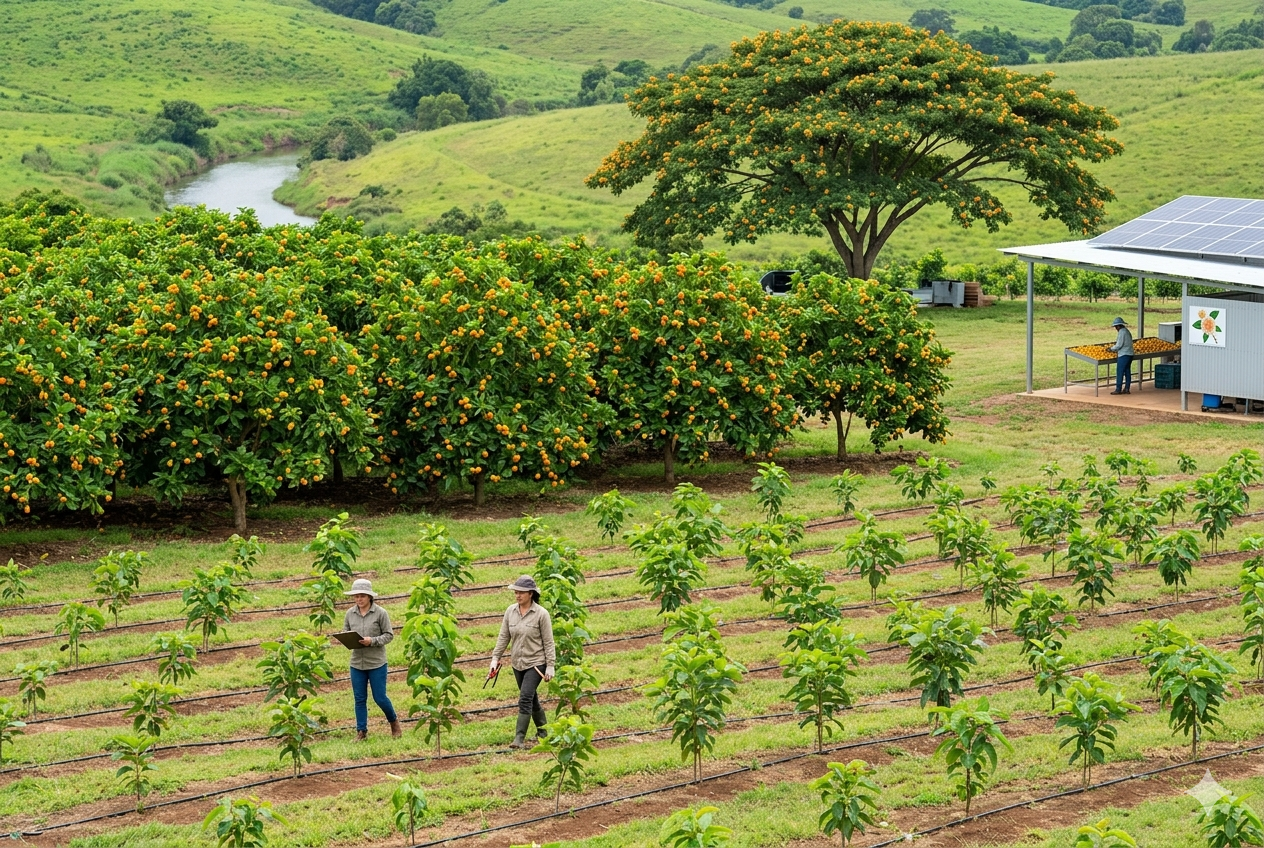
Kadamba (Neolamarckia cadamba) — Kadamba / Kadamb / Burflower Tree — is one of India's most beloved cultural trees, deeply woven into the mythology and poetry of Lord Krishna. The Kadamba is the tree under which Krishna played his flute, sheltered during rains, and famously stole the clothes of the gopis in the Bhagavatam stories — every major Krishna temple in Vrindavan and Mathura has Kadamba trees. The tree produces extraordinary spherical golden-orange flowers (actually composite flower heads of hundreds of tiny flowers) with an intensely sweet fragrance that carries hundreds of metres. These flowers bloom precisely during the monsoon (July-September), which is also Krishna's birth month (Bhadrapada) — the Kadamba in full monsoon bloom is one of India's most evocative natural phenomena. Beyond cultural significance, Kadamba is one of India's fastest-growing trees and a major commercial timber species in South India, also used widely in agroforestry and pulpwood production.

Kadamba (Neolamarckia cadamba) — कदम्ब — India के सबसे प्रिय सांस्कृतिक पेड़ों में से एक, भगवान Krishna की mythology और कविता में गहराई से बुना हुआ। कदम्ब वही पेड़ है जिसके नीचे Krishna ने बांसुरी बजाई, बारिश में आश्रय लिया। हर प्रमुख Krishna मंदिर में Kadamba पेड़ हैं। मानसून में (July-September) गोलाकार सुनहरे-नारंगी फूल खिलते हैं — सैकड़ों मीटर तक सुगंध। India के सबसे तेज़ बढ़ने वाले पेड़ों में से एक — commercial timber और agroforestry में major species।

🌿 Overview & Quick Facts / परिचय और मुख्य तथ्य

🔬 Scientific NameNeolamarckia cadamba (syn. Anthocephalus cadamba) — Family: Rubiaceae
📏 Height / ऊंचाई15–45 metres — large spreading tree / बड़ा फैलने वाला वृक्ष
Lifespan / आयु100–200 years. Fast establishment — commercially harvestable in 10–15 years.
📈 Growth Rate / वृद्धि दरVery fast — one of India's fastest. 5–8 feet/year when young / बहुत तेज़ — 5-8 फुट/वर्ष
🌸 Flowers / फूलSpherical golden-orange composite heads, July–September. Intensely fragrant! / गोलाकार सुनहरे-नारंगी, July-September। तीव्र सुगंध!
🌡️ Climate / जलवायुTropical humid — 20–40°C. Needs high rainfall 1500mm+. Pan-India below 1000m.
⚖️ Legal Status / कानूनीNot specially protected. Commercial cultivation allowed. Timber trade legal with transit permit. / विशेष रूप से संरक्षित नहीं। Commercial cultivation allowed।
💰 Timber Value / लकड़ी मूल्यRs.800–1,500/cubic foot — commercial timber. Pulpwood, plywood, furniture. / Rs.800-1,500/cubic foot — commercial timber

🌿 Parts & Their Uses — हर अंग का उपयोग

🟫
Bark / छाल
Bark decoction: anti-inflammatory, anti-pyretic (fever reducer). Traditional treatment for skin diseases, wounds. Contains cadambine alkaloid — antimicrobial activity in research. Bark powder: applied to skin infections in tribal medicine. MFP: Rs.10–18/kg dried bark.

छाल काढ़ा: anti-inflammatory, anti-pyretic (बुखार)। त्वचा रोग, घाव। Cadambine alkaloid — antimicrobial activity। छाल पाउडर: tribal medicine में त्वचा संक्रमण। MFP: Rs.10-18/kg।
🌸
Flowers / फूल (Most Famous Part)
Flowers: primarily cultural/religious use — Krishna worship, garlands, offerings. Flower juice: anti-emetic, digestive. Flowers edible — sweet, fragrant. Used in traditional perfumery — Kadamba attar (essential oil) is a classical Indian fragrance. Commercial attar: Rs.5,000–15,000/litre from Kannauj distillers.

फूल: मुख्यतः सांस्कृतिक/धार्मिक — Krishna पूजा, माला, भेंट। Flower juice: anti-emetic, digestive। फूल खाने योग्य — मीठे, सुगंधित। Kadamba attar (essential oil) — classical Indian fragrance। Commercial attar: Rs.5,000-15,000/litre।
🍃
Leaves / पत्ते
Large leaves: food plates in tribal areas. Leaf extract: anti-inflammatory, diuretic activity in research. Young leaves: fed to cattle — good fodder, high protein. Leaf paste: applied to forehead for headache in traditional medicine.

बड़े पत्ते: tribal क्षेत्रों में food plates। Leaf extract: anti-inflammatory, diuretic। युवा पत्ते: पशु चारा — high protein। पत्ते का paste: सिरदर्द में माथे पर।
🍎
Fruits / फल
Small fleshy aggregate fruits: edible — slightly sour-sweet. Consumed by birds, bats, small mammals. Fruit extract: anti-diarrheal activity. Fruit eaten by forest tribes. Important wildlife food source — supports fruit bats and hornbills.

छोटे fleshy aggregate fruits: खाने योग्य — थोड़े खट्टे-मीठे। पक्षी, चमगादड़, छोटे स्तनपायी खाते हैं। Anti-diarrheal activity। Forest tribes खाते हैं। Fruit bats और hornbills के लिए महत्वपूर्ण।
🌱
Roots / जड़ें
Root bark decoction: traditional treatment for excessive thirst and heat-related conditions. Root extract: anti-inflammatory, analgesic in research. Nitrogen-fixing root bacteria (Rhizobium) — improves soil fertility. Young root pieces: used in tribal Ayurveda for digestive disorders.

Root bark काढ़ा: अत्यधिक प्यास और गर्मी-संबंधी स्थितियों का पारंपरिक उपचार। Root extract: anti-inflammatory, analgesic। Nitrogen-fixing root bacteria — मिट्टी की उर्वरता सुधारता है। युवा root pieces: tribal Ayurveda में पाचन विकार।
🪵
Wood / लकड़ी (Commercial Value)
Light, soft, durable timber. Uses: plywood, matchsticks, paper pulp, packing cases, low-cost furniture. Commercial plantation timber: 10-15 year rotation crop. Yield: 50-70 cubic metres/hectare/year. Market: Rs.800-1,500/cubic foot. Major commercial species South India.

हल्की, नरम, durable timber। Uses: plywood, माचिस, paper pulp, packing cases, low-cost furniture। Commercial plantation: 10-15 साल rotation। Yield: 50-70 cubic metres/hectare/year। Market: Rs.800-1,500/cubic foot।

🌍 Cultural Significance & Agroforestry / सांस्कृतिक महत्व और कृषि वानिकी

⚡ Key Facts / मुख्य तथ्य
🎵 Krishna Connection / कृष्ण संबंध
Krishna's tree in Bhagavatam. Under Kadamba in Vrindavan — most sacred Krishna spots.
Bhagavatam में Krishna का पेड़। Vrindavan में Kadamba के नीचे — सबसे पवित्र Krishna स्थान।
🌧️ Monsoon Bloom / मानसून फूल
Flowers precisely in monsoon — July-September. Tied to Krishna's birth month Bhadrapada.
ठीक मानसून में फूल — July-September। Krishna के जन्म माह भाद्रपद से जुड़ा।
⚡ Fast Growth / तेज़ वृद्धि
5-8 ft/year. One of India's fastest growing trees. Commercial harvest in 10-15 years.
5-8 फुट/वर्ष। India के सबसे तेज़ बढ़ने वाले पेड़ों में। 10-15 साल में commercial harvest।
🌿 Agroforestry
Excellent boundary/shade tree for farms. Fast canopy, nitrogen improvement, fodder leaves.
Farm के लिए उत्तम boundary/shade tree। Fast canopy, nitrogen सुधार, fodder पत्ते।
🌸 Attar
Kadamba attar — classical Indian perfume from Kannauj. Rs.5,000-15,000/litre.
Kadamba attar — Kannauj से classical Indian perfume। Rs.5,000-15,000/litre।
🦇 Wildlife
Fruit bats, hornbills, 60+ bird species. Keystone tree for monsoon biodiversity.
Fruit bats, hornbills, 60+ bird species। मानसून biodiversity के लिए keystone tree।

🌱 Growing Guide / कदम्ब कैसे उगाएं

ParameterEnglishHindi / हिंदी
🌱 PropagationSeeds (very fine — mix with sand) OR stem cuttings June-July. Seeds germinate in 10-15 days.बीज (बहुत बारीक — sand के साथ मिलाएं) या June-July में stem cuttings। बीज 10-15 दिन में अंकुरित।
🪴 SoilDeep moist loamy soil. pH 6.0–7.5. Needs good moisture — does not tolerate drought well.गहरी नम loamy मिट्टी। pH 6.0-7.5। अच्छी नमी चाहिए — सूखा सहन नहीं।
📅 Best TimeMonsoon onset — June-July. Very fast establishment in high rainfall.मानसून शुरुआत — June-July। High rainfall में बहुत तेज़ establish।
📏 SpacingFarmland: 5×5m for timber plantation. Gardens: 10m from structures (roots moderately invasive).Farm: timber plantation के लिए 5×5m। Garden: संरचनाओं से 10m (जड़ें मध्यम रूप से invasive)।
💧 WaterNeeds regular moisture first 2 years. More water-demanding than Peepal or Banyan.पहले 2 साल नियमित नमी चाहिए। पीपल या बरगद से ज़्यादा पानी की ज़रूरत।
💰 Income potential10-15 year timber harvest: Rs.3-5 lakh/hectare. Plus annual flower harvest for attar industry.10-15 साल में timber harvest: Rs.3-5 lakh/hectare। Plus annual flower harvest attar industry के लिए।

💰 Market Value & Legal Status / बाज़ार मूल्य और कानूनी स्थिति

Product / उत्पादValue / मूल्यLegal / कानूनी
🪵 Timber / लकड़ीRs.800–1,500/cubic foot commercial / व्यावसायिकLegal with transit permit from Forest Dept / Forest Dept transit permit के साथ legal
🌸 Flowers (Attar) / फूलFresh flowers: Rs.20-40/kg. Attar: Rs.5,000-15,000/litre from KannaujFreely tradeable / स्वतंत्र रूप से
🟫 Bark / छालRs.10–18/kg dried MFP / सूखी MFPCollection from own cultivated trees OK / अपने cultivated पेड़ों से ठीक
🌱 Seeds/SeedlingsRs.5-10/seedling bulk nursery rateFreely tradeable / स्वतंत्र रूप से
❓ Frequently Asked Questions / अक्सर पूछे जाने वाले सवाल
The Kadamba-Krishna connection is one of India's deepest botanical-cultural relationships. In Bhagavata Purana (Bhagavatam), Srimad Bhagavatam, and hundreds of devotional poems by saints like Mirabai, Surdas, Jayadeva — Kadamba is inseparable from Krishna's Vrindavan. Key stories: (1) Kaliya Daman: when the serpent Kaliya poisoned the Yamuna, young Krishna climbed a Kadamba tree on the bank and leapt into the river — the famous Kaliya-mardan begins from under a Kadamba. (2) Vastra-harana (clothes stealing): in Bhagavatam, gopis bathing in Yamuna had their clothes stolen by Krishna who hid in a Kadamba tree — the tree as witness to divine play. (3) Raas Leela: Kadamba grove in Vrindavan is the setting for Krishna's celestial dance (Raas Leela) with the gopis. (4) Flute playing: Krishna's flute music under Kadamba in monsoon rain — one of Indian poetry and painting's most beloved images. Why Kadamba specifically: (1) Blooms in monsoon = Krishna's birth month. (2) Spherical golden flower = divine cosmic imagery. (3) Intense fragrance = Krishna's divine presence signal. (4) Near Yamuna riverbanks = Krishna's natural habitat. Vrindavan today: Nidhivan, Seva Kunj, and other sacred Kadamba groves are major pilgrimage sites — these are directly connected to Bhagavatam stories.

Kadamba-Krishna संबंध India के सबसे गहरे botanical-cultural relationships में से एक। Bhagavata Purana, Srimad Bhagavatam, Mirabai, Surdas, Jayadeva की रचनाओं में — Kadamba Vrindavan से अलग नहीं। मुख्य कहानियां: (1) Kaliya दमन: Krishna ने Yamuna किनारे के Kadamba पेड़ पर चढ़कर नदी में छलांग लगाई। (2) वस्त्र-हरण: Bhagavatam में गोपियों के कपड़े Krishna ने Kadamba पेड़ में छुपकर चुराए। (3) रास लीला: Kadamba grove में Krishna की celestial dance। (4) बांसुरी: मानसून में Kadamba के नीचे Krishna की बांसुरी — Indian poetry और painting का सबसे प्रिय image। क्यों Kadamba: (1) मानसून में फूल = Krishna का जन्म महीना। (2) गोलाकार सुनहरा फूल = दैवीय imagery। (3) Yamuna किनारे natural habitat।
Kadamba is one of India's best commercial agroforestry trees because of its extraordinary growth rate. Financial model (1 hectare, 10-year rotation): Investment: Seedlings (400 @ Rs.15): Rs.6,000. Land preparation + planting: Rs.10,000. Fertilizer + maintenance (10 years): Rs.40,000. Total investment: ~Rs.56,000/hectare. Yield at 10 years: 400 trees × 0.1-0.2 cubic metre each = 40-80 cubic metres. Market: Rs.800-1,200/cubic foot (1 cubic metre = 35.3 cubic feet). Revenue: 60 cubic metres × 35.3 × Rs.1,000 = Rs.21 lakh/hectare. Net: ~Rs.20 lakh/hectare in 10 years = Rs.2 lakh/hectare/year average. Compare: wheat gives Rs.35,000-50,000/hectare/year. Kadamba gives 4-6x more — with almost no annual inputs after Year 2. Additional income: Flower harvest during July-September for attar/fragrance industry. Fresh flowers: Rs.20-40/kg. 400 trees × 5kg flowers/tree/year = 2,000 kg × Rs.30 = Rs.60,000/year additional from Year 4 onward. Government support: State Forest Departments in Karnataka, Andhra Pradesh, Odisha, West Bengal promote Kadamba plantation through subsidized seedlings. NABARD agroforestry loans available.

Kadamba India के best commercial agroforestry trees में — extraordinary growth rate। Financial model (1 hectare, 10-year rotation): Investment: Rs.56,000/hectare (seedlings + maintenance)। Revenue: 60 cubic metres × 35.3 cubic feet × Rs.1,000 = Rs.21 lakh/hectare। Net: ~Rs.20 lakh/10 साल = Rs.2 lakh/hectare/year। Compare: गेहूं = Rs.35,000-50,000/hectare/year। Kadamba = 4-6x ज़्यादा। Plus: Flower harvest July-September — Rs.60,000/year से Year 4। State Forest Departments: Karnataka, AP, Odisha, WB — subsidized seedlings। NABARD agroforestry loans available।
Kadamba attar is a classical Indian fragrance obtained by steam distillation of Kadamba flowers (Neolamarckia cadamba) into sandalwood base oil — this is the traditional Kannauj method. Fragrance profile: Sweet, floral, slightly musky, with a distinctive monsoon-petrichor character — many describe it as "the smell of rain on earth mixed with flowers." It is deeply evocative of Vrindavan and Krishna in Indian tradition. Production: Kannauj, Uttar Pradesh — India's perfume capital. The distillation process (deg-bhapka method): flowers packed in a copper still (deg), steam passed through, condensate collected in a receiver with sandalwood oil base. Traditional process, unchanged for 500+ years. Price: Genuine Kadamba attar: Rs.5,000-15,000/litre. Small 5ml vials: Rs.200-500. Synthetic Kadamba fragrance: much cheaper (Rs.100-300/100ml) but completely different character. Where to buy genuine: Kannauj directly (many distillers), reliable perfumers in Delhi, Mumbai, Lucknow. Online: beware fakes — buy from established vendors with lab testing certification. Uses: religious — puja, Krishna worship. Personal fragrance — applying behind ears, on wrists. Aromatherapy — stress reduction. The authentic Kadamba attar is one of India's heritage fragrances — increasingly rare and valuable as traditional Kannauj production declines.

Kadamba attar = Kadamba के फूलों की steam distillation से classical Indian fragrance — Kannauj method। Fragrance: मीठा, floral, slightly musky, monsoon-petrichor character — "बारिश की महक फूलों के साथ।" Vrindavan और Krishna की याद दिलाता है। Production: Kannauj, UP — India का perfume capital। Deg-bhapka method: 500+ साल पुरानी, अपरिवर्तित। Price: असली: Rs.5,000-15,000/litre। 5ml vial: Rs.200-500। कहां खरीदें: Kannauj directly, Delhi/Mumbai/Lucknow के established perfumers। Online: fakes से सावधान।
Kadamba flowering: July to September — precisely monsoon season. This is one of India's most dramatic flowering events. The flower structure is botanically unusual: what looks like one round golden ball is actually a composite flower head (similar to sunflower but spherical) — hundreds of individual tiny tubular flowers packed into a 3-5cm diameter sphere on a long stalk. Color progression: starts pale yellow-cream, intensifies to bright orange-gold at peak, then fades. The spheres dangle attractively. Fragrance: sweet, floral, most intense in morning and evening. Carries 100-200 metres in still air. Flower development: flower buds visible 3-4 weeks before opening. The tree flowers heavily for 6-8 weeks, then a small second flush in October. Fruiting: small aggregate fruits develop September-November — important monsoon wildlife food. Best viewing: Vrindavan (UP), Western Ghats forest roads, temple gardens across Kerala and Tamil Nadu. Identifying Kadamba by flowers: impossible to confuse — no other common Indian tree has orange spherical composite flower heads on long stalks. Identifying without flowers: leaves are simple, large (15-30cm), opposite, with prominent stipules at base of each leaf pair — characteristic of Rubiaceae family.

Kadamba flowering: July से September — ठीक मानसून season। India के सबसे dramatic flowering events में। Flower structure: जो एक गोल सुनहरी गेंद दिखती है वह composite flower head है — 3-5cm diameter sphere में सैकड़ों छोटे tubular flowers। Color: pale yellow-cream से bright orange-gold तक। Fragrance: मीठी, floral, सुबह और शाम सबसे तीव्र। 100-200 मीटर तक। फूल 6-8 weeks, फिर October में second flush। Best viewing: Vrindavan (UP), Western Ghats roads, Kerala और Tamil Nadu के मंदिर बगीचे। पहचान: कोई अन्य common Indian पेड़ में orange spherical composite flower heads नहीं।
Kadamba agroforestry — practical guide: Site selection: Any area with rainfall 1,500mm+ annually. Deep alluvial or loamy soil. Avoid waterlogged areas and very shallow soils. Not suitable for arid regions (Rajasthan, Gujarat plains). Seed collection: Collect ripe aggregate fruits September-October. Crush to release seeds. Very fine seeds — mix with sand for sowing. Sow in nursery beds with moist coco peat + loam. Germination in 10-15 days at 25-30°C. Nursery: Maintain 6-9 months in polybags. Transplant when 45-60cm height. Plantation: Monsoon planting June-July. Spacing depends on purpose: (1) Timber only: 3×3m (1,111 trees/hectare). (2) Timber + intercrop: 8×4m (312 trees/hectare) with crops in between. (3) Farm boundary: single rows 5m apart. Intercropping: Years 1-5 (before canopy closes): turmeric, ginger, shade-tolerant vegetables excellent between Kadamba rows. Annual income from intercrop while timber matures. Maintenance: First 2 years — weeding critical. Kadamba grows so fast that after Year 2 it shades out most weeds. Pruning: remove lower branches up to 6m for better timber form. Harvest: 10-year rotation for pulpwood/plywood (smaller diameter). 15-20 year rotation for furniture-grade timber (larger, more valuable). Government schemes: MNREGS plantations, State agroforestry missions often include Kadamba. NABARD provides subsidized loans for agroforestry including Kadamba.

Kadamba agroforestry — practical guide: Site: 1,500mm+ rainfall। Deep loamy मिट्टी। Waterlogged से बचें। Arid regions (Rajasthan, Gujarat plains) के लिए suitable नहीं। Seed: September-October पके fruits collect करें। बहुत बारीक बीज — sand के साथ mix। Nursery 6-9 months। Plantation: June-July। Spacing: Timber only: 3×3m। Timber + intercrop: 8×4m। Intercropping Years 1-5: हल्दी, अदरक, shade-tolerant सब्जियां। Maintenance: पहले 2 साल weeding critical। Year 2 बाद fast growth से खुद weeds shade। Harvest: 10 साल pulpwood/plywood। 15-20 साल furniture-grade। NABARD agroforestry loans available।
⚠️
AI-Assisted Content — Please Read
AI-सहायता से बनाई गई सामग्री — कृपया पढ़ें

All tools, plant encyclopedias, edible growing guides and blog content on PlantCare are created with the assistance of AI (Artificial Intelligence) and are intended for general informational and educational purposes only. While we strive for accuracy, the information provided may not be complete, current or suitable for every situation, region or individual plant variety.

For health, medical or serious agricultural decisions — always consult a qualified horticulturist, agronomist, Ayurvedic practitioner, medical professional or relevant expert. PlantCare does not take responsibility for outcomes arising from use of this information. Identification results from AI tools (plant identifier, pest identifier etc.) should be verified before taking any action.

इस वेबसाइट पर सभी tools, plant encyclopedias, edible guides और blog content AI (Artificial Intelligence) की सहायता से बनाए गए हैं और केवल सामान्य जानकारी और शिक्षा के उद्देश्य से हैं। स्वास्थ्य, चिकित्सा या गंभीर कृषि निर्णयों के लिए कृपया किसी योग्य विशेषज्ञ से संपर्क करें। PlantCare इस जानकारी के उपयोग से होने वाले परिणामों के लिए जिम्मेदार नहीं है।