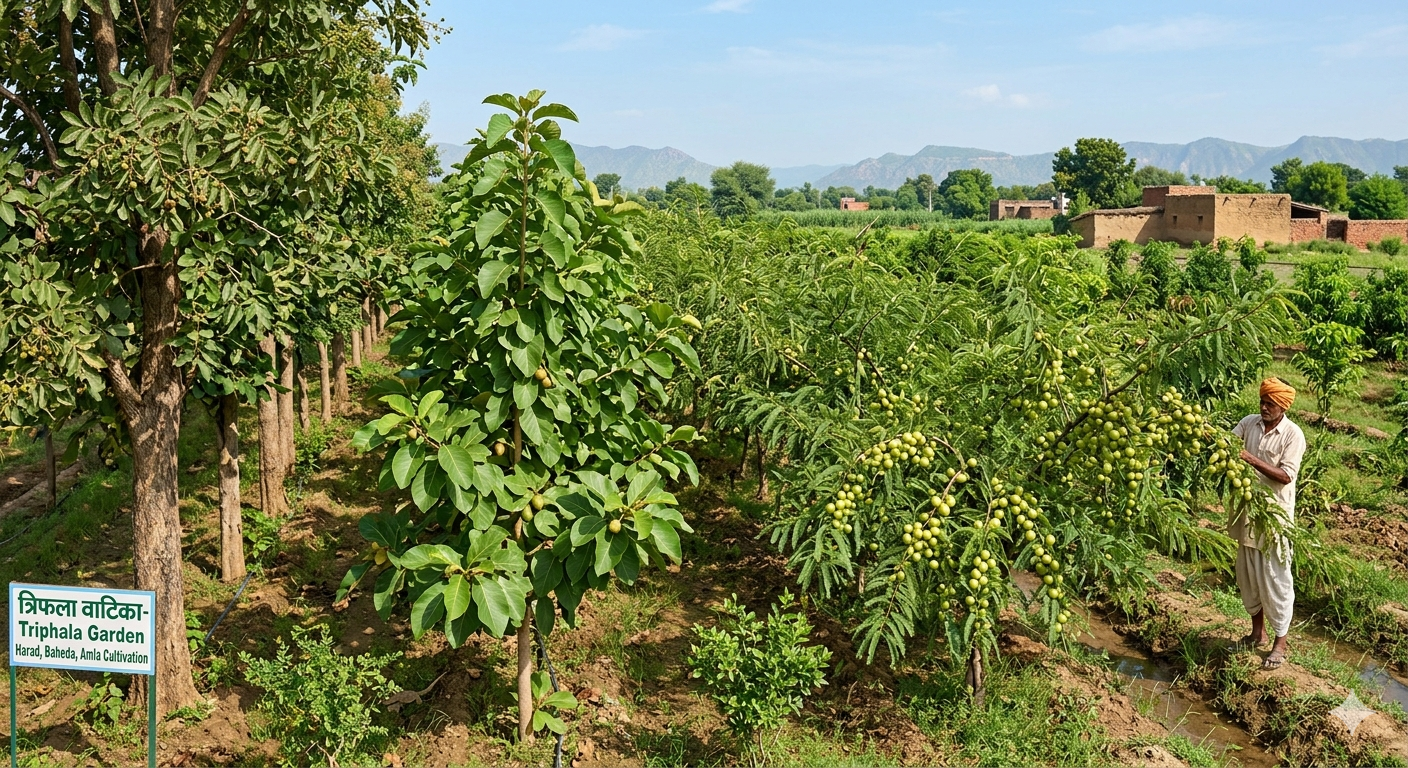
Grow triphala plants — amla in container, harad/baheda sourcing, homemade triphala powder with equal ratio grinding and 5-taste quality test.
Triphala plants — amla container में, harad/baheda sourcing, homemade triphala powder और 5-taste quality test।
Triphala — meaning "three fruits" in Sanskrit — is Ayurveda's most versatile and universally recommended formulation, made from equal parts of three dried fruits: Harad (Terminalia chebula), Baheda (Terminalia bellirica) and Amla (Phyllanthus emblica / Indian Gooseberry). Used for 2,000+ years as a digestive tonic, detoxifier, eye health supplement, anti-inflammatory and gentle laxative, Triphala is the first supplement recommended by virtually every Ayurvedic practitioner. Growing all three plants at home — even on a terrace or in a large balcony — gives you a completely self-sufficient supply of India's most important Ayurvedic formulation.
Triphala — "तीन फल" — Ayurveda का most versatile formulation है। Harad + Baheda + Amla। Digestive tonic, detoxifier, eye health, anti-inflammatory। तीनों plants घर पर grow करके self-sufficient Triphala supply।
🌿 What is Triphala — The Three Plants
Triphala — तीन Plants
| Plant | Sanskrit Name | Primary Property | Tree Size |
|---|---|---|---|
| 🌳 Harad (Terminalia chebula) | Haritaki — "King of medicines" | Digestive, nerve tonic, rejuvenating, mild laxative | Large tree 15–30m. Pot-possible as dwarf. |
| 🌳 Baheda (Terminalia bellirica) | Bibhitaki — "Fearless of disease" | Respiratory health, eye health, anti-inflammatory, detoxifying | Large tree 20–30m. Pot-possible young. |
| 🌳 Amla (Phyllanthus emblica) | Amalaki — "Sustainer" | Highest natural Vitamin C, immunity, liver, hair, eye, anti-aging | Medium tree 8–18m. Best for home growing. |
💊 Health Benefits of Triphala
| System | Benefit | Usage |
|---|---|---|
| 🫃 Digestive | Improves gut motility, treats constipation, bloating, IBS; cleanses colon | 1 tsp powder in warm water at bedtime |
| 👁️ Eye Health | Triphala eye wash reduces redness, improves vision, prevents cataracts in traditional use | Dilute Triphala water as eye wash |
| 🛡️ Immunity | Amla's Vitamin C (20x more than orange) + antioxidant polyphenols from all three | Morning Triphala water on empty stomach |
| 🩸 Blood Sugar | Haritaki and Amla both lower blood glucose; Triphala improves insulin sensitivity | Triphala water before meals |
| ⚖️ Weight Management | Improves metabolism, reduces fat absorption, gentle laxative effect | Triphala water at night |
| 💇 Hair & Skin | Amla's Vitamin C and antioxidants strengthen hair, improve skin texture | Triphala hair mask, internal use |
🌳 Harad (Terminalia chebula) — Growing at Home
Harad — Growing at Home
- Large tree — best in ground: Harad is a large deciduous tree reaching 15–30m in natural conditions. In garden ground planting it's an excellent shade tree that fruits in 5–8 years. In a large 100L container, growth is restricted to 2–3m — possible but slow fruiting.
- Propagation: From seeds (slow — 6–8 weeks germination) or nursery grafted saplings. Available at forest department nurseries and Ayurvedic plant nurseries. Soak seeds 24 hours before sowing. Direct sow in ground or 30L nursery container.
- Care: Full sun, well-drained soil, drought tolerant once established. Minimal fertilizer needed. Drops leaves in winter (deciduous) — normal. Small greenish-yellow flowers in March–May, fruits (olive-shaped, 5-ribbed) ripen October–January.
- Harvest: Collect fully ripe dark brown-black fruits fallen from tree. Dry in shade 2–3 weeks. Dried Harad stores for 1–2 years.
🌳 Baheda (Terminalia bellirica) — Growing at Home
Baheda — Growing at Home
- Large tree — ground or large container: Baheda reaches 20–30m in forests. In home gardens — plant in ground for a long-term productive tree (8–12 years to fruit) or maintain as a container specimen in 100L container for ornamental and limited medicinal use.
- Propagation: Seeds available at forest nurseries. Soak 48 hours, sow in nursery bags. Saplings available at specialty Ayurvedic plant nurseries. Slower germinating than Amla — 3–5 weeks.
- Care: Full sun, deep well-drained soil, tolerates drought and poor soil. Fruits: round, yellow-grey, 5-angled, 2–3 cm. Ripen December–February. Collect fallen fruits, dry completely in shade.
🌳 Amla (Indian Gooseberry) — Best for Home Growing
Amla — Home Growing के लिए Best
- Most suitable for home gardens: Amla tree is the most manageable of the three — medium-sized (8–18m ground, 2–3m container), produces fruit in just 3–5 years from grafted sapling and is highly productive once fruiting. The most important Triphala component to grow at home.
- Container growing: 50–100L fabric grow bag or large terracotta pot. Grafted Amla saplings (Chakaiya or Francis variety) available at nurseries for Rs.150–400. Fruit in 3rd year from grafted sapling. Annual yield: 20–100 fruits per container-grown tree.
- Care: Full sun (6+ hours), well-drained soil, drought tolerant. Annual pruning after fruiting. Feed with NPK 20:20:20 monthly February–October. Iron deficiency (yellow leaves with green veins) is common — ferrous sulphate 2g/L foliar spray.
- Harvest & use: Fruits ripen November–January. Hard, pale green, translucent. High Vitamin C — sour and astringent. Eat fresh, make murabba, juice, candy (amla candy — children love it), dry and powder for Triphala.
🔧 Making Triphala at Home
घर पर Triphala बनाना
🍵 How to Use Triphala
| Preparation | Method | Best For |
|---|---|---|
| 💧 Triphala water | Soak 1 tsp powder in 1 glass water overnight. Drink strained water morning on empty stomach. | Gentlest form — daily tonic, digestion, immunity |
| 🍵 Triphala decoction | Boil 1 tsp in 2 cups water, reduce to 1 cup, strain | Constipation, stronger detox effect |
| 👁️ Eye wash | Very dilute Triphala water (1/4 tsp in 1 cup boiled cooled water) — filtered twice | Eye redness, tiredness — NOT for contact lens wearers |
| 💆 Hair mask | Mix Triphala powder with coconut oil into paste — apply 1 hour before wash | Hair growth, scalp health, dandruff |