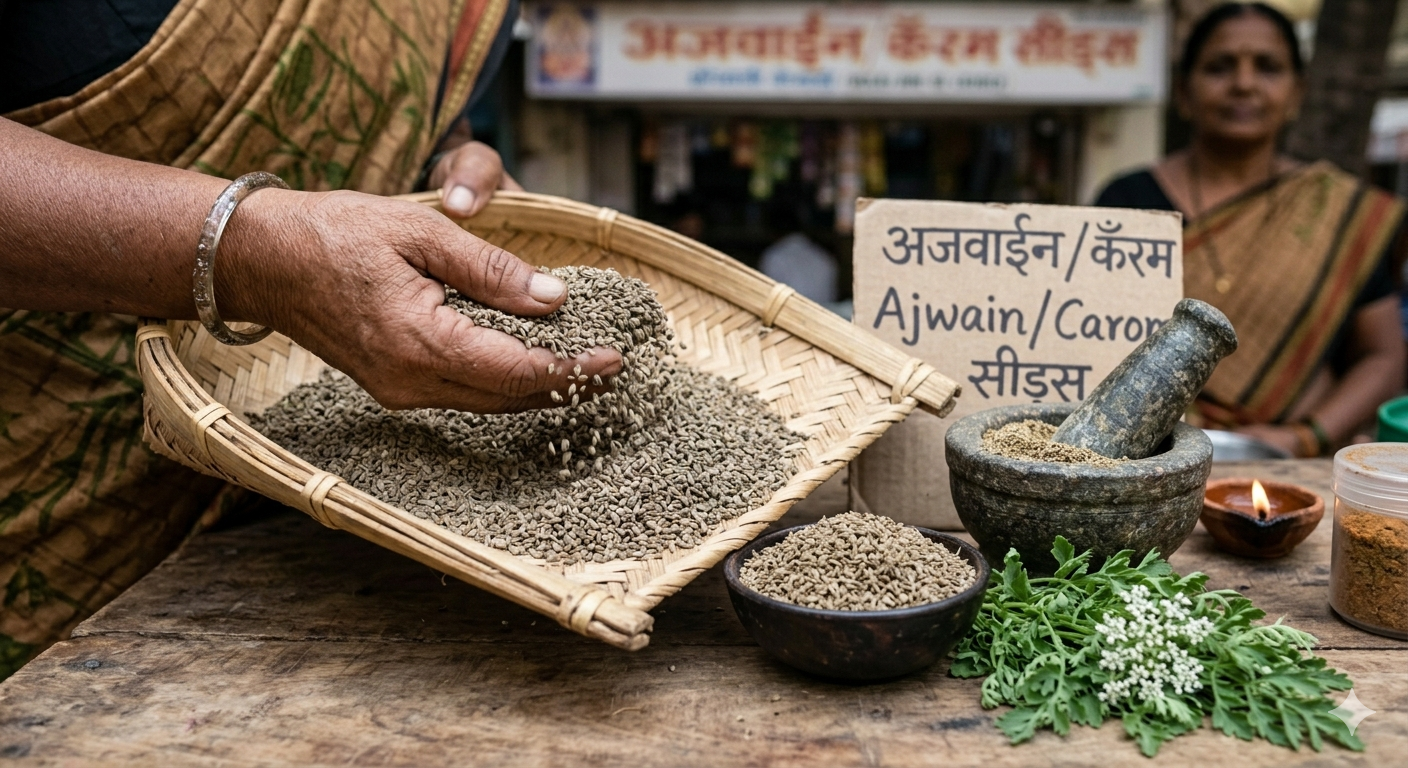
Ajwain Carom Seeds Growing India — Thymol Digestive Herb Encyclopedia
🌿 Herbs & Medicinal

Ajwain / Carom Seeds अजवायन

Trachyspermum ammi (syn. Carum copticum)
🌱 Sept-Oct DIRECT SOW only (taproot) | Market ajwain seeds = planting seeds! ⏱️ Leaves: 4-6 weeks | Seeds: 3-4 months | Dry conditions = more thymol in seeds 🌿 Easy Grow ⚠️ Mild Caution
Photo: PlantCare
Ajwain Carom 30-35% Thymol Market Seeds Free Leaves Vegetable Infant Colic Ark Pregnancy Caution

Ajwain — 30-35% thymol (same as Listerine, MORE concentrated!). Market ajwain = free planting seeds! Leaves edible as vegetable (Rajasthan). Direct sow only. Pregnancy large doses: caution.

Ajwain — 30-35% thymol (Listerine जैसा, MORE concentrated!)। Market ajwain = free planting seeds! Leaves edible vegetable (Rajasthan)। Direct sow only। Pregnancy large doses: caution।

⚡ Quick Reference / एक नज़र में
🌱 Sowing Season
Sept-Oct DIRECT SOW only (taproot) | Market ajwain seeds = planting seeds!
⏱️ Harvest Time
Leaves: 4-6 weeks | Seeds: 3-4 months | Dry conditions = more thymol in seeds
🍽️ Edible Parts
Leaves (fresh vegetable — underused!) + seeds (30-35% thymol!)
☀️ Light
Full sun — 6+ hours
💧 Water
Every 4-5 days — reduce at seed stage
🌡️ Temperature
15-25°C — cool season (Oct-Feb India)
💊
Key Nutrition / पोषण
Thymol 30-35% oil (highest common spice!), Calcium 1525mg/100g, Iron 13.6mg
🍳
Indian Kitchen Uses / भारतीय रसोई
Ajwain paratha, tadka, ajwain water (pet dard instant!), leaves sabzi, infant colic (ark)

Ajwain (Trachyspermum ammi) — Carom Seeds / Bishop's Weed — is India's most therapeutically important cooking spice and one of Ayurveda's primary digestive medicines. Known as "Ajmoda" in Sanskrit and grown extensively in Rajasthan, Gujarat, Madhya Pradesh and Bihar, ajwain is unique among Indian spices: it has an intensely powerful flavor (a small pinch significantly flavors an entire dish) and contains thymol — the same compound responsible for Listerine's antimicrobial power — at concentrations of 30-35% in the seed oil. Every Indian mother knows: ajwain for stomach ache, ajwain for gas, ajwain for indigestion, ajwain for chest congestion — this is not folklore, it is empirically validated pharmacology confirmed by modern research. For home gardeners, ajwain is rewarding and uniquely Indian: an annual herb that provides both fresh leaves (used as a vegetable in Rajasthan) and dried seeds (the actual spice) from the same plant, in one cool-season growing cycle.

Ajwain (Trachyspermum ammi) — India का most therapeutically important cooking spice। Ayurveda का primary digestive medicine। Thymol 30-35% — Listerine का active ingredient same! Rajasthan, Gujarat, MP, Bihar में extensively grown। Stomach ache, gas, indigestion, chest congestion — सब के लिए — folklore नहीं, validated pharmacology! Home garden: fresh leaves (sabzi) AND dried seeds (spice) — same plant।

🌿 Overview, History & Varieties

🔬 Scientific NameTrachyspermum ammi (syn. Carum copticum)
🌍 OriginIndian subcontinent — native. Ancient Ayurvedic texts. India world's primary producer.
🧴 Thymol Content30-35% of seed essential oil — same compound as Listerine, more concentrated
🌡️ Temperature15-25°C — cool season. October-February India.
⏱️ HarvestLeaves: 4-6 weeks | Seeds: 3-4 months
🌿 Dual UseLeaves (fresh vegetable) + seeds (spice) — both from same plant
Use FormPartWhen Available
🌿 Fresh LeavesYoung tender leaves — Rajasthani vegetable6-10 weeks after sowing
🌾 Dried SeedsPrimary spice use — the ajwain in your kitchen3-4 months — after plant flowers and seeds mature
🌿 Seed Essential OilSteam distilled — pharmaceutical, food gradeCommercial — from mature seeds

💊 Nutrition & Health — Ajwain ke Fayde

CompoundAmountHealth Benefit
🌿 Thymol30-35% of oil — highest any common spiceAntimicrobial (bacteria, fungi), antispasmodic, digestive enzyme stimulant
🌿 γ-Terpinene30-35% of oilAntioxidant, synergizes with thymol
💆 Niacin (B3)16 mg per 100g seedsBrain health, cholesterol management
⚙️ Iron13.6 mg per 100g seedsAnemia — significant mineral content
🦴 Calcium1525 mg per 100g seedsBone density — extraordinarily high calcium in seeds
🌾 Fiber11.9g per 100g seedsGut health, cholesterol, blood sugar
  • Digestive system — the most validated benefit: Ajwain works on the digestive system through multiple simultaneous mechanisms: (1) Thymol stimulates gastric acid and digestive enzyme secretion — improving protein and fat digestion. (2) Thymol's antispasmodic action relaxes intestinal smooth muscle — relieves cramping and colic. (3) Carminative effect — prevents and relieves gas formation. (4) Antimicrobial against gut pathogens — reduces dysbiosis. The traditional Indian prescription of ajwain with warm water for stomach problems is one of the most mechanistically complete natural digestive remedies in existence — addressing simultaneously insufficiency, spasm, gas and infection.
  • Ajwain water for babies — traditional and effective: Boiling ajwain seeds in water and giving the strained, cooled water to infants for colic and digestive discomfort — traditional across North India and Rajasthan. The dilute thymol in the water provides gentle antispasmodic and carminative effect. This "ajwain ark" (ajwain distillate) is India's original OTC infant digestive remedy, predating commercial gripe waters by centuries. For adults: ajwain water (1 tsp seeds in 200ml warm water) after meals is one of the most effective natural post-meal digestive aids.

🌱 Growing Guide — Cool Season Spice Herb

🌱
Direct Sow — September-October
Ajwain is direct-sown (doesn't like transplanting — taproot). Scatter seeds in prepared container or bed, 1 cm deep. Thin to 20 cm spacing. Germination: 7-10 days at 18-22°C. October sowing ideal for North India: leaf harvest December-January, seed harvest February-March. South India: October-January sowing. Seeds available from any spice shop — fresh cooking ajwain works for planting. Verify freshness: fresh seeds germinate well, old don't.
🏠
Container Growing
Deep 15-inch container (long taproot). Rich moist well-draining mix. Full sun. Water every 4-5 days. Ajwain grows to 60-90 cm — tall plant. One container: 3-4 plants, provides generous leaf harvest and good seed yield. Rajasthan tradition: ajwain as edible garden plant grown alongside coriander and dill in winter kitchen garden. All three share same season, same care, same harvest methods.
🌿
Leaf vs Seed Strategy
Two approaches: (1) Leaf production: harvest leaves regularly (outer stems), delay flowering by removing flower buds — extends leaf harvest window. (2) Seed production: allow full growth without heavy leaf harvesting — plant puts energy into seed development. Practical hybrid: harvest leaves first 6-8 weeks, then allow plant to flower and seed March-April, collect seeds. Same plant provides both in sequence.
🌾
Seed Harvest
When seeds mature (late February-March in North India): seed heads turn brownish, seeds develop characteristic ajwain smell when rubbed. Cut entire seed-bearing umbels, place in paper bag. Sun-dry 3-5 days. Rub to release seeds, winnow lightly. Store in airtight jar — 1-2 years excellent quality. Home-grown fresh ajwain seeds: far more aromatic than market seeds (which may be months or years old). The difference in flavor intensity is remarkable.

💧 Growing & Care

⚡ Quick Care Reference
☀️ Light
Full sun — 6+ hours
Essential for thymol production
💧 Water
Every 4-5 days
Consistent — like coriander
🌡️ Temperature
15-25°C — cool season
October-February India window
🪴 Soil
Rich well-draining — deep
Deep for taproot development
🧪 Fertilizer
Monthly dilute — moderate
Compost top-dress monthly
🌾 Seeds
Reduce water at seed maturity
Dry conditions concentrate thymol
  • Aphid management: Like all Apiaceae family herbs (dill, coriander, parsley), ajwain attracts aphids on young tender growth. Neem oil spray weekly preventively. Strong water spray removes aphid colonies. Companion planting with marigold nearby deters aphids. Act early — aphids on ajwain multiply very quickly in cool weather.
  • Reducing water at seed stage: When flowers appear and seeds begin forming: reduce irrigation (every 7-10 days). Slightly dry conditions concentrate thymol in developing seeds — more aromatic end product. Commercial ajwain is grown in semi-arid Rajasthan partly for this reason — natural dry conditions improve oil content.

🌾 Harvest, Storage & Medicinal Uses

  • Leaves fresh, seeds dried: Leaves: harvest outer stems, use fresh or refrigerate 1 week. Seeds: harvest brown umbels, sun-dry, store airtight 1-2 years. Fresh ajwain seeds (just harvested): intensely aromatic vs 6-month-old market seeds. Dry-roasting seeds before use (2-3 minutes in pan): dramatically enhances aroma and flavor — traditional Indian kitchen practice for good reason.
UseMethodNote
🫓 Ajwain ParathaSeeds kneaded into wheat dough — digestive, flavorful flatbreadMost popular ajwain cooking use India
🫕 Tadka/TemperingSeeds in hot oil at start of dal, sabzi — releases thymol into oilNorth India daily cooking base
💊 Ajwain + Salt Water1 tsp seeds + pinch salt in warm water — instant stomach remedyIndia's most universal digestive home remedy
🤧 Chest CongestionAjwain seeds in small cloth bundle, heat and inhale steam — OR ajwain kadhaTraditional decongestant — thymol steam
🌿 Ajwain Leaves SabziFresh tender leaves with tadka + onion — Rajasthan winter vegetableUnderutilized unique fresh herb
❓ FAQ
Ajwain for stomach problems — proven Indian remedies: (1) Classic ajwain-salt water: 1 tsp ajwain seeds + large pinch black salt (kala namak) in 250ml warm water. Drink slowly — within 15-20 minutes digestive relief. Most effective for gas, bloating, indigestion. (2) Dry roast and eat: dry roast 1/2 tsp ajwain until slightly brown and aromatic. Chew slowly with warm water. (3) Ajwain-ginger-lemon: ajwain seeds + ginger piece + squeeze lemon in warm water — for nausea and digestive discomfort. (4) Oma podi (Andhra): deep-fried ajwain sticks — snack traditionally eaten for digestive health. (5) After-meal: chew 1/4 tsp raw ajwain seeds after heavy meal to prevent gas formation. (6) For infants: ajwain ark — 1/2 tsp seeds boiled in 150ml water, cool, strain. 1-2 tsp given to colicky babies. Note: ajwain's thymol acts in 10-20 minutes after ingestion — faster than most pharmaceutical antacids for gas relief. One of the few traditional remedies where mechanism is completely clear and onset is rapid enough to notice immediately.
Home ajwain growing: (1) September-October: buy fresh ajwain seeds from spice shop — Rs.10-20 for 50g (same seeds you cook with). (2) Direct sow in 15-inch deep pot with cocopeat + compost mix. (3) Scatter seeds, cover 1 cm, mist daily. (4) Germination: 7-10 days. (5) Thin to 20 cm spacing. (6) Full sun, water every 4-5 days. (7) Month 2-3: harvest outer leaves for cooking (ajwain leaf sabzi or fresh addition to dough). (8) Month 3-4: white umbrella flowers appear. Allow to set seeds. (9) Month 4-5: seeds mature, turn brownish, intensely fragrant when rubbed. Cut seed heads, sun-dry, store. (10) Fresh home-grown ajwain seeds: 3-4x more aromatic than market seeds — the quality difference is dramatic. Value calculation: 50g seeds (planting) → 200-500g fresh seeds (harvest) + months of fresh leaves. Investment: Rs.20 seeds + pot. Return: premium fresh spice + fresh vegetable from India's most medicinally important cooking spice.
Ajwain in pregnancy — important consideration: Cooking amounts (pinch in paratha dough, tadka): generally considered safe — traditional Indian cooking uses ajwain regularly in everyday food. Medicinal therapeutic doses (1 tsp ajwain water daily, herbal preparations): caution, especially first trimester. Thymol in higher concentrations has uterine-stimulating and emmenagogue properties — traditional use of ajwain for menstrual stimulation reflects this. Specifically: Ayurveda traditionally uses ajwain to stimulate menstruation and in postpartum preparations (to expel afterbirth, stimulate lactation). This same uterine-stimulating property creates caution during pregnancy. First trimester: avoid large therapeutic amounts. Second-third trimester: moderate culinary use generally considered safe based on centuries of traditional practice. Postpartum: actively recommended — ajwain and gur (jaggery) preparations are traditional for new mothers in North India for uterine recovery, digestion and lactation. Practical guidance: normal cooking use throughout pregnancy = safe. Daily therapeutic consumption = consult doctor. The distinction is dose and frequency, as is the case with most potent herbs.
Direct comparison: Thymol content: Ajwain seed oil: 30-35% thymol. Thyme leaf oil: 20-54% thymol (varies by variety — some thyme varieties actually higher). On pure thymol basis: approximately similar or thyme slightly higher in high-thymol varieties. However: Ajwain seed: more concentrated per unit weight as a spice — you use 1/4 tsp ajwain seeds, not 1/4 tsp thyme leaves. Flavor intensity: ajwain is dramatically more pungent — a little goes a long way. Traditional use efficiency: ajwain is designed for Indian cooking doses (small amounts in large dishes). Thyme: milder herb used in larger quantities. Medicinal delivery: ajwain water or raw seed chewing — rapid thymol delivery. Thyme tea — slower, gentler delivery. Conclusion: both are valuable and work through same mechanism (thymol). Ajwain is the Indian spice already present in every Indian kitchen — more practical, cheaper, culturally integrated. Thyme is the continental herb for cooking applications where ajwain's intensity would be inappropriate. Growing both gives comprehensive thymol-based medicinal coverage in different delivery formats for different situations.
Ajwain fresh leaves — underutilized Rajasthan vegetable: Appearance: feathery, similar to carrot/coriander leaves but distinctly ajwain smell when crushed. Taste: milder than seeds but same character — earthy, thymol-forward, aromatic. Uses: (1) Ajwain patta ki sabzi: tadka (mustard seeds + hing) in oil, add chopped onion, then fresh ajwain leaves, cook 5-7 minutes. Simple, fragrant winter vegetable — Rajasthan traditional. (2) Dough addition: finely chopped fresh leaves in roti or paratha dough — more aromatic and gentler than seeds. (3) Raita: chopped fresh leaves in curd + jeera + salt — unique digestive raita. (4) Chutney: blend with coriander + green chilli + ginger + lemon — fresh herb chutney. (5) Pakoda batter: add chopped leaves to besan batter for ajwain pakode. (6) Egg dishes: fresh leaves in omelette or egg bhurji — continental touch with Indian spice character. Harvest: outer stems when plant is young and leafy (November-December). More leaves available before plant flowers. After flowering focus shifts to seed harvest.