Siris Shirish Tree Allergy Medicine Agroforestry India — PlantCare
📷 PlantCare
🕉️ Sacred & Medicinal Trees

Siris / Shirish / Woman's Tongue शिरीष / सिरस

Albizia lebbeck Family: Fabaceae (N-fixing legume)

Siris / Shirish — India's anti-allergy tree. Bark lebbeckaside = confirmed antihistaminic (urticaria, skin allergy). N-fixing: 50-80 kg free nitrogen/ha/year! 3-5 ft/year growth. Wheat intercrop: 15% yield boost documented.

📏 18–30 metres ⏳ 100–200+ years 📈 Very fast — 3–5 ft/year young 📍 Pan-India up to 1,000m — very drought tolerant ⚠️ Not protected. Commercial cultivation freely allowed. Timber: FD transit permit. 💰 Rs.600–1,000/cubic foot beautiful grain furniture
📤 WhatsApp
Siris Shirish Anti-Allergic Lebbeckaside Confirmed N-Fixing 50-80kg Free 3-5ft/year Fastest Large Wheat Intercrop 15% Boost Monsoon Honey Furniture Timber

शिरीष — India का anti-allergy tree। Bark lebbeckaside = confirmed antihistaminic (urticaria, skin allergy)। N-fixing: 50-80 kg free nitrogen/ha/year! 3-5 फुट/वर्ष growth। Wheat intercrop: 15% yield boost documented।

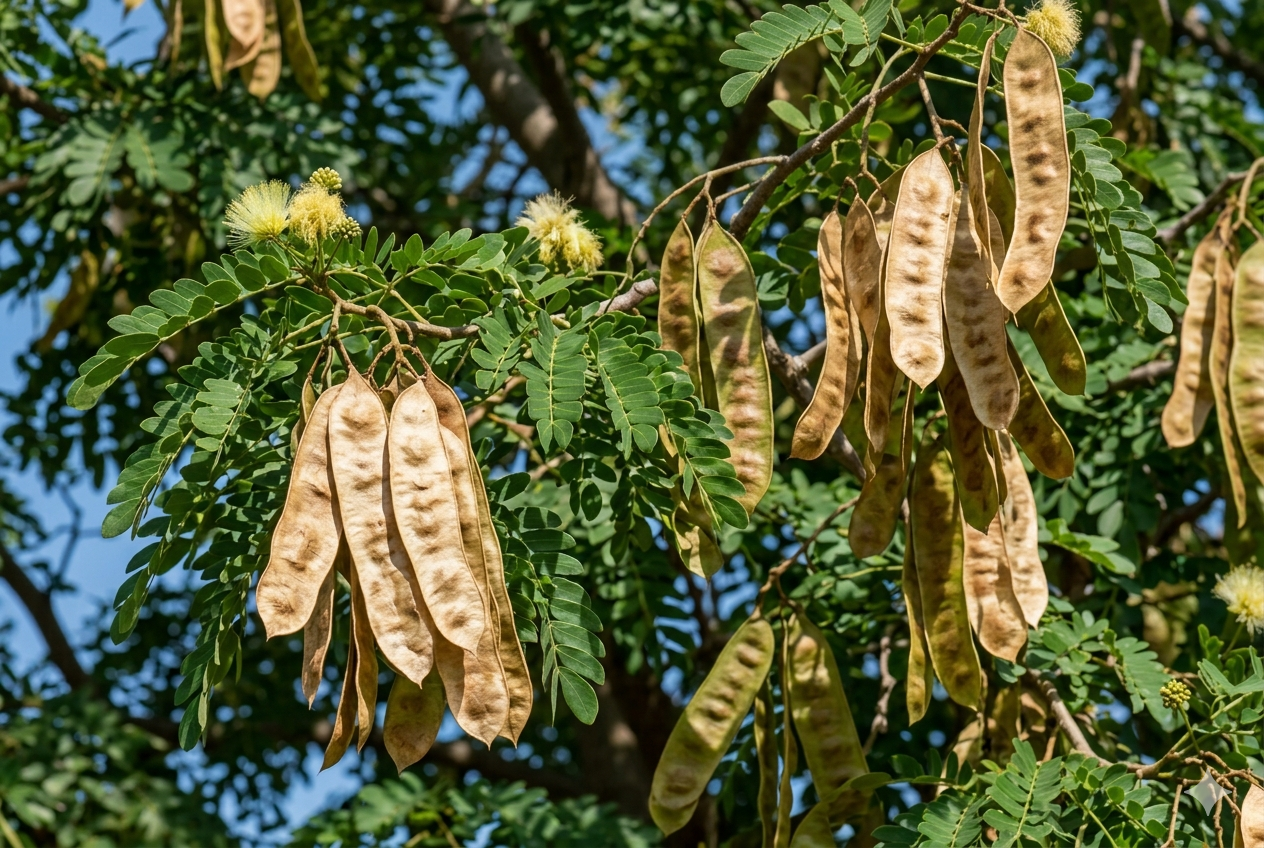
Siris (Albizia lebbeck) — Shirish / Woman's Tongue / Lebbeck / Rain Tree of India — is one of India's most widely planted avenue and shade trees and simultaneously one of Ayurveda's most important anti-allergic and anti-inflammatory medicinal trees. The tree produces characteristic flat seed pods that rattle in the wind when dry — creating a distinctive rattling sound that earned it the poetic name "Woman's Tongue" in colonial-era English (the sound suggesting continuous talking). Siris is considered one of the most beautiful avenue trees — its large spreading canopy, pinnate feathery leaves, and fragrant white-yellow flower puffs (July-August) make it exceptionally ornamental. In Ayurveda, Siris bark and seeds are among the most important anti-allergic medicines — particularly for skin allergies, respiratory allergies, and urticaria (hives). The bark contains saponins and alkaloids with confirmed antihistaminic properties — making it a natural antihistamine. Siris is also a nitrogen-fixing legume — it actively improves soil quality. Its remarkable drought tolerance, rapid growth (one of the fastest growing large trees in India) and multiple use value make it one of the most versatile plantation trees available to Indian farmers.

Siris (Albizia lebbeck) — शिरीष / Woman's Tongue — India के most widely planted avenue और shade trees में। साथ ही Ayurveda का सबसे महत्वपूर्ण anti-allergic medicinal tree। Dry pods की rattling wind में — "Woman's Tongue" नाम। Large spreading canopy, pinnate feathery leaves, fragrant white-yellow flower puffs (July-August)। Ayurveda में Siris bark + seeds: skin allergies, respiratory allergies, urticaria के लिए most important anti-allergic। Confirmed antihistaminic properties। N-fixing legume — soil improve। India के fastest growing large trees में।

🌳 Overview & Quick Facts / परिचय और मुख्य तथ्य

🔬 Scientific NameAlbizia lebbeck — Family: Fabaceae (Legume — N-fixing)
📏 Height / ऊंचाई18–30 metres | Wide spreading canopy — excellent shade / Wide spreading canopy — excellent shade
Lifespan / आयु100–200+ years / 100-200+ वर्ष
📈 Growth Rate / वृद्धि दरVery fast — 3–5 ft/year when young. One of India's fastest large trees / बहुत तेज़ — 3-5 फुट/वर्ष
🌸 Flowers / फूलJuly–September — fragrant white-yellow powder-puff clusters / July-September — fragrant white-yellow
🌡️ Climate / जलवायुTropical to subtropical. Pan-India. Very drought tolerant. Up to 1,000m.
⚖️ Legal Status / कानूनीNot specially protected. Commercial cultivation freely allowed. Timber: Forest Dept transit permit.
💰 Value / मूल्यBark: Rs.15–30/kg | Seeds: Rs.20–40/kg | Timber: Rs.600–1,000/cubic ft | N-fixing: soil value

🌿 Parts & Their Uses — हर अंग का उपयोग

🟫
Bark / छाल (Primary Medicinal)
THE most important medicinal part. Bark contains saponins (lebbeckaside), alkaloids — anti-allergic, antihistaminic, anti-inflammatory. Confirmed anti-allergic research. Traditional: bark decoction for skin allergies, urticaria, respiratory allergy. Also anti-microbial, wound healing. Market: Rs.15-30/kg dried.

Most important medicinal हिस्सा। Saponins (lebbeckaside), alkaloids — anti-allergic, antihistaminic, anti-inflammatory। Confirmed research। Bark decoction: skin allergies, urticaria, respiratory allergy। Anti-microbial, wound healing। Market: Rs.15-30/kg।
🌱
Seeds / बीज
Seeds in flat rattling pods — medicinally important. Seed extract: anti-allergic, anti-inflammatory, anti-ulcer research. Seeds used in Ayurvedic formulations for chronic skin disorders and respiratory allergies. Market: Rs.20-40/kg. Also used in animal feed — high protein. N-fixing bacteria in roots add 50-80 kg N/ha to soil.

Flat rattling pods में बीज। Seed extract: anti-allergic, anti-inflammatory, anti-ulcer research। Chronic skin disorders, respiratory allergies में Ayurvedic formulations। Market: Rs.20-40/kg। Animal feed — high protein। Root bacteria: 50-80 kg N/ha soil add।
🍃
Leaves / पत्ते
Pinnate leaves — excellent cattle and goat fodder (high protein 18-22%). Fallen leaves: excellent green manure. Leaf extract: anti-bacterial, mild anti-inflammatory. Young leaves: occasionally used as vegetable in tribal areas. Leaf litter: good mulch, improves soil organic matter rapidly.

Pinnate leaves — excellent cattle/goat fodder (high protein 18-22%)। Fallen leaves: excellent green manure। Leaf extract: anti-bacterial। Young leaves: tribal areas में vegetable। Leaf litter: mulch, soil organic matter rapidly improve।
🌸
Flowers / फूल
White-yellow fragrant powder-puff clusters (July-September) — excellent honey source. Bees heavily attracted. Flower extract: mild anti-oxidant. Flowers used in puja and decoration. Siris honey: distinctive floral flavor — premium variety. Important monsoon honey source when many trees have finished flowering.

White-yellow fragrant powder-puff clusters (July-Sept) — excellent honey source। Bees heavily attracted। Flower extract: mild anti-oxidant। Puja और decoration में। Siris honey: distinctive floral flavor — premium। Monsoon honey source।
🌳
Shade & Nitrogen / छाया और नाइट्रोजन
Ecological services: large spreading canopy = best shade tree. N-fixing legume — root bacteria fix 50-80 kg N/ha/year — equivalent to Rs.4,000-7,000 of urea fertilizer value. Ideal agroforestry tree — crops under Siris benefit from both shade (reduced water need) and nitrogen. Siris + wheat/bajra intercrop: documented yield improvement in dryland areas.

Ecological services: large canopy = best shade। N-fixing legume — 50-80 kg N/ha/year — Rs.4,000-7,000 urea equivalent। Ideal agroforestry: crops under Siris — shade (water need reduce) + nitrogen benefit। Siris + wheat/bajra intercrop: documented yield improvement dryland।
🪵
Wood / लकड़ी
Wood: hard, heavy, durable, beautiful grain. Uses: furniture, agricultural implements, carving, construction. Commercially valuable Rs.600-1,000/cubic foot. One of India's best furniture woods from fast-growing trees. Forest Dept transit permit required. Rapid growth makes commercial plantation attractive — 15-20 year harvest.

लकड़ी: hard, heavy, durable, beautiful grain। Furniture, कृषि औज़ार, carving, निर्माण। Commercial: Rs.600-1,000/cubic foot। India के best furniture woods fast-growing से। Forest Dept transit permit। 15-20 year commercial plantation attractive।

🌍 Allergy Medicine & Agroforestry / Allergy Medicine और कृषि वानिकी

⚡ Key Facts / मुख्य तथ्य
🤧 Anti-Allergic
Bark saponins = confirmed antihistaminic — anti-allergic, urticaria, respiratory allergy.
Bark saponins = confirmed antihistaminic — anti-allergic, urticaria, respiratory allergy।
⚡ Fast Growth
3-5 ft/year — one of India's fastest large trees. Commercial plantation in 15-20 years.
3-5 फुट/वर्ष — India के fastest large trees में। 15-20 साल में commercial plantation।
🌿 N-Fixing
50-80 kg N/ha/year — Rs.4,000-7,000 free fertilizer value annually.
50-80 kg N/ha/year — Rs.4,000-7,000 free fertilizer value annually।
🐄 Fodder
Leaves: 18-22% protein — excellent cattle and goat fodder. Fallen leaves green manure.
Leaves: 18-22% protein — excellent cattle/goat fodder। Fallen leaves green manure।
🛣️ Avenue Tree
India's most planted avenue tree historically. Wide canopy cools roads by 8-12°C.
Historically India का most planted avenue tree। Wide canopy roads 8-12°C cool।
🍯 Monsoon Honey
July-September flowers — bees heavily attracted. Distinctive Siris honey premium market.
July-September flowers — bees heavily attracted। Distinctive Siris honey premium।

🌱 Growing Guide / शिरीष कैसे उगाएं

ParameterEnglishHindi / हिंदी
🌱 PropagationSeeds from dry pods (easy, 90%+ success). Soak 12-24 hours. Germination 7-14 days. Very easy to grow.Dry pods से बीज (आसान, 90%+)। 12-24 hours soak। 7-14 दिन germination। बहुत आसान।
🪴 SoilAny well-draining soil — sandy to clay. pH 5.5–9.0. Very drought tolerant. Grows on marginal soils.कोई भी well-draining मिट्टी। pH 5.5-9.0। Very drought tolerant। Marginal soils पर।
📅 Best TimeMonsoon June-July. Very fast establishment — 3-5 ft in first year.Monsoon June-July। बहुत fast — पहले साल में 3-5 फुट।
📏 SpacingAvenue: 8-10m. Agroforestry: 10-15m (crops between). Farm boundary: 5m. Roots not highly invasive.Avenue: 8-10m। Agroforestry: 10-15m (crops बीच में)। Farm boundary: 5m। Roots highly invasive नहीं।
🌿 AgroforestryPlant in rows 10m apart, grow crops between rows. N-fixation + shade reduces crop water need. Intercrop UP wheat 15% yield boost documented.10m rows में plant, बीच में crops। N-fixation + shade से crop water need reduce। UP wheat intercrop 15% yield boost documented।
💰 IncomeTimber: 50 trees × 1 cubic metre (20 yr) × Rs.800 = Rs.40,000/tree timber. Plus annual fodder + honey + bark income.Timber: 50 trees × 1 cubic metre × Rs.800 = Rs.40,000/tree। Plus annual fodder + honey + bark।

💰 Market Value & Legal Status / बाज़ार मूल्य और कानूनी स्थिति

Product / उत्पादValue / मूल्यLegal / कानूनी
🟫 Bark / छालRs.15–30/kg dried Ayurvedic / AyurvedicOwn trees: freely. Forest trees: FRA 2006. / freely
🌱 Seeds / बीजRs.20–40/kg | Animal feed: Rs.10-15/kgFreely traded / freely
🍯 Honey / शहदSiris honey Rs.300–600/kg premium / premiumFreely tradeable / freely
🪵 Timber / लकड़ीRs.600–1,000/cubic footTransit permit Forest Dept / Forest Dept permit
❓ Frequently Asked Questions / अक्सर पूछे जाने वाले सवाल
Siris bark for allergy — Ayurvedic anti-allergic: Research basis: Siris bark contains lebbeckaside (a saponin glycoside) and other compounds that have been shown to inhibit mast cell degranulation — the process that releases histamine in allergic reactions. This is the same mechanism as pharmaceutical antihistamines (but milder and with more side effects profile — drowsiness common in pharmaceuticals, less so with Siris). Published research confirms anti-allergic and anti-anaphylactic activity in animal models. Conditions where traditional use is most supported: (1) Urticaria (hives/sheetpitta) — the primary indication in Ayurveda. (2) Allergic skin rashes, contact dermatitis. (3) Respiratory allergy — allergic rhinitis, mild asthmatic wheeze. (4) Food allergy skin reactions. Preparation: (1) Bark decoction: 10g dried Siris bark + 400ml water, boil to 200ml. Strain, cool. Drink 100ml twice daily. (2) Bark powder: 3-5g + honey, twice daily. (3) Shirisha Rishta: classical Ayurvedic fermented formulation — available at Ayurvedic pharmacies. (4) Combined with Haridra (turmeric): Siris bark decoction + 1 tsp turmeric — enhanced anti-inflammatory and anti-allergic effect. Timeframe: 2-4 weeks for chronic allergy conditions. Acute allergy: may not be fast enough — for severe acute allergy (anaphylaxis), always seek emergency medical care. Caution: pregnancy — consult Ayurvedic doctor. Drug interactions: may enhance antihistamine medications — monitor if on both. Siris is most effective as chronic allergy management, not acute emergency treatment.

Siris bark allergy — Ayurvedic: Research: lebbeckaside — mast cell degranulation inhibit (histamine release)। Pharmaceutical antihistamines जैसा mechanism but milder। Conditions: (1) Urticaria (sheetpitta) — primary Ayurvedic indication। (2) Allergic skin rashes। (3) Respiratory allergy। (4) Food allergy reactions। Preparation: (1) Bark decoction: 10g + 400ml → 200ml। 100ml twice daily। (2) Bark powder: 3-5g + honey। (3) Shirisha Rishta: classical formulation। (4) + Haridra: enhanced effect। Timeframe: 2-4 weeks chronic। Acute allergy: fast enough नहीं — severe acute (anaphylaxis): emergency medical। Caution: pregnancy — doctor। Antihistamine interaction — monitor।
Siris agroforestry — the multipurpose system: Why Siris is ideal for agroforestry: (1) Fast canopy: 3-5 ft/year — provides shade quickly. (2) N-fixation: 50-80 kg N/ha/year — reduces need for chemical fertilizer under Siris. (3) Deciduous: sheds leaves in winter (Jan-Feb) when Rabi crops need maximum sunlight — canopy opens exactly when crops need it most. This phenological synchrony with Indian crop seasons is remarkable. (4) Leaf litter: fallen Siris leaves decompose rapidly — high N content improves soil. (5) Cattle fodder: fresh/dried leaves high protein — additional livestock income. (6) Timber after 15-20 years: long-term wealth creation. (7) Non-competitive roots: root zone predominantly deep — less competition with surface-rooting crops. Documented intercrop systems in India: Siris + wheat (UP): 10m tree spacing, wheat between rows. Wheat yield under Siris: 15% higher than open field due to reduced water stress and N-fixation. Siris + sugarcane (UP/Bihar): shade reduces sugarcane water demand by 20%. Siris + soybean (MP): legume synergy — soybean + Siris N-fixation = significantly reduced fertilizer input. Siris + grass/fodder crops: livestock dual income. Income from Siris agroforestry (hectare, 100 trees at 10m spacing, crops between): Annual crop income: same as monoculture (with N-fixation bonus). Annual Siris income: bark Rs.5,000 + seeds Rs.3,000 + fodder Rs.8,000 + honey Rs.5,000 = Rs.21,000/ha/year additional. Year 20 timber: 100 trees × 0.5 cubic metre × Rs.800 = Rs.40,000/tree × 100 = Rs.40 lakh one-time. Total lifetime value: extraordinary compared to single-use annual crop systems.

Siris agroforestry — multipurpose system: Why ideal: (1) Fast canopy — shade quickly। (2) N-fixation: 50-80 kg N/ha/year। (3) Deciduous: winter में leaves shed — exactly जब Rabi crops को maximum sunlight चाहिए। Phenological synchrony remarkable। (4) Leaf litter: high N, rapidly decompose। (5) Cattle fodder: high protein। (6) Timber 15-20 years। (7) Non-competitive roots। Documented intercrop: Siris + wheat (UP): 15% higher yield due to water stress reduce + N-fixation। Siris + sugarcane: 20% water demand reduce। Siris + soybean (MP): fertilizer input significantly reduce। Annual Siris income per hectare: bark + seeds + fodder + honey = Rs.21,000/year additional। Year 20 timber: Rs.40 lakh। Extraordinary lifetime value।
Siris timber — quality and value: Wood characteristics: Siris (Albizia lebbeck) produces one of the most beautiful furniture-grade woods among fast-growing Indian trees. Heartwood: dark brown to reddish-brown with irregular dark streaks — very attractive grain. Durability: Class II-III — moderate to durable. Hardness: hard (Janka hardness ~800 lbf). Easy to work: good for turning, carving, hand tools. Finishes well: takes polish and varnish beautifully. Applications: premium furniture, decorative paneling, cabinets, carving, musical instruments, agricultural implements, ploughs, bullock cart parts. Traditional use: widely used in UP, MP, Bihar for furniture before teak became the dominant premium wood. Commercial value: local market: Rs.600-1,000/cubic foot. Premium quality, well-seasoned: Rs.800-1,200/cubic foot. Comparison: Sheesham (Dalbergia sissoo) = Rs.800-1,500. Teak = Rs.1,500-3,000. Siris = Rs.600-1,200. For a fast-growing tree (15-20 year rotation vs 40-60 years for teak), Siris timber economics are excellent. Plantation economics: 1 hectare, 100 trees, 20-year rotation: 100 trees × 0.5 cubic metre timber each = 50 cubic metres total. 50 cubic metres × 35.3 cubic feet/cubic metre × Rs.800 = Rs.14 lakh timber value from 20-year plantation. Plus 20 years of annual income (bark + seeds + fodder + honey). Seasoning: Siris timber must be properly air-seasoned (12-18 months) before use — green wood prone to checking (cracking). Commercial sawmills in MP, UP, Maharashtra handle Siris regularly.

Siris timber — quality और value: Wood: dark brown to reddish-brown irregular dark streaks — beautiful grain। Durability: Class II-III। Hard (Janka ~800 lbf)। Easy to work, finishes beautifully। Applications: premium furniture, decorative paneling, cabinets, carving, musical instruments। Commercial: Rs.600-1,200/cubic foot। Comparison: Sheesham Rs.800-1,500। Teak Rs.1,500-3,000। For fast-growing (15-20 year): excellent economics। Plantation economics (100 trees, 20 yr): 50 cubic metres × Rs.800/cubic ft × 35.3 = Rs.14 lakh timber। Plus 20 years annual income। Seasoning: 12-18 months air-season mandatory — green wood checking prone।
Siris identification — distinctive features: The most distinctive feature of Siris is its seed pod in the dry season. Pods: flat, papery, straw-colored, 15-30cm long, contain 6-12 seeds. When dry, they hang on the tree and rattle loudly in wind — this is the "Woman's Tongue" sound. Pods hang on tree for several months after seeds mature. Leaves: bi-pinnate compound leaves (twice pinnate) — feathery appearance. Each leaf has 3-6 pairs of pinnae, each pinna has 6-12 pairs of small leaflets. Leaflets are oblong, 8-20mm, asymmetric at base. Overall leaf appearance: soft, feathery, light green. Flowers (July-September): white-yellow, fluffy powder-puff spheres (stamens are the visible white parts). Fragrant. Bark: grey-brown, roughly furrowed in mature trees, smoother in young. Similar trees that may confuse: Albizia procera (White Siris): similar but larger leaflets, different pod shape. Albizia saman (Rain Tree/Saman): same powder-puff flowers but pods thick and fleshy (not papery), much larger tree. Acacia species: similar compound leaves but have thorns (Siris has NO thorns). Simple identification: No thorns + bi-pinnate feathery leaves + papery rattling pods = Siris. If you hear rattling pods on a large shade tree in winter — almost certainly Siris. The rattling pods are unmistakable and distinctive.

Siris identification: Most distinctive: seed pod dry season में। Pods: flat, papery, straw-colored, 15-30cm। Dry होने पर wind में rattle — "Woman's Tongue" sound। महीनों तक tree पर hang। Leaves: bi-pinnate compound (twice pinnate) — feathery appearance। Flowers (July-September): white-yellow fluffy powder-puff spheres। Fragrant। Similar trees: Albizia procera (White Siris): similar but different pods। Albizia saman (Rain Tree): thick fleshy pods (papery नहीं)। Acacia: thorns (Siris = NO thorns)। Simple identification: No thorns + bi-pinnate feathery leaves + papery rattling pods = Siris। Winter में rattling pods = almost certainly Siris।
Siris fast growth — strategic applications: Growth data: Siris grows 3-5 feet (90-150cm) per year when young and conditions are good. By Year 5: typically 6-8 metres height. By Year 10: 12-15 metres. By Year 20: mature timber tree (18-25 metres). This growth rate is extraordinary for a hard timber species — most comparable timber species grow 1-2 feet/year. Strategic uses of fast growth: (1) Quick shade: Siris provides full shade canopy faster than any comparable shade tree. For new houses, schools, hospitals — if you need substantial shade in 3-5 years (not 15-20 like slower trees), Siris is the answer. (2) Wind break: plant 2-3 rows of Siris on windward side of orchards/farms. 3-year-old Siris creates an effective wind break reducing wind damage to crops. (3) Erosion control: on slopes and degraded land, Siris establishes quickly with deep roots — controls erosion while also fixing nitrogen to begin soil reclamation. (4) Quick-income plantation: the early years provide bark, seeds, fodder income while you wait for timber. This is a key advantage over teak which provides nothing for 20+ years. (5) Carbon sequestration: fast growth = fast carbon capture. One Siris sequesters 20-25 kg CO₂/year in its fast-growth phase. Carbon credit potential for large plantations under voluntary carbon markets. (6) Green belt: for industrial areas, roadsides, residential complexes — fastest creation of green belt among large tree species. (7) Live fence for dairy farm: Siris rows around dairy farm = shade for cows + N-fixing + leaf fodder + eventual timber. Most efficient boundary use for dairy farmers.

Siris fast growth — strategic applications: Growth: 3-5 feet/year young। Year 5: 6-8 metres। Year 10: 12-15m। Year 20: mature timber। Hard timber species के लिए extraordinary। Strategic uses: (1) Quick shade: 3-5 years में full canopy। New houses, schools, hospitals के लिए। (2) Wind break: 3-year Siris = effective wind break। Orchard/farm protection। (3) Erosion control: slopes और degraded land पर fast establish + erosion control + N-fixation soil reclaim। (4) Quick-income plantation: bark + seeds + fodder early years income। Teak का advantage नहीं। (5) Carbon sequestration: 20-25 kg CO₂/year fast phase। Carbon credits potential। (6) Green belt: fastest large tree। (7) Dairy farm live fence: shade + N-fixing + leaf fodder + eventual timber। Most efficient boundary use।
⚠️
AI-Assisted Content — Please Read
AI-सहायता से बनाई गई सामग्री — कृपया पढ़ें

All tools, plant encyclopedias, edible growing guides and blog content on PlantCare are created with the assistance of AI (Artificial Intelligence) and are intended for general informational and educational purposes only. While we strive for accuracy, the information provided may not be complete, current or suitable for every situation, region or individual plant variety.

For health, medical or serious agricultural decisions — always consult a qualified horticulturist, agronomist, Ayurvedic practitioner, medical professional or relevant expert. PlantCare does not take responsibility for outcomes arising from use of this information. Identification results from AI tools (plant identifier, pest identifier etc.) should be verified before taking any action.

इस वेबसाइट पर सभी tools, plant encyclopedias, edible guides और blog content AI (Artificial Intelligence) की सहायता से बनाए गए हैं और केवल सामान्य जानकारी और शिक्षा के उद्देश्य से हैं। स्वास्थ्य, चिकित्सा या गंभीर कृषि निर्णयों के लिए कृपया किसी योग्य विशेषज्ञ से संपर्क करें। PlantCare इस जानकारी के उपयोग से होने वाले परिणामों के लिए जिम्मेदार नहीं है।