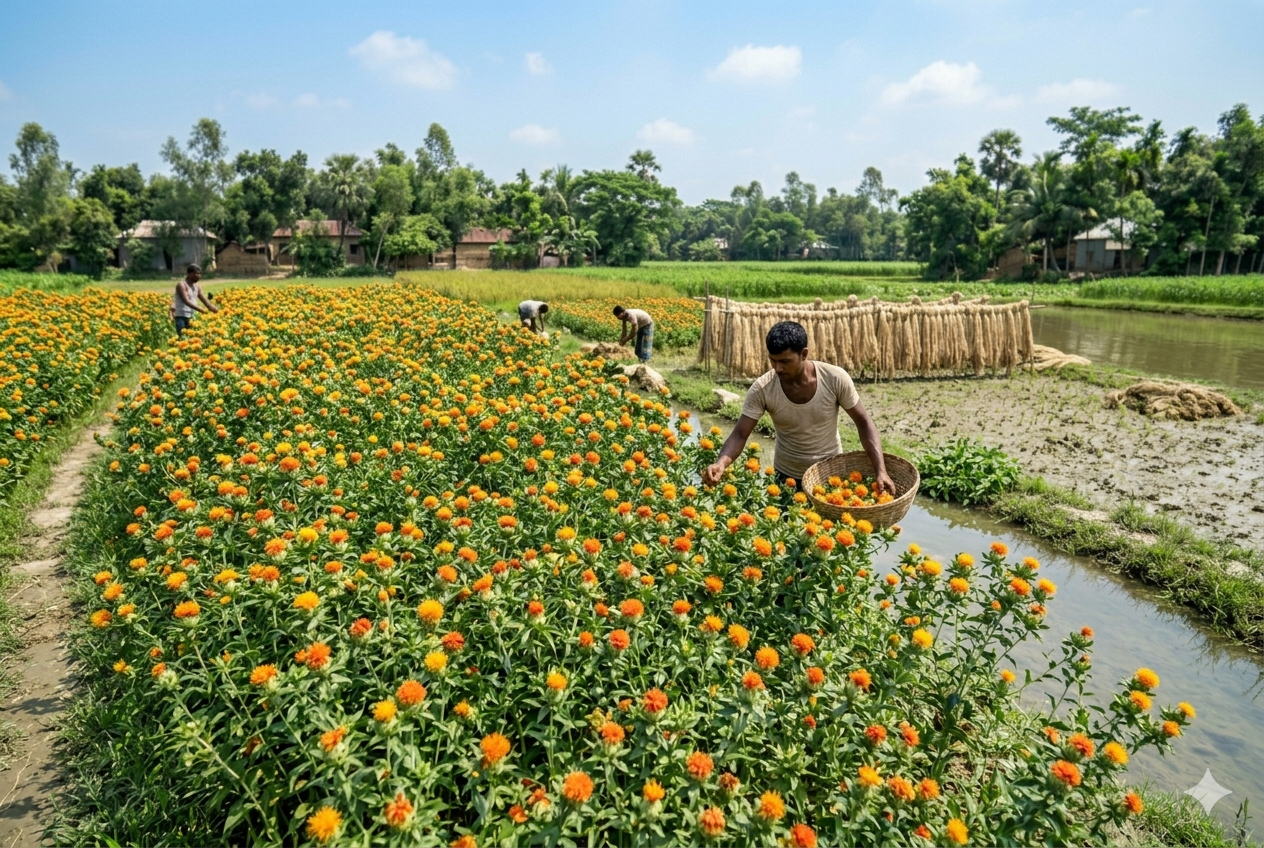
Safflower / Kusum — most drought tolerant oilseed (200mm rainfall!). DUAL INCOME: seed oil + petals (Rs.400-800/kg). Highest smoke point oil (265°C). Saffron color substitute. WEAR GLOVES — very sharp spines!
Safflower / Kusum — most drought tolerant oilseed (200mm rainfall!)। DUAL INCOME: seed oil + petals (Rs.400-800/kg)। Highest smoke point oil (265°C)। Saffron color substitute। GLOVES पहनो — very sharp spines!
Safflower (Carthamus tinctorius) — Kusum / Karad / Kardai — is India's oldest indigenous oilseed crop and one of the world's most drought-resistant field crops, with archaeological evidence of cultivation in the Indus Valley civilization (2,500 BCE). India is among the world's top safflower producers, with Maharashtra being the primary state (contributing 60%+ of national output), followed by Karnataka, Andhra Pradesh, Telangana and Madhya Pradesh. Safflower's remarkable drought tolerance — it can survive on 200-250mm rainfall, the lowest water requirement of any oilseed — makes it the natural crop for Maharashtra's drought-prone Marathwada, Vidarbha and Karnataka's northern districts. The crop's dual personality: safflower oil (high in linoleic acid omega-6) is one of India's premium cooking oils with a neutral flavor and very high smoke point; safflower flowers (the bright orange-red petals) have been used for centuries as a natural fabric dye (the original "saffron" substitute for dyeing Buddhist robes), food colorant, and in recent years as the basis of a growing natural colorant industry. Safflower petals are also edible — used in herbal teas, as a saffron substitute in cooking, and for their anti-inflammatory properties.
Safflower (Carthamus tinctorius) — Kusum / Karad — Indus Valley 2,500 BCE! India का oldest indigenous oilseed। Maharashtra = 60%+ national output! 200-250mm rainfall में survive — lowest water oilseed! Dual personality: premium cooking oil + natural fabric dye (original saffron substitute!)। Petals edible — herbal tea, colorant।
🌸 Overview, Classification & Varieties
| 🔬 Scientific Name | Carthamus tinctorius |
| 📅 Season | Rabi — sown October-November, harvested February-April |
| 🌡️ Temperature | 15-25°C growing | Tolerates frost at seedling stage | Heat at maturity OK |
| 💧 Water | 200-400mm — most drought tolerant oilseed! Deep taproot. Rain-fed Marathwada standard. |
| ⏱️ Duration | 130-160 days — longer duration Rabi oilseed |
| 🌾 Yield | Improved: 1.0-1.5 t/ha | Traditional: 0.4-0.7 t/ha | Oil: 28-35% |
| Variety | Specialty | Region |
|---|---|---|
| 🌸 PBNS-12 | VNMKV Parbhani — Maharashtra standard. High yield, spineless (easy harvest), disease resistant. | Maharashtra |
| 🌸 JSI-73 | JNKVV Jabalpur — MP variety, drought tolerant, medium duration | MP, Chhattisgarh |
| 🌸 A-1 | UAS Dharwad — Karnataka standard, high oil content | Karnataka, AP |
| 🌸 NRI-1 | NRCSS Ajmer — Rajasthan, high oil, petal yield for colorant industry | Rajasthan |
| 🌸 Spineless varieties | No thorns — easier harvesting, no injury to workers. Newer breeding focus. | All regions |
🪴 Soil, Sowing & Nutrient Management
🌿 Crop Protection & Management
| Tool / Resource | Use for Safflower |
|---|---|
| 📅 Crop Sowing Calendar | Rabi safflower — Maharashtra, Karnataka, AP October-November dates |
| 🧪 Fertilizer Calculator | Minimal N + sulphur — rain-fed deep-rooted oilseed |
| 🔍 Pest Identifier | Aphid colony vs caterpillar — safflower head pest ID |
| 💧 Watering Calculator | 1-2 optional irrigation timing for semi-irrigated areas |
| 🌱 Companion Planting Guide | Safflower + chickpea intercrop — traditional Marathwada system |
🌸 Harvest, Nutrition, Uses & Economics
- Harvest March-April when 75% heads turn brown: 130-160 days. Flowering complete, heads turn brown, seeds hard. Caution: sharp spines — wear thick gloves and protective clothing. Cut heads individually or whole plant. Dry in sun 5-7 days. Thresh by beating — seeds release from dry heads. Winnow. Dry to 8-9% moisture. MSP 2024-25: Rs.5,800/quintal. Additional income: petal collection during January-February flowering (3-4 pickings, Rs.400-800/kg dried petals).
| Nutrition (safflower oil per 100ml) | Value | Note |
|---|---|---|
| 🫙 Linoleic acid (Omega-6) | 74-80% — highest common oil! | High PUFA — cardiovascular neutral-positive but balance Omega-3 |
| 🌿 Vitamin E (tocopherol) | 34mg — 227% RDA | Second highest Vitamin E after sunflower |
| 🔥 Smoke Point | 232-265°C — highest common oil! | Best for high-heat frying in India |
| 🌿 Petals: Carthamin | Red-orange natural pigment | Food colorant, anti-inflammatory, herbal tea |
| 🫙 Neutral Flavor | Tasteless — no flavor transfer | Premium cooking oil for dishes where flavor must not change |
| 📊 Glycemic impact | Reduces insulin resistance | High linoleic acid associated with insulin sensitivity improvement |