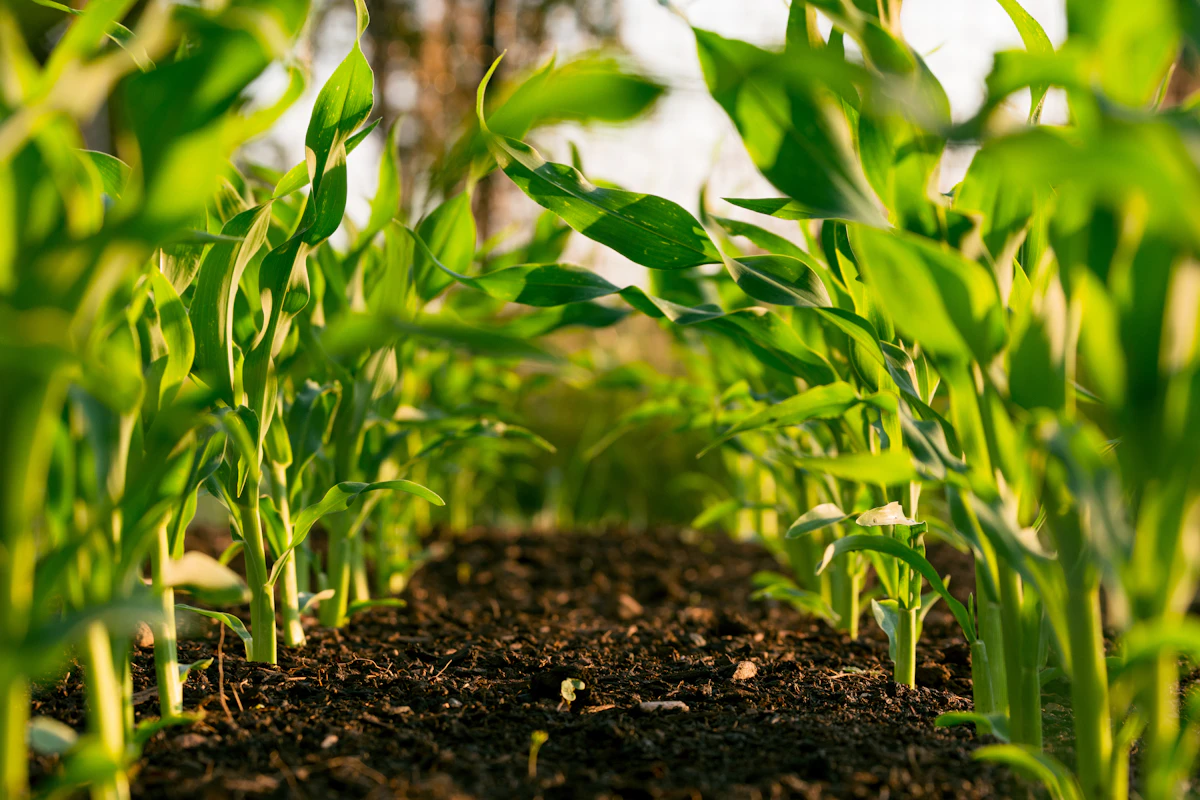
Complete Kharif crops guide — top 10 crops, state-wise sowing calendar, fertilizer, irrigation and pest management for Indian farmers.
खरीफ फसलों की complete guide — top 10 फसलें, state-wise बुआई calendar, खाद, सिंचाई और pest management।
🌾 What Are Kharif Crops? / खरीफ फसलें क्या हैं?
खरीफ — भारत की monsoon season की फसलें
Kharif crops are the summer-monsoon crops of India — sown at the beginning of the monsoon season (June–July) and harvested in autumn (September–November). They are also called monsoon crops or summer crops. Kharif crops depend on monsoon rainfall for irrigation and grow in warm, humid conditions.
खरीफ फसलें भारत की गर्मी-monsoon की फसलें हैं — monsoon की शुरुआत में बोई जाती हैं (जून–जुलाई) और शरद ऋतु में काटी जाती हैं (सितंबर–नवंबर)। इन्हें वर्षा ऋतु की फसलें भी कहते हैं।
| Season | Hindi Name | Sowing | Harvest | Key Crops |
|---|---|---|---|---|
| Kharif ← This guide | खरीफ | Jun–Jul | Sep–Nov | Rice, Maize, Cotton, Soybean |
| Rabi | रबी | Oct–Nov | Mar–Apr | Wheat, Barley, Mustard, Gram |
| Zaid | जायद | Mar–Apr | Jun–Jul | Cucumber, Watermelon, Pumpkin |
📅 State-wise Kharif Sowing Calendar
State-wise खरीफ बुआई Calendar
Kharif sowing time varies by state depending on when monsoon arrives. Sowing too early (before monsoon) or too late (after peak monsoon) reduces yields significantly.
खरीफ की बुआई का समय राज्य के अनुसार अलग होता है — monsoon के आगमन के अनुसार। बहुत जल्दी या बहुत देर से बुआई पैदावार कम करती है।
| State / राज्य | Monsoon Arrival | Best Sowing Window | Main Kharif Crops |
|---|---|---|---|
| Kerala, Karnataka (South) | June 1st week | June 1–15 | Rice, Coconut, Rubber, Banana |
| Andhra Pradesh, Telangana | June 2nd week | June 10–30 | Rice, Cotton, Maize, Groundnut |
| Maharashtra, Goa | June 2nd week | June 15 – July 10 | Soybean, Cotton, Bajra, Jowar |
| Madhya Pradesh | June 3rd–4th week | June 20 – July 15 | Soybean, Rice, Maize, Cotton |
| Uttar Pradesh | June 4th week | June 25 – July 20 | Rice, Maize, Bajra, Arhar/Tur |
| Punjab, Haryana | July 1st week | June 15 – July 15 (paddy transplant) | Rice (Paddy), Maize, Cotton |
| Rajasthan | July 1st–2nd week | July 1–20 | Bajra, Jowar, Moth Bean, Groundnut |
| Gujarat | June 4th week | June 25 – July 20 | Groundnut, Cotton, Castor, Bajra |
| Bihar, Jharkhand | June 4th week | June 20 – July 15 | Rice, Maize, Arhar, Jute |
| West Bengal, Assam | June 1st–2nd week | June 1–20 | Rice (Aman), Jute, Maize |
🌾 Top 10 Kharif Crops — Complete Guide
Top 10 खरीफ फसलें — Complete Guide
| # | Crop / फसल | Main States | Yield/Hectare | Sowing Depth | Spacing |
|---|---|---|---|---|---|
| 1 | 🌾 Rice / Dhaan (धान) | UP, WB, AP, Punjab, Bihar | 25–60 qtl/ha | Direct: 3–5cm / Transplant: 2–3cm | 20×15 cm |
| 2 | 🌽 Maize / Makka (मक्का) | UP, Bihar, MP, Karnataka | 30–70 qtl/ha | 3–5 cm | 60×20 cm |
| 3 | 🫘 Soybean | MP, Maharashtra, Rajasthan | 15–25 qtl/ha | 3–4 cm | 45×5 cm |
| 4 | 🌿 Cotton / Kapas (कपास) | Maharashtra, Gujarat, AP, Punjab | 15–25 qtl/ha (lint) | 3–5 cm | 90×60 cm |
| 5 | 🥜 Groundnut / Moongfali (मूंगफली) | Gujarat, AP, Rajasthan, TN | 15–25 qtl/ha | 5–7 cm | 30×10 cm |
| 6 | 🌾 Bajra / Pearl Millet (बाजरा) | Rajasthan, UP, Haryana, Gujarat | 20–30 qtl/ha | 2–3 cm | 45×15 cm |
| 7 | 🌾 Jowar / Sorghum (ज्वार) | Maharashtra, Karnataka, AP, UP | 20–40 qtl/ha | 3–5 cm | 45×15 cm |
| 8 | 🫘 Arhar / Tur Dal (अरहर) | UP, Maharashtra, MP, Karnataka | 15–25 qtl/ha | 5–7 cm | 60×20 cm |
| 9 | 🫘 Moong / Green Gram (मूंग) | Rajasthan, Maharashtra, UP, MP | 8–15 qtl/ha | 3–4 cm | 30×10 cm |
| 10 | 🫘 Urad / Black Gram (उड़द) | UP, MP, AP, Tamil Nadu | 8–15 qtl/ha | 3–4 cm | 30×10 cm |
🌱 Soil Preparation for Kharif Crops
खरीफ फसलों के लिए खेत तैयारी
🧪 Fertilizer Schedule for Major Kharif Crops
प्रमुख खरीफ फसलों का खाद Schedule
| Crop | N (kg/ha) | P (kg/ha) | K (kg/ha) | Basal Dose (at sowing) | Top Dressing |
|---|---|---|---|---|---|
| 🌾 Rice (Paddy) | 100–120 | 50–60 | 40–50 | Full P+K + 1/3 N (DAP+MOP) | 1/3 N at tillering + 1/3 N at panicle |
| 🌽 Maize | 120–150 | 60–80 | 40–60 | Full P+K + 1/3 N | 1/3 N at knee-high + 1/3 N at tasseling |
| 🫘 Soybean | 20–30 | 60–80 | 40–50 | Full dose at sowing (Rhizobium reduces N need) | No top dressing needed |
| 🥜 Groundnut | 20–25 | 50–60 | 80–100 | Full dose at sowing + Gypsum 250kg/ha | No top dressing |
| 🌾 Bajra | 80–100 | 40–50 | 40 | Full P+K + 1/3 N | 1/2 remaining N at tillering |
| 🫘 Arhar (Tur) | 20–25 | 50–60 | 30–40 | Full dose (Rhizobium inoculation essential) | No top dressing |
💧 Irrigation Guide for Kharif Crops
खरीफ फसलों की सिंचाई Guide
Kharif crops primarily depend on monsoon rainfall. However, supplemental irrigation at critical growth stages dramatically increases yield, especially in years with uneven rainfall distribution.
खरीफ फसलें मुख्यतः monsoon पर depend करती हैं। लेकिन critical growth stages पर supplemental irrigation से पैदावार बहुत बढ़ती है — खासकर uneven rainfall वाले सालों में।
| Crop | Critical Irrigation Stages | Irrigations Needed | Method |
|---|---|---|---|
| 🌾 Rice | Transplanting, tillering, panicle initiation, grain filling | Continuous flooding (2–5 cm standing water) | Flood / AWD (Alternate Wetting Drying) |
| 🌽 Maize | Knee-high stage, tasseling, silking, grain filling | 4–6 irrigations if rain fails | Furrow / Drip |
| 🫘 Soybean | Flowering, pod filling | 1–2 supplemental if dry spell | Furrow / Sprinkler |
| 🥜 Groundnut | Flowering, pegging, pod development | 4–6 irrigations in dry areas | Furrow / Drip |
| 🌾 Bajra | Booting, heading, grain filling | 2–3 irrigations (drought tolerant) | Furrow |
| 🌿 Cotton | Square formation, flowering, boll development | 6–8 irrigations total | Furrow / Drip |
🐛 Common Pests & Diseases in Kharif Crops
खरीफ फसलों में common कीट और रोग
| Crop | Major Pest/Disease | Symptoms | Management |
|---|---|---|---|
| 🌾 Rice | Brown Plant Hopper, Blast disease | Hopperburn, circular lesions on leaves | Carbofuran granules, Tricyclazole spray |
| 🌽 Maize | Fall Armyworm, Stem Borer | Leaf damage, entry holes in stem | Emamectin benzoate, Coragen spray |
| 🫘 Soybean | Girdle Beetle, Yellow Mosaic | Stem girdling, yellow mosaic on leaves | Carbosulfan, remove infected plants |
| 🥜 Groundnut | Leaf Spot, Tikka disease | Brown spots on leaves | Mancozeb/Chlorothalonil spray |
| 🌿 Cotton | Pink Bollworm, Whitefly, Aphid | Damaged bolls, leaf curl | Bt cotton (resistant), Imidacloprid |
| 🌾 Bajra | Downy Mildew (Green Ear), Ergot | Green ear, pink deposits on ear | Metalaxyl seed treatment, Mancozeb |
🌾 Harvesting & Post-Harvest Storage
कटाई और भंडारण
| Crop | Harvest Indicator | Moisture % at Harvest | Storage Tips |
|---|---|---|---|
| 🌾 Rice | 80–85% grains golden yellow, 25–30 days after flowering | 20–22% (dry to 14% for storage) | Store at below 14% moisture in jute bags, well-ventilated store |
| 🌽 Maize | Husks turn brown, kernels hard, black layer at base | 25–30% (dry to 12%) | Store shelled grain at 12% moisture, protect from weevils |
| 🫘 Soybean | 80% pods brown, leaves shed, rattling sound | 15–18% (dry to 12%) | Store at 12% moisture, cool dry place |
| 🥜 Groundnut | Inner pod turns dark, seeds fill completely | 45–50% (dry to 8–10%) | Store pods at 8–10% moisture with proper ventilation |
| 🌾 Bajra | Earheads bend downward, grains hard | 18–20% (dry to 12%) | Threshed grain at 12% moisture |
📈 Yield Improvement Tips for Kharif Crops
Kharif फसलों की पैदावार बढ़ाने के Tips
- Use certified seeds: Certified/improved variety seeds give 20–30% higher yield over local varieties. Available at government seed centers, IFFCO or local agriculture department.
- Seed treatment: Trichoderma + Rhizobium (for legumes) seed treatment costs Rs.50/kg seed and gives 10–15% better germination and yield.
- Sow at right time: Never sow before first 2–3 effective monsoon rains. Premature sowing wastes seeds and fertilizer. Wait for soil to have adequate moisture 15–20 cm deep.
- Maintain proper plant population: Too dense = competition, disease. Too sparse = low yield. Follow recommended spacing strictly.
- Weed management in first 30 days: Kharif crops compete most with weeds in first 30 days after sowing. One weeding at 20 days + one at 35–40 days increases yield 20–30%.
- Micronutrient supplementation: Many Indian soils are deficient in Zinc, Boron and Sulfur. Apply Zinc Sulphate 25 kg/ha as basal dose for most Kharif crops — low cost, high returns.
- Crop rotation: Never grow the same crop on the same field two consecutive years. Rotate legumes (Arhar, Soybean, Moong) with cereals (Rice, Maize, Bajra) to break pest cycles and improve soil nitrogen naturally.