Arhar Tur Dal Pigeon Pea Farming India — Kharif Pulse World Leader Encyclopedia
🌾 Crops & Grains

Arhar / Tur Dal / Pigeon Pea अरहर / तूर दाल / लाल अरहर

Cajanus cajan
🌱 Kharif June-July | Short (120d) = wheat rotation | Ratoon = free second harvest! ⏱️ Dec-Jan (short) / Jan-Feb (medium) | Ratoon: April-May bonus! | MSP Rs.7,550/qt highest Kharif pulse 🌿 Easy Grow ✅ Edible Safe
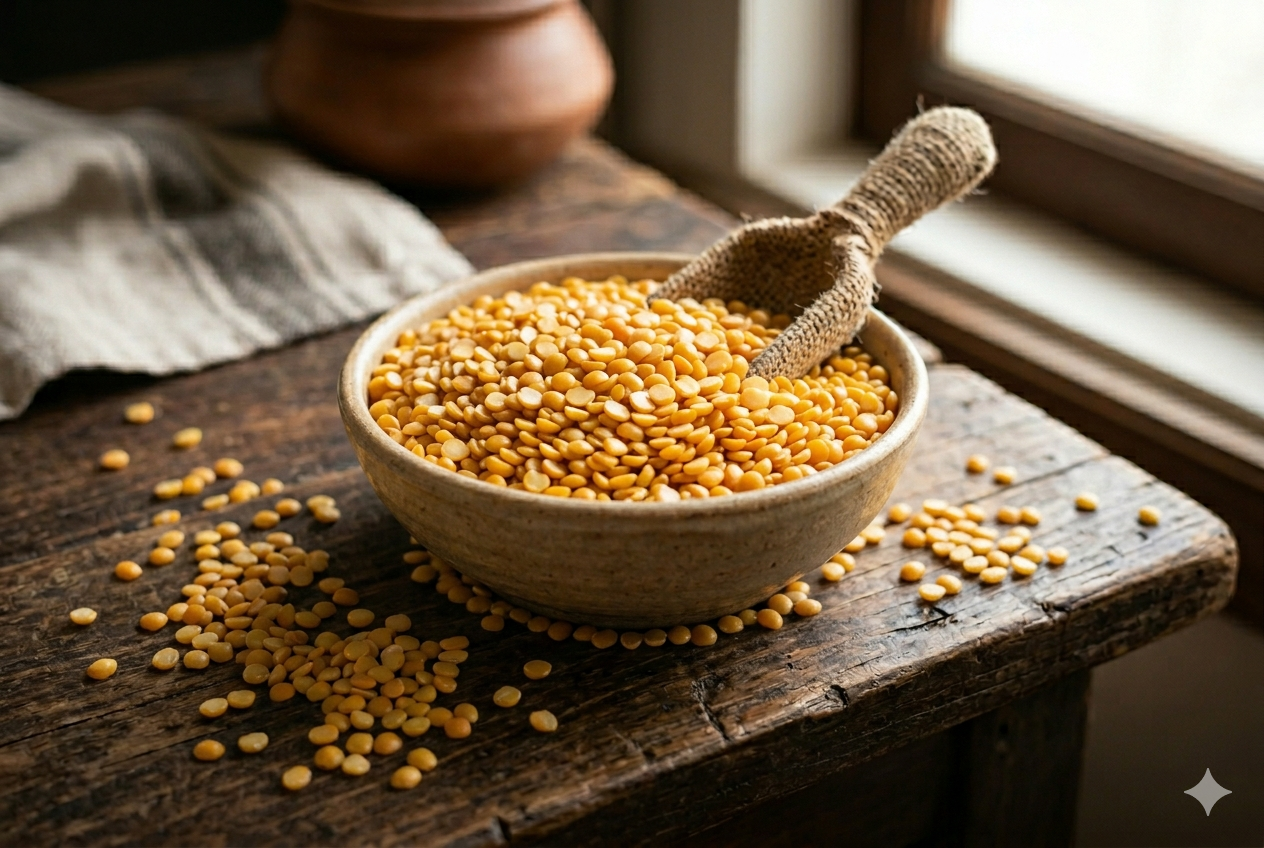
Photo: PlantCare
Arhar Tur Dal India 75-80% World Ratoon Free Second Harvest Folate 114% Highest MSP 7550 Highest Kharif Bradyrhizobium Cajanus Deep Taproot Drought

Arhar / Tur Dal — India grows 75-80% of WORLD production! RATOON crop: free second harvest from same plant (40-60% of main)! Folate 114% RDA — highest Kharif pulse. MSP Rs.7,550 highest Kharif pulse.

Arhar / Tur Dal — India WORLD का 75-80% produce! RATOON crop: same plant से free second harvest (40-60% of main)! Folate 114% RDA — highest Kharif pulse। MSP Rs.7,550 highest Kharif pulse।

⚡ Quick Reference / एक नज़र में
🌱 Sowing Season
Kharif June-July | Short (120d) = wheat rotation | Ratoon = free second harvest!
⏱️ Harvest Time
Dec-Jan (short) / Jan-Feb (medium) | Ratoon: April-May bonus! | MSP Rs.7,550/qt highest Kharif pulse
🍽️ Edible Parts
Grain — arhar dal (daily India dal), green pods (sabzi), immature seeds
☀️ Light
Full sun — 6+ hours
💧 Water
600-1000mm | Deep taproot finds subsoil water | 150-180 days long duration
🌡️ Temperature
25-35°C | Drought tolerant deep taproot | Frost sensitive
💊
Key Nutrition / पोषण
Protein 22g, Folate 456mcg (114% RDA — highest Kharif pulse!), Iron 5.4mg, GI 22-35
🍳
Indian Kitchen Uses / भारतीय रसोई
Dal tadka, sambhar, rasam, dal rice, arhar ki khichdi — India's most consumed dal daily

Arhar (Cajanus cajan) — Pigeon Pea / Tur Dal / Toovar / Lal Arhar — is India's most important Kharif pulse and the primary protein source in the dal-roti and dal-chawal combination that feeds hundreds of millions of Indians daily. India produces approximately 4-5 million tonnes annually — accounting for 75-80% of global pigeon pea production — making India the undisputed world leader. Maharashtra, Karnataka, Uttar Pradesh, Andhra Pradesh, Madhya Pradesh and Telangana are the primary growing states. Arhar dal — the yellow split pigeon pea — is the most consumed dal in India by volume, present at millions of Indian lunch and dinner tables daily. What makes arhar uniquely important: it is a perennial crop that can be grown as an annual, a drought-resistant deep-rooted plant that mines subsoil nutrients, a nitrogen-fixer that leaves 40-60 kg N/ha in the soil, and its woody stem and leaves are valuable fuel and fodder. The long duration (150-180 days) is both arhar's strength (drought escape through deep roots) and limitation (only one crop per year in most systems).

Arhar (Cajanus cajan) — Pigeon Pea / Tur Dal — India का most important Kharif pulse। India = world का 75-80% production! Dal-roti, dal-chawal — India का most consumed dal daily। Maharashtra, Karnataka, UP primary producers। Perennial crop as annual। 150-180 days — deep-rooted drought escape। N-fixation 40-60 kg N/ha।

🌱 Overview, Classification & Varieties

🔬 Scientific NameCajanus cajan
📅 SeasonKharif — sown June-July, harvested December-January (long duration 150-180 days)
🌡️ Temperature25-35°C | Drought tolerant through deep taproot | Frost sensitive
💧 Water600-1000mm | Deep taproot finds subsoil water | More drought tolerant than moong/urad
⏱️ DurationShort: 120-140 days | Medium: 150-180 days | Long: 200-240 days
🌾 YieldImproved short: 1.5-2.5 t/ha | Medium: 1.2-2.0 t/ha | Traditional: 0.5-1.0 t/ha
VarietyDurationSpecialtyRegion
🌱 ICPL 87119 (Asha)Short (130-140 days)ICRISAT — Fusarium wilt resistant, good yield. Most recommended.Pan-India
🌱 BDN-2 (Bahar)Medium (170-180 days)VNMKV Parbhani — Maharashtra standard, high yield on black soilMaharashtra
🌱 GT-100Short (130 days)GAU Gujarat — drought tolerant, early, Gujarat standardGujarat, Rajasthan
🌱 Pusa 992Medium (155-165 days)IARI — wilt resistant, good for North India plainsUP, Bihar, Haryana
🌱 UPAS-120Short (120-130 days)CSAUAT Kanpur — early harvest, fits wheat rotationUP, MP

🪴 Soil, Sowing & Nutrient Management

🪴
Soil — Deep Preferred
Well-draining sandy loam to clay loam — pH 6.0-8.0. Deep soils preferred — arhar taproot goes 2-3 meters deep accessing subsoil moisture. Black cotton soil: ideal for medium/long duration arhar — water-retaining supports long growth. Avoid waterlogging — roots rot rapidly. Arhar's deep root mines subsoil phosphorus and nutrients unavailable to shallow-rooted crops. Crop rotation: Fusarium wilt builds in soil — don't grow arhar in same field more than once every 3-4 years.
📅
Sowing & Intercropping
June 15 — July 15 sowing. Seed rate: 15-20 kg/ha (pure stand). 25-30 kg/ha (intercrop — wider spacing). Spacing: Pure: 60-75 cm × 15-20 cm. Intercrop with sorghum/maize: 1:2 rows (1 arhar : 2 sorghum rows). India's most widespread intercrop: arhar + sorghum — arhar N-fixes, sorghum provides fast income while arhar matures. Seed treatment: Rhizobium (Cajanus-specific!) + Thiram + Trichoderma. Always use pigeon pea-specific Rhizobium — common Vigna Rhizobium does not nodulate arhar.
🧪
Fertilizer
N: 20-25 kg/ha starter only — Rhizobium (Bradyrhizobium) fixes 40-60 kg N/ha over long season. P: 50-60 kg P₂O₅ — critical for 150-180 day crop. K: 20-30 kg K₂O. Sulphur: 20 kg/ha — improves protein quality. Zinc: 25 kg ZnSO₄ if deficient — common in Maharashtra soils. Molybdenum: 1g/kg seed — nitrogen-fixing enzyme cofactor. FYM: 8-10 tonnes/ha one month before sowing — long-season crop needs sustained nutrition. The N-fixation efficiency of arhar is the highest among common Indian pulses — makes it the most valuable N-contributor to subsequent crops.
🌿
Short vs Long Duration Strategy
Short duration varieties (120-140 days): harvest December, allows Rabi wheat/chickpea sowing. Better in North India wheat rotation. Lower yield but income security. Medium duration (150-180 days): Maharashtra/Karnataka black soil — harvested January-February. Higher yield on black cotton soil residual moisture. Long duration (200-240 days): traditional varieties still grown in tribal areas — ratoon (second crop from same root) possible. Ratoon = free second harvest from established plant without resowing — unique arhar advantage. Selection guide: If growing wheat after arhar → short duration UPAS-120. If growing on black cotton soil without Rabi crop → medium/long BDN-2 for maximum yield.

🌿 Crop Protection — Wilt & Pod Borer

⚡ Key Pests & Diseases
🍂 Fusarium Wilt
F. udum — soil borne, no cure
Resistant variety ONLY + Trichoderma + crop rotation
🐛 Pod Borer
Helicoverpa armigera — major
Emamectin + NPV + pheromone traps
🌿 Sterility Mosaic
Eriophyid mite transmitted — viral
No cure — resistant variety + mite control
🐛 Blister Beetle
Mylabris pustulata
Hand-pick or Endosulfan spray
🍂 Phytophthora Blight
Phytophthora drechsleri
Metalaxyl spray + drainage
🐛 Plume Moth
Pod damage similar to Helicoverpa
Lambda-cyhalothrin spray
Tool / ResourceUse for Arhar
📅 Crop Sowing CalendarKharif arhar dates + duration variety selection by region
🧪 Fertilizer CalculatorLong-season P + K requirements for 150-180 day crop
🔍 Pest IdentifierFusarium wilt vs Phytophthora — visual ID for correct treatment
🌱 Companion Planting GuideArhar + sorghum / arhar + maize intercrop ratio
💧 Watering CalculatorLong-season critical irrigation stages — flowering + pod fill

🌱 Harvest, Nutrition, Uses & Economics

  • Harvest December-February when 75-80% pods turn brown: Long growing season ends December-January (short duration) or January-February (medium). Pods dry brown, seeds rattle. Harvest: cut plants at base with sickle. Dry in sun 5-7 days. Thresh by beating — arhar stem is woody, threshing needs more effort. Clean, dry to 10-12%. Storage: stores well 1-2 years in clean conditions. Ratoon option: cut plants leaving 30-40 cm stub — secondary growth produces ratoon crop in 60-75 days (March-April harvest). Ratoon yield: 40-60% of main crop — essentially free second harvest. MSP 2024-25: Rs.7,550/quintal — highest Kharif pulse MSP.
Nutrition (per 100g dry)ValueNote
💪 Protein22gGood protein, methionine-limited like most legumes
🌾 Fiber15gGood gut health contribution
⚙️ Iron5.4mg — 30% RDASignificant iron source
🌿 Folate456mcg — 114% RDAExcellent pregnancy nutrition
📊 Glycemic Index22-35 (very low)Excellent blood sugar management
🌿 PolyphenolsIsoflavones presentAntioxidant, mild phytoestrogenic
❓ FAQ
Ratoon farming — arhar's unique second harvest: After main Kharif harvest (December-January): instead of uprooting, cut arhar plants 30-40 cm above soil level. New shoots emerge from crown. This ratoon crop: flowers in February-March, pods mature April-May. Yield: 40-60% of main crop without replanting. Why economically valuable: Zero seed cost. Zero land preparation cost. Zero planting labor. Only inputs: one light nitrogen spray (2% urea foliar spray) to boost ratoon growth. One irrigation at ratoon flower emergence if water available. Total additional cost: Rs.2,000-4,000/ha. Additional revenue: 0.6-0.8 tonne × Rs.7,550 = Rs.45,000-60,000. Net additional income: Rs.40,000-56,000/ha — essentially free income. Which varieties: Medium and long duration varieties ratoon better than short duration. BDN-2 (Maharashtra), local long-duration varieties — excellent ratoon response. Limitation: ratoon delays Kharif sowing if field needed for next crop. In Maharashtra and Karnataka where arhar field is fallowed after harvest: ratoon is pure income. Increasingly adopted practice — ICAR and state agriculture departments actively promoting as income enhancement strategy.
Maharashtra arhar farming on black cotton soil: (1) Variety: BDN-2 (Bahar) or Asha (ICPL 87119) — both wilt resistant. Buy certified from MSSC or KVK. (2) June 15-July 10 sowing with monsoon. (3) Black cotton soil: raised bed sowing — prevents waterlogging in July-August. (4) Seed rate: 15-20 kg/ha. Spacing: 60 cm × 20 cm (wider rows allow intercrop). (5) Seed treatment: Bradyrhizobium (pigeon pea specific) + Thiram + Trichoderma viride. (6) Intercrop: arhar (1 row) + sorghum (2 rows) — traditional Maharashtra Kharif system. Sorghum harvested October, arhar continues to January. (7) Fertilizer: DAP 1.5 bags/bigha at sowing + zero urea. (8) Pod borer: pheromone traps from October. Spray Emamectin at threshold (2 larvae/m row). (9) Wilt: if appears — uproot affected plants. Resistant variety prevents most losses. (10) Harvest: December-January when 75% pods brown. (11) Ratoon: cut at 35 cm, second harvest April-May. (12) Sell: APMC mandi at MSP Rs.7,550/qt. Economics: Input Rs.12,000-18,000/ha (main crop). Revenue at 1.8t: Rs.1,35,900. Ratoon: additional Rs.40,000-50,000. Total: Rs.1,75,000-1,85,000 per hectare — one of Maharashtra's best Kharif crop economics.
Perfect restaurant-style Arhar dal tadka: Ingredients: Arhar/toor dal: 200g. Ghee: 3-4 tbsp. Cumin: 1 tsp. Hing (asafoetida): 1/4 tsp. Dry red chilli: 2. Onion: 1 medium, finely chopped. Tomato: 2, finely chopped. Garlic: 4-5 cloves. Green chilli: 1-2. Turmeric, red chilli powder, coriander powder. Fresh coriander, lemon. Cooking: (1) Wash arhar thoroughly. Pressure cook with turmeric and salt — 4-5 whistles. Dal should be completely soft and somewhat creamy. Mash 30% with ladle — creates creamy body while leaving some texture. (2) TADKA is the soul: heat ghee (not oil) in small tadka pan to smoking point. Add cumin — let it darken (not burn). Hing immediately. Dry red chilli. Finely chopped garlic — cook until golden. Add onion — cook until golden brown (7-10 minutes properly). Add green chilli + tomato — cook until oil separates. Add red chilli powder + coriander powder. (3) Pour tadka over cooked dal — the sizzle sound is essential. (4) Simmer together 10 minutes. (5) Final tadka (restaurant secret): separate small tadka of pure ghee + red chilli powder poured over the top just before serving — creates the characteristic orange color and aroma. Lemon + fresh coriander. The restaurant difference: they use more ghee, brown onion properly, and do the double tadka. Home temptation to reduce ghee or skip proper onion browning = restaurant taste gap.
Sterility Mosaic Disease (SMD) — arhar's second most serious disease: Cause: Pigeon Pea Sterility Mosaic Virus (PPSMV) — transmitted by eriophyid mite (Aceria cajani). Not an insect — a microscopic mite invisible to naked eye. Symptoms: (1) Mosaic chlorosis on leaves — yellow-green mottling. (2) Most distinctive: plant produces abundant leaves and branches but ZERO pods — complete sterility. (3) Plants look "bushy" and apparently healthy — but no pods develop. Hence the name. Damage: 20-100% yield loss — complete crop failure in severe epidemics. SMD is endemic in South India — Karnataka, Andhra Pradesh, Tamil Nadu. Less problem in North India. Management: (1) Resistant varieties: ICPL 87119 (Asha), Maruti — significant resistance. Most important intervention. (2) Early sowing: before mite population peaks. (3) Roguing: uproot infected plants immediately when symptoms appear. (4) Mite control: Dicofol @ 2.5ml/litre or Wettable Sulphur @ 3g/litre at first symptom sign. (5) Border crop: maize 2 rows around arhar field — reduces mite migration from adjacent fields. (6) Avoid neighboring old infected arhar fields as source. Economically: SMD-resistant varieties have eliminated the disease as a major threat in most commercial areas — variety selection is 90% of the solution.
India's three major Kharif pulses — optimal rotation for complete nutrition: Arhar (Tur Dal): Protein 22g. Folate 456mcg (114% RDA — highest Kharif pulse!). Isoflavones (mild phytoestrogenic). Medium digestibility. Good for: lunch as main dal. Pregnancy (folate). Antioxidant. Daily dal: arhar tadka or sambhar. Moong: Protein 24g. Best digestibility. Sprouting adds Vitamin C. Very low GI (25-32). Good for: dinner (lighter). Illness recovery. Infants. Diabetics. Sprouting. Evening khichdi. Urad: Protein 25-26g — HIGHEST. Iron 7.6mg. Calcium 154mg. Heavy, gas-forming. Good for: fermented foods (idli/dosa/vada). Dal makhani (occasional). Lunch when maximum digestion. Sports nutrition. Weekly rotation recommendation: Monday-Wednesday: Arhar dal tadka (protein + folate). Thursday-Friday: Moong dal / sprouts (digestibility + blood sugar). Saturday: Urad preparation — idli/dosa for breakfast. Sunday: Mix dal (all three combined — complete amino acid profile). This rotation provides: Complete amino acid coverage, varying fiber types for diverse gut microbiome, all key micronutrients (iron, folate, calcium, zinc) covered across the week. The traditional Indian practice of eating different dals daily is nutritionally sophisticated — modern dietitians recommend the same rotation that Indian grandmothers practiced for generations.
⚠️
AI-Assisted Content — Please Read
AI-सहायता से बनाई गई सामग्री — कृपया पढ़ें

All tools, plant encyclopedias, edible growing guides and blog content on PlantCare are created with the assistance of AI (Artificial Intelligence) and are intended for general informational and educational purposes only. While we strive for accuracy, the information provided may not be complete, current or suitable for every situation, region or individual plant variety.

For health, medical or serious agricultural decisions — always consult a qualified horticulturist, agronomist, Ayurvedic practitioner, medical professional or relevant expert. PlantCare does not take responsibility for outcomes arising from use of this information. Identification results from AI tools (plant identifier, pest identifier etc.) should be verified before taking any action.

इस वेबसाइट पर सभी tools, plant encyclopedias, edible guides और blog content AI (Artificial Intelligence) की सहायता से बनाए गए हैं और केवल सामान्य जानकारी और शिक्षा के उद्देश्य से हैं। स्वास्थ्य, चिकित्सा या गंभीर कृषि निर्णयों के लिए कृपया किसी योग्य विशेषज्ञ से संपर्क करें। PlantCare इस जानकारी के उपयोग से होने वाले परिणामों के लिए जिम्मेदार नहीं है।