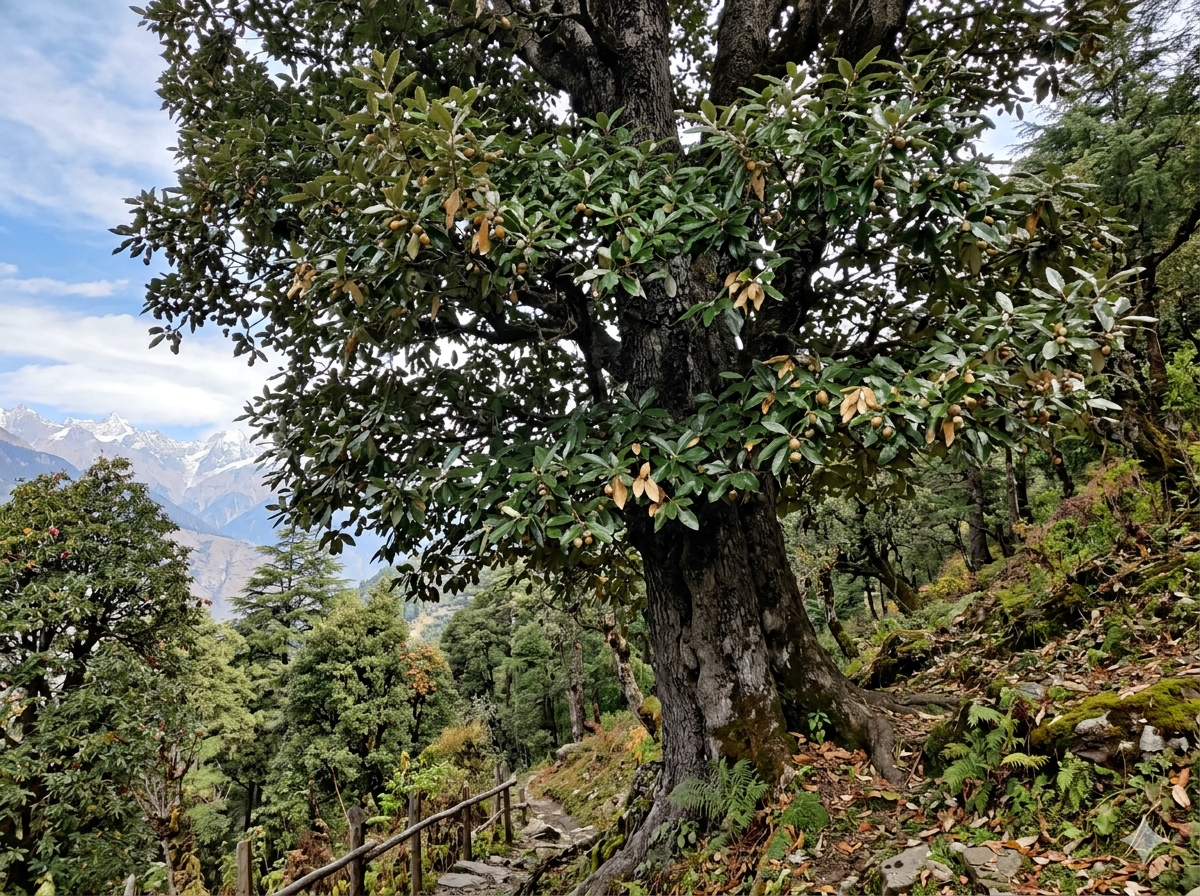
Himalayan Banj Oak — WATER SECURITY tree। Oak deforestation 5-10 years बाद perennial springs disappear। Oct-March: Himalayan livestock LIFELINE winter fodder। Oak loss → Chir Pine → MORE FLASH FLOODS (scientifically linked)। RESTORE BANJ OAK = flood + drought insurance। Van Devata sacred groves = most effective conservation।
Himalayan Oak (Quercus leucotrichophora / Quercus semecarpifolia / Quercus floribunda) — Banj Oak / Ban Oak / Himalayan White Oak / Green Oak / Moru Oak — is the most ecologically important and botanically diverse group of native oak trees of the Indian Himalaya, forming vast forests across Himachal Pradesh, Uttarakhand, Meghalaya, Nagaland, and other Himalayan and northeastern states. India has approximately 35 species of oak (Quercus), but the Himalayan oaks — particularly Banj Oak (Q. leucotrichophora) of the middle Himalaya (1,500-3,000m) and Moru Oak (Q. floribunda) of higher altitudes — are the most ecologically critical. Himalayan oak forests are the ultimate watershed protection forests — they capture monsoon rain, release it slowly through dry season springs, maintain soil structure on steep hillsides, and support extraordinary biodiversity including rare birds, mammals, and invertebrates. The leaves are critical fodder for Himalayan livestock. The acorns are important food for wildlife and historically for humans. The bark has significant tannin content. The wood, while protected, is one of India's hardest and most durable for tool handles and implements. The loss of Himalayan oak forests to pine (Chir Pine) expansion, fuelwood collection, and grazing pressure is one of the most serious ecological crises in the Indian Himalaya — directly contributing to the increasing frequency and severity of flash floods and landslides across Uttarakhand and Himachal Pradesh.
Himalayan Oak (Quercus leucotrichophora / semecarpifolia / floribunda) — बांज ओक / बन ओक / Banj Oak — Indian Himalaya का most ecologically important + botanically diverse native oak trees group। HP, Uttarakhand, Meghalaya, Nagaland, other Himalayan + NE states में vast forests। India में ~35 oak species। Banj Oak (Q. leucotrichophora, 1,500-3,000m) + Moru Oak (Q. floribunda, higher) = most ecologically critical। ULTIMATE watershed protection forests — monsoon rain capture, slowly release dry season springs, steep hillside soil structure maintain, extraordinary biodiversity support। Leaves = Himalayan livestock critical fodder। Acorns = wildlife + historical human food। Bark = significant tannin। Wood = India's hardest implements। Himalayan oak forests loss = most serious ecological crises — flash floods + landslides UK + HP में increasing।
🌳 Overview & Quick Facts / परिचय और मुख्य तथ्य
| 🔬 Major Species India | Q. leucotrichophora (Banj Oak, 1,500-3,000m), Q. floribunda (Moru Oak, 2,500-3,500m), Q. semecarpifolia (Kharsu Oak, 3,000-4,000m), Q. glauca (East Himalayan), Q. dealbata (NE India) |
| 📏 Height / ऊंचाई | 15–30 metres | Broad spreading crown | Deeply lobed leaves distinctive |
| ⏳ Lifespan / आयु | 200–1,000+ years | Ancient sacred oak trees documented |
| 📈 Growth Rate / वृद्धि दर | Slow — 0.5–1.5 ft/year | Slow = strong + durable + long-lived |
| 🌡️ Altitude | 1,200–4,000m depending species | HP, UK, J&K, Sikkim, Arunachal, Meghalaya, Nagaland |
| ⚖️ Legal Status / कानूनी | Natural forests: STRICTLY PROTECTED. Plantation: allowed. Leaf collection (fodder): FRA 2006 community rights. Timber: very restricted. |
| 💰 Value / मूल्य | Fodder leaves: Rs.5-12/kg | Acorns: Rs.10-25/kg | Bark tannin: Rs.12-20/kg | Honey: Rs.400-700/kg | Ecological service: immeasurable |
🌿 Parts & Their Uses — हर अंग का उपयोग
THE most commercially important Himalayan communities। "Banjpatta" oak leaf fodder — cattle, buffalo, goats। October-March grass scarce। Protein 8-12%, digestible fiber। Annual lopping: centuries sustainable। FRA 2006 community rights protect। Market: Rs.5-12/kg। One mature Banj Oak: 25-50 kg dry fodder/year sustainable। "Himalayan livestock = oak forest" dependency = total।
Acorns — edible after processing (soaking/leaching removes tannins)। Historical Himalayan food: famine periods acorn flour important। Wildlife: bears, wild pigs, deer, birds extensively। Market: Rs.10-25/kg dried। Poultry/pig feed, traditional food, craft (acorn craft growing), tannin extraction। Acorn-fed pig: niche premium meat market emerging।
THE most critical ecological। Banj Oak forests: (1) Monsoon rainfall intercept — canopy rain intensity break। (2) Deep roots (10-15m) soil channels create — water absorb, not run off। (3) Perennial springs maintain — Banj Oak areas year-round springs। Deforested areas = 5-10 years में springs lose। (4) Landslide prevent — dense roots steep hillside soils hold। Economic value: incalculable — billions flood/landslide damage annually prevented।
High tannin (15-20%) — excellent leather tanning। Historically Himalayan leather industry। Traditional: diarrhea, dysentery (astringent tannins)। Anti-inflammatory। Oak gall (gall wasps from leaf abnormal growth) = even higher tannin — traditional medicine + ink making (historic)। Market: Rs.12-20/kg। FRA community rights।
Banj Oak forests exceptional honey। Spring catkin flowers = important nectar। Himalayan oak forest honey: dark, complex, high anti-oxidants। European forest honey similar। Traditional + commercial apiculture। Market: Rs.400-700/kg। HP/UK beekeeping: oak catkin bloom follow। Honeydew honey from oak aphids also possible।
Extraordinary biodiversity। Temperate oak forests globally = any other forest type से more species/unit area। India: Himalayan black bear (acorn feed), musk deer, red panda (eastern oak), Kalij pheasant, Koklass pheasant, numerous warblers (migratory), oak gall wasps, hundreds fungi, lichens, mosses। Oak loss = cascade extinction।
🌍 Himalaya's Water Tower & Livestock Lifeline / Himalaya's Water Tower और Livestock Lifeline
🌱 Growing Guide + Restoration / Banj Oak कैसे उगाएं + Restore करें
| Parameter | English | Hindi / हिंदी |
|---|---|---|
| 🌱 Propagation | Acorns from mature trees (October-November). Banj Oak acorns: sow immediately after falling (recalcitrant — cannot dry/store). Germination 4-8 weeks. Easy when fresh. Coppice regeneration: cut stumps regenerate vigorously. Community nurseries: HP/UK Forest Dept runs oak restoration nurseries. | Mature trees से acorns (Oct-Nov)। Banj Oak acorns: falling के immediately बाद sow (recalcitrant — dry/store नहीं)। 4-8 weeks germination। Fresh = easy। Coppice: cut stumps vigorously regenerate। Community nurseries: HP/UK Forest Dept oak restoration। |
| 🌡️ Altitude + Climate | Banj Oak: 1,500-3,000m HP, UK। Moru Oak: 2,500-3,500m। Kharsu Oak: 3,000-4,000m। Tropical plains: NOT। Cold winter + cool summer need। Shimla, Mussoorie, Nainital hill station gardens excellent। | |
| 🌊 Restoration priority | NATIONAL PRIORITY। UK/HP: degraded Chir Pine-invaded hillsides पर Banj Oak plant। Every Banj Oak = downstream communities future water security। MNREGS + Compensatory Afforestation funds available। Van Panchayat community forest restoration programs। | |
| 🍃 Sustainable lopping | Community standard: max 30% branches/tree/year। Alternate years rest। Lopping height: min 2m above ground। Regenerate vigorously। Over-lopping = tree weakening, decline, death। Traditional communities centuries sustainable manage — modern pressure balance breaking। | |
| 💰 Livelihood from oak | 1 mature Banj Oak grove (100 trees): Annual fodder value Rs.20,000-40,000 (purchased fodder saved)। Honey: Rs.25,000। Acorns: Rs.750। Total: Rs.45,000-65,000/ha/year mature grove। | |
| 🌱 Sacred grove | Van Devata sacred grove tradition: many Himalayan villages traditional cutting prohibition। Most intact remnant oak forests। Support + revive Van Devata traditions — oak के लिए most effective conservation system। |
💰 Value & Legal Status / मूल्य और कानूनी स्थिति
| 🍃 Leaf fodder / बांजपत्ता | Rs.5–12/kg | Oct-March Himalayan winter | FRA 2006 community rights. Sustainable lopping only. State Forest Dept guidelines. |
| 🌰 Acorns | Rs.10–25/kg | Wildlife food + traditional food | FRA 2006 community collection. Own trees freely. |
| 🟫 Bark tannin | Rs.12–20/kg | Leather industry | FRA 2006. Sustainable from dead/fallen bark only ideally. |
| 🍯 Honey | Rs.400–700/kg oak forest premium | Freely traded / freely |
Banj Oak vs Chir Pine: Most important Indian forestry ecological story। UK + HP में Banj Oak का Chir Pine से replacement ongoing। Natural distribution: Chir Pine below 1,500m + dry exposed slopes। Banj Oak 1,500-3,000m moist slopes। Natural mosaic coexistence। What happening: human disturbance (excessive lopping, fuelwood, grazing, fire) → oak degrade। Chir Pine fire-adapted → expands degraded oak areas। Pine needles flammable → fire frequency increase → oak regeneration prevent। Positive feedback loop: disturbance → pine → fire → less oak → more pine। Ecological consequences: (1) Water: Oak = deep roots + dense canopy = high absorption, slow release, perennial springs। Pine = shallower roots + resinous needles = less absorption, fast runoff, springs dry। Shift = water security devastating। Communities 20-30 years में year-round springs dry = oak loss attribute। (2) Fodder: Oak leaves = critical winter fodder। Pine needles = livestock NOT eat। Oak→pine = winter fodder loss = livestock reduction = economic hardship। (3) Landslides: oak roots bind hillside soils। Pine = shallower, less binding। Pine slopes = more susceptible landslides। (4) Biodiversity: oak > pine। Solution: Banj Oak restore। UK/HP Forest Dept programs। MNREGS। Van Panchayats। Critical action: HP/UK degraded hillside = Banj Oak planting advocate। Every oak today = future flood + drought insurance।
Himalayan oak acorns: Food centuries Himalayan communities। Challenge: ALL acorns contain tannins (bitter, astringent)। Raw = too bitter। Tannin removal required। Traditional methods: (1) Water leaching: crack + shell remove + coarse grind। Cold water daily change 5-7 days soak। Taste test: no bitter = ready। (2) Running water: cloth bag in running stream 2-3 days। More efficient। (3) Boiling: boil + drain + repeat 5-8 times fresh water। Faster but some nutrients destroy। (4) Himalayan traditional: wood ash (alkaline) + water mix। Faster tannin removal। After removal: nutty mild flavor। Use: flatbread flour (30-50% mix), porridge, soup thickener। Nutrition: 6-8% protein, 2-4% fat (oleic), 40-50% carb, fiber, potassium, magnesium। Calorie-dense। Modern: premium "Acorn Flour" growing Europe + USA health food niche। Indian Himalayan = premium indigenous superfood position। Acorn coffee: dried roasted ground — Korea dotori garu, health food cafes globally। Acorn-fed pigs: "bellota" style pork (Spanish tradition) — ultra-premium Rs.3,000-8,000/kg। Himalayan pig-rearing communities develop possible। Wildlife: bear, wild pig, deer, birds = acorn crop critically depend।
Van Devata sacred groves: Traditional Himalayan animist belief — certain groves = sacred (forest deities inhabited)। Cutting = spiritually prohibited + socially enforced। "Van Devata ki jungle," "Dev ban," "Devara" different HP + UK communities। Why matters: Increasingly degraded forests में sacred groves = ONLY remaining intact old-growth Banj Oak patches often। These groves: commercially logged NEVER (spiritual prohibition)। Regularly maintained (dead wood remove, living trees protect)। Complete biodiversity maintain (rare fungi, mosses, orchids — nowhere else local)। Perennial springs maintain (surrounding degraded = dry)। Seed sources surrounding landscape natural regeneration। Examples: HP + UK hundreds Van Devata groves — some 200-500 year old Banj Oak trees। Living heritage। Challenge: modern influence = traditional beliefs weaken → spiritual prohibition violated some communities। Road construction, development, traditional governance weakening → threats। What do: Himalayan villages visit → Van Devata groves ask + community efforts support। GBPIHED (Govind Ballabh Pant National Institute) = documenting + supporting sacred grove conservation HP + UK — work deserves support।
Himalayan oak identification: General features (all Quercus): Leaves: typically lobed/toothed margins। Fruits: ACORNS — single nut in cap (cupule) of overlapping scales। Acorn + cup = OAK genus globally unique — know acorns, never misidentify। Bark: rough, deeply furrowed mature। Male flowers: catkins (hanging)। Female: tiny, leaf axils near। Banj Oak (Q. leucotrichophora) — most common: Leaves: 7-15cm, oblong, SILVERY-WHITE UNDERSIDE ("leucotrichophora" = white-haired)। Margin: irregularly toothed/serrate (not deeply lobed)। Thick, leathery, semi-evergreen। 1,500-3,000m। Moru Oak (Q. floribunda): smaller (4-8cm), elliptic, toothed। Scaly bark। 2,500-3,500m। Often + Rhododendron। Kharsu Oak (Q. semecarpifolia): thick leathery, entire/lightly toothed। 3,000-4,000m। Extremely slow, ancient। Simple field: 1,500-3,000m HP/UK hillside + broad-leaved evergreen + silvery-white leaf underside + acorns = almost certainly Banj Oak। Most important Himalayan forest oak। Acorns on ground = oak confirmed।
Himalayan oak restoration individual actions: (1) Seed collection + nursery: Banj Oak acorns Oct-Nov collect। Immediately polythene bags (forest soil + compost) में sow। 4-8 weeks germination। 1-2 years partial shade grow। Restoration sites plant। Zero-cost। (2) Acorn banking: community seed banks। Semi-recalcitrant — 3-6 months care के साथ store। Different seasons planting। (3) Support programs: HP + UK Forest Dept restoration nurseries + plantation। MNREGS-funded oak restoration — BDO contact। CAMPA funds। (4) Van Panchayat: community forest council में Banj Oak restoration portion advocate। Rights हैं but technical support lack। (5) Sacred grove protection: Van Devata groves protect। Ancient oaks document (photograph, GPS, GBPIHED share)। (6) Sustainable lopping: max 30%, alternate years। Supplementary fodder transition gradually। (7) NGO oak planting: HP/UK forest NGOs financial या physical। Scale: 1 km² degraded hillside catchment meaningful restoration = ~2,000-3,000 Banj Oak trees। Timeline: 25-30 years full watershed restoration। Long-term but absolutely worthwhile — flood + drought prevention value = planting cost से orders of magnitude greater।