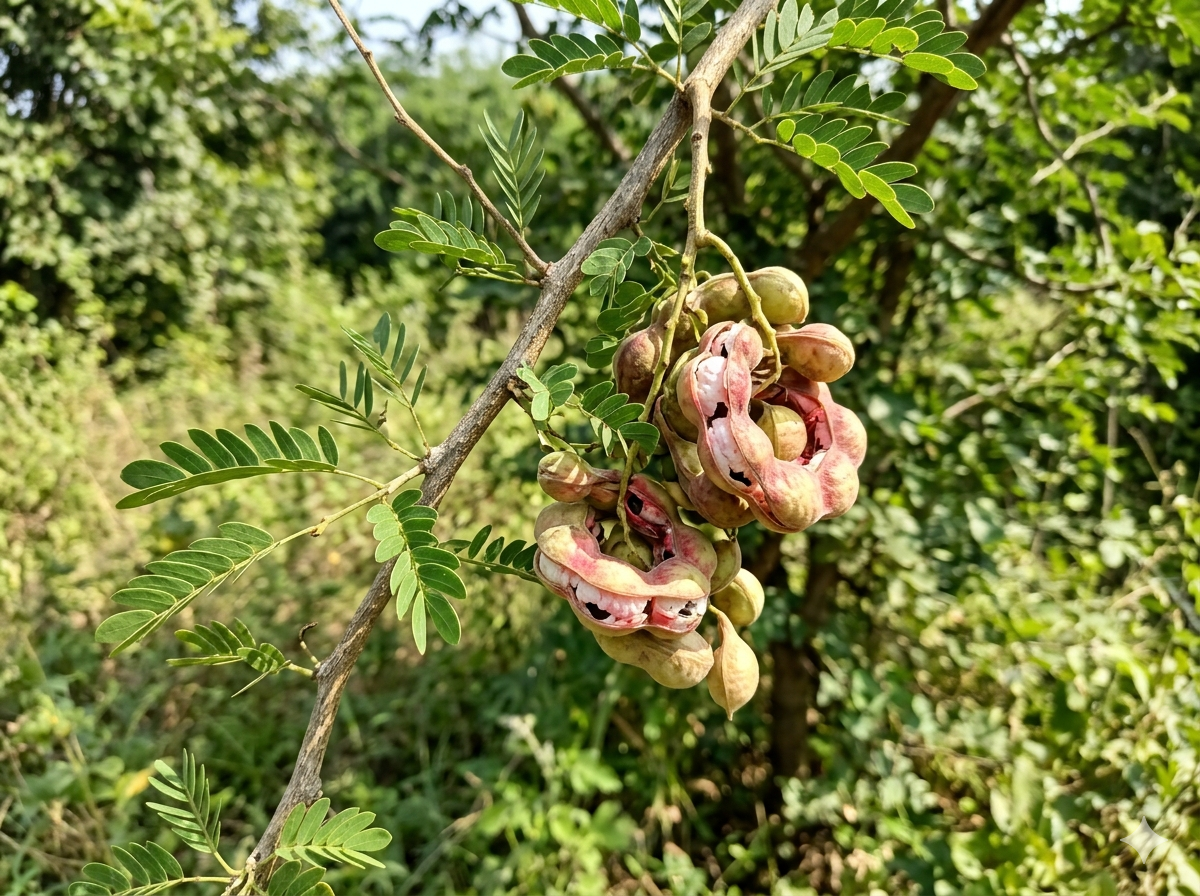
जंगल जलेबी — red-pink JALEBI-SHAPED sweet-sour pods = South India schoolchildren का beloved street food! Earning farm boundary hedge: Rs.2 lakh+/km। Drought hero — Deccan drylands में thrives। Best dry-region fodder। Anti-diabetic bark research।
Jungle Jalebi (Pithecellobium dulce) — Jungle Jalebi / Manila Tamarind / Madras Thorn / Kodukkapuli / Vilayati Imli — is one of India's most widely naturalized introduced trees and simultaneously one of the most beloved street food trees, named after the popular Indian sweet "Jalebi" because the ripe seed pods curl into attractive reddish-pink coiled spirals that resemble jalebi. Originally from Mexico and Central America, Jungle Jalebi was introduced to India during the colonial era and has naturalized so completely — particularly in Tamil Nadu, Andhra Pradesh, Telangana, Karnataka, Maharashtra, and Gujarat — that most Indians consider it native. The tree produces distinctive curved pods with bright red-pink pulp surrounding shiny black seeds — this sweet-sour red pulp is eaten fresh as a street food across South India, particularly by schoolchildren who buy them from street vendors. The pulp is also used to make chutneys, juices, and traditional beverages. The tree is one of the best fodder, fencing, and agroforestry trees available for hot dry regions — it is extremely drought-tolerant, grows rapidly on poor soils, fixes nitrogen, and its thorny branches make it ideal for living hedges. The bark and leaves have documented anti-diabetic and anti-inflammatory medicinal properties.
Jungle Jalebi (Pithecellobium dulce) — जंगल जलेबी / Manila Tamarind — India में widely naturalized + beloved street food tree। Ripe seed pods = reddish-pink coiled spirals — jalebi जैसी! Mexico और Central America से। TN, AP, Telangana, Karnataka, MH, Gujarat में completely naturalized। Ripe pods: bright red-pink sweet-sour pulp + shiny black seeds — South India में schoolchildren की street food। Chutneys, juices, traditional beverages। Best fodder + fencing + agroforestry tree — hot dry regions। Extremely drought-tolerant, poor soils, N-fixing, thorny = ideal living hedges। Bark + leaves: anti-diabetic + anti-inflammatory।
🌳 Overview & Quick Facts / परिचय और मुख्य तथ्य
| 🔬 Scientific Name | Pithecellobium dulce — Family: Fabaceae (N-fixing legume) |
| 📏 Height / ऊंचाई | 8–18 metres | Thorny, spreading canopy / Thorny, spreading |
| ⏳ Lifespan / आयु | 50–100+ years / 50-100+ वर्ष |
| 📈 Growth Rate / वृद्धि दर | Fast — 3–4 ft/year / तेज़ — 3-4 फुट/वर्ष |
| 🌸 Flowers / फूल | Feb–May — small fragrant white/cream puffs. Honey source. Year-round in some areas. / Feb-May — small fragrant white/cream puffs। |
| 🌡️ Climate / जलवायु | Tropical to subtropical. Pan-India. Extremely drought tolerant — one of best dry-region trees. |
| ⚖️ Legal Status / कानूनी | Not native. Not protected. Freely planted. NOT invasive concern in India — well naturalized without ecological harm documented. |
| 💰 Value / मूल्य | Pod pulp: Rs.15–40/kg | Fodder: Rs.8-15/kg | Timber: Rs.500-900/cubic ft | Honey: Rs.300-500/kg |
🌿 Parts & Their Uses — हर अंग का उपयोग
Primary food। Ripe pods: red-pink coiled (jalebi-shaped!), sweet-sour red/pink pulp + shiny black seeds। Edible raw — South India street food। Nutrition: Vitamin C, sugars, anti-oxidants। Traditional: chutney, juice, tamarind substitute। Market: Rs.15-40/kg। Mature tree: 5-20 kg/season।
Anti-inflammatory, anti-diabetic research (glucose-lowering animal studies confirmed), anti-microbial। Bark decoction: fever, diarrhea, skin। Bark tannins: tanning। Flavonoids, tannins, alkaloids। MFP: Rs.8-15/kg। South India में traditional wound healing।
Excellent cattle, goat, sheep fodder — very high palatability, good protein। Dry regions के लिए best legume fodder trees में। Leaf extract: anti-oxidant, anti-inflammatory। Young leaves: traditional cooking (tamarind-like sourness)। N-fixing leaf litter: green manure। Rs.8-15/kg fresh।
Small white-cream fragrant puff flowers — honey source। Bees Feb-May heavy। Warm areas: year-round minor। Jungle Jalebi honey — distinctive mild। Feb-May dry regions में critical bee nectar। Commercially traded नहीं।
Dense thorny — excellent living fence। Fields को cattle, goats से protect। N-fixing simultaneously boundary soil improve। Fast: 3-5 years usable fence। Best "earning hedges" — pods + fodder + honey + fence। Boundary planting। Low maintenance after establish।
लकड़ी: hard, heavy, durable। Agricultural implements, furniture, fuelwood (high calorific, excellent charcoal)। Market: Rs.500-900/cubic foot। FD transit permit। Charcoal: dry South India में best fuelwood trees में। Seeds: shiny black decorative beads jewelry + crafts।
🌍 Street Food Tree & Dry Region Hero / Street Food Tree और Dry Region Hero
🌱 Growing Guide / Jungle Jalebi कैसे उगाएं
| Parameter | English | Hindi / हिंदी |
|---|---|---|
| 🌱 Propagation | Seeds from dry pods (very easy — 90%+ success). Soak 12 hours. Germination 7-10 days. Direct sowing works well. | Dry pods से seeds (very easy — 90%+)। 12 hours soak। 7-10 दिन germination। Direct sowing well works। |
| 🌵 Living fence | Plant 50cm apart for dense fence. Grows fast — usable living fence in 3-5 years. Naturally thorny — no additional fencing needed. | 50cm apart dense fence। Fast — 3-5 years usable। Naturally thorny — additional fencing needed नहीं। |
| 🪴 Soil | Any soil — sandy, rocky, poor, saline, alkaline. pH 5.0–9.0. One of most soil-adaptable Indian trees. Avoids only waterlogged. | Any soil — sandy, rocky, poor, saline, alkaline। pH 5.0-9.0। Most soil-adaptable Indian trees में। Waterlogged only avoid। |
| 💧 Water | Extremely drought tolerant — once established, survives on very little rainfall. Perfect for Deccan, Rajasthan, Gujarat drylands. | Extremely drought tolerant — established, very little rainfall। Deccan, Rajasthan, Gujarat drylands के लिए perfect। |
| 🌀 First pods | Year 3-5 from seed. Full production Year 7-10. Pods throughout warm season in South India. | Seed से Year 3-5। Full production Year 7-10। South India में warm season throughout pods। |
| 💰 Income | 1 km farm boundary (2,000 plants): Rs.30,000-80,000/year pods + Rs.20,000-40,000 fodder + Rs.15,000 honey = Rs.65,000-1,35,000/year from boundary. | 1 km boundary (2,000 plants): pods Rs.30-80k + fodder Rs.20-40k + honey Rs.15k = Rs.65,000-1,35,000/year। |
💰 Value & Legal Status / मूल्य और कानूनी स्थिति
| Product / उत्पाद | Value / मूल्य | Legal / कानूनी |
|---|---|---|
| 🌀 Pod Pulp / गूदा | Rs.15–40/kg | Street food + chutney + beverage market | Freely traded from own trees / freely |
| 🍃 Fodder / चारा | Rs.8–15/kg fresh / fresh | Freely from own trees / freely |
| 🍯 Honey / शहद | Rs.300–500/kg Jungle Jalebi honey | Freely traded / freely |
| 🪵 Timber / लकड़ी | Rs.500–900/cubic foot | Charcoal high value | Transit permit FD / FD permit |
Jungle Jalebi eating guide: Edible: sweet-sour pink/red pulp around shiny black seeds। Seeds = NOT edible (hard, indigestible)। Safety: completely safe, generations South India में। How to eat: ripe pods collect (green → red-pink, opening)। Pod break open। Pink-red pulp peel/bite from black seeds around। Black seeds spit। Taste: sweet-sour, tangy, refreshing। Tamarind-like sourness लेकिन sweeter + fresh-fruity। South India children = natural candy, roadside free snack। Street: cleaned pulp Rs.10-20/packet। Chutney: pulp + green chili + ginger + garlic + salt → idli/dosa। Beverage: pulp + water + jaggery + lime = Jungle Jalebi sharbat। Nutrition: Vitamin C, anthocyanins, sugars। Caution: excessive = loose stools। Moderate = perfectly safe। Wash pods before eating।
Jungle Jalebi farm boundary — ultimate earning hedge: Simultaneously: thorny cattle protection + pod income + fodder + honey + N-fixation + soil improve। Setup: boundary line mark। 20-30cm trench। 50cm spacing seeds/seedlings (2,000/km)। Once water। Denser: 2-3 rows staggered। Year 1-2: 1-2m, beginning। Year 3-5: 3-5m dense impenetrable। Year 5+: mature earning fence। Maintenance: annual trim → cattle fodder collect। Pods: regularly collect, फिर nहीं तो ferment। Income per km (2,000 plants): Pods: 2,000 × 3 kg × Rs.25 = Rs.1,50,000/km/year (mature)। Fodder trimming: 4,000 kg × Rs.10 = Rs.40,000। Beekeeping: Rs.30,000-50,000। Net Year 5+: Rs.2 lakh+/km। Previously unproductive fencing investment। Water: Year 2+ Deccan droughts without irrigation survive। Dryland farmers के लिए most viable।
Jungle Jalebi names — "foreign tamarind" question: "Jungle Jalebi": pods = jalebi spiral shape। Purely descriptive। "Vilayati Imli": UP, Rajasthan, MP। "Vilayati" = foreign। "Imli" = tamarind। Sweet-sour = tamarind-like but clearly not native — "foreign tamarind।" "Kodukkapuli" (TN): "Kodu" = curved, "kapuli" = tamarind। "Seeme Hunase" (Karnataka): "Seeme" = foreign, "Hunase" = tamarind। "Manila Tamarind" (English): Philippines में commonly seen (Mexico से Philippines introduce किया था)। "Madras Thorn": thorny tree around Madras। "Dulce" = Latin "sweet" — sweet pulp। Collective story: foreign tree + sweet-sour tamarind-like + colonial trade routes + so common = local names locally coined। Every regional language में different vernacular name — not borrowed। Cultural naturalization reflected।
Jungle Jalebi bark diabetes: Research (South Indian institutions): (1) Alpha-glucosidase inhibition — post-meal glucose spike reduce (acarbose mechanism)। (2) Glucose tolerance improvement — diabetic animal models। (3) Anti-oxidant। (4) Anti-inflammatory। Status: in-vitro + animal studies only। No large human RCTs। Traditional: Tamil Nadu, AP rural communities में empirical bark decoction। Preparation: (1) Bark decoction: 10g + 400ml → 200ml। 100ml twice daily before meals। (2) Bark powder: 3-5g + warm water। Some traditional herbalists South India markets। Caution: insulin medications + hypoglycemia risk। Doctor inform। Blood glucose monitor। Banaba leaf या Karela जितना researched नहीं — secondary complement only।
Jungle Jalebi identification: Easiest = pod। Pods: coiled, spiraling, 10-15cm, green → bright red-pink ripe। "Jalebi" appearance। Inside: bright pink-red pulp + shiny black seeds — no other common Indian tree exactly। Leaves: bipinnate compound, very small pinnae + leaflets (fine-textured)। 2-4 pairs pinnae, 2-6 pairs leaflets (1-3cm each)। Semi-deciduous। Thorns: short, straight/curved, branches + leaf nodes। Flowers: small white-cream puffball clusters। Bark: grey, slightly rough। Tree: irregular spreading, thorny। Similar: Tamarind (MUCH larger, longer pods, brown pulp)। Acacia (similar leaves, different pods)। Simple key: Pink-red coiled jalebi pods + shiny black seeds = Jungle Jalebi। Unmistakable fruiting में। Year-round: small bipinnate leaves + short thorns + irregular form distinguish।