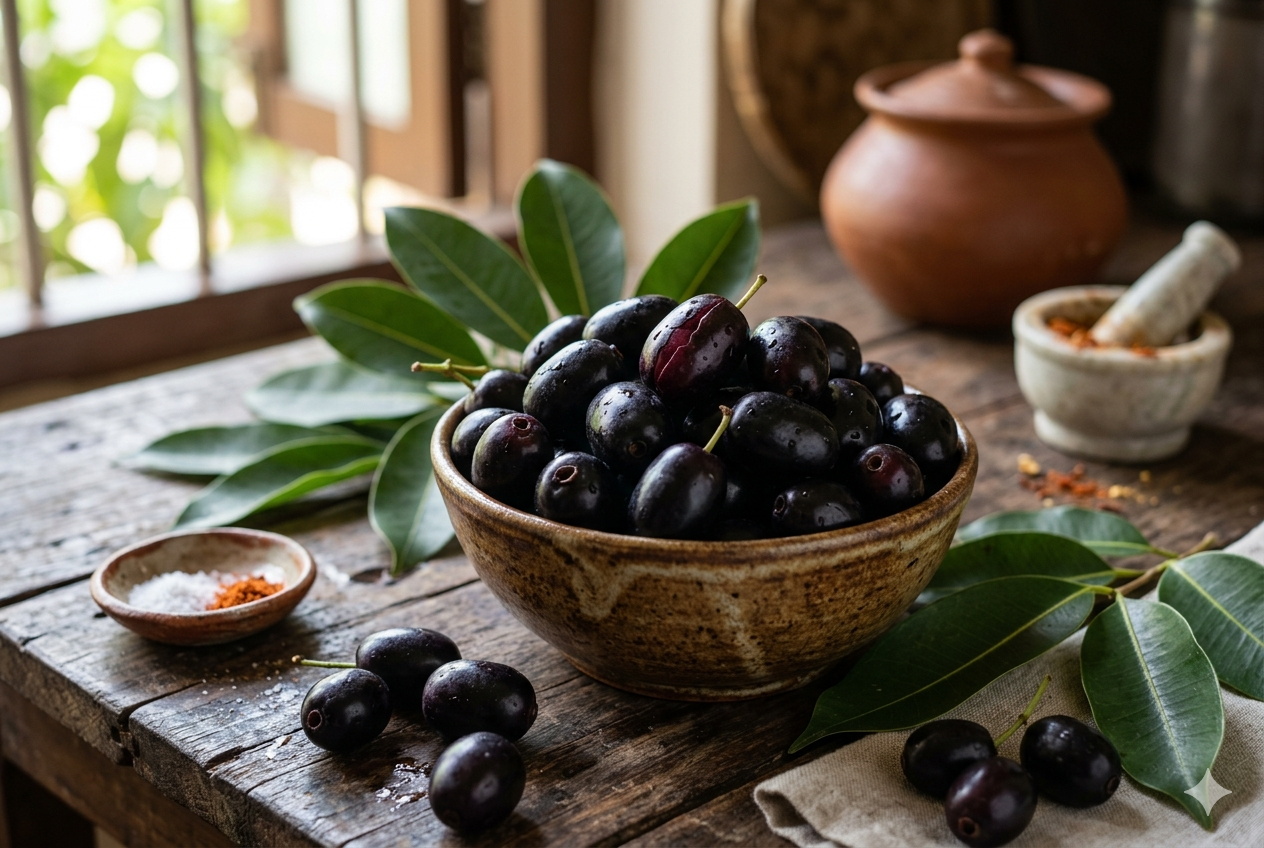
🌱 From fresh seed or grafted | June-July planting | Tree life: 50-100 years⏱️ Seedling: 5-8 years | Season: May-July only (fleeting 4-6 weeks)🌿 Easy Grow✅ Edible Safe
Photo: PlantCare
JamunBlack PlumSeeds Anti-diabeticJambolinePurple Tongue100 Year TreeRamayana Fruit
Jamun — seeds are the most valuable part (jamboline — anti-diabetic!). India's most climate-resilient tree. Purple tongue = antioxidant dose. 100-year tree. May-July season only.
Jamun — seeds सबसे valuable part (jamboline — anti-diabetic!)। India का most climate-resilient tree। Purple tongue = antioxidant dose। 100-year tree। May-July season only।
⚡ Quick Reference / एक नज़र में
🌱 Sowing Season
From fresh seed or grafted | June-July planting | Tree life: 50-100 years
⏱️ Harvest Time
Seedling: 5-8 years | Season: May-July only (fleeting 4-6 weeks)
🍽️ Edible Parts
Fruit + seeds (anti-diabetic powder — MOST VALUABLE PART!)
☀️ Light
Full sun to partial shade — adaptable
💧 Water
Monthly mature — tolerates drought AND waterlogging!
🌡️ Temperature
20-45°C — widest range of any Indian fruit tree
💊
Key Nutrition / पोषण
Jamboline+Jambosine (seeds — anti-diabetic), Anthocyanins, Ellagic acid, Vitamin C, Iron
🍳
Indian Kitchen Uses / भारतीय रसोई
Fresh with salt, jamun seed powder (diabetes), sharbat, vinegar, jam
Jamun (Syzygium cumini) — Black Plum / Java Plum — is one of India's most beloved native fruits and one of Ayurveda's most important medicinal trees. Native to the Indian subcontinent, jamun has been cultivated and revered here for over 3,000 years — ancient Sanskrit texts describe it as the fruit of the gods, and Ayurvedic medicine uses every part of the tree: fruit, seeds, bark, leaves and flowers. The deep purple-black berry with its distinctive astringent-sweet flavor and the temporary purple staining of tongue and lips is one of the most nostalgic summer experiences for Indians of every generation. For home gardeners, jamun is particularly attractive because it is India's most low-maintenance and disease-resistant common fruit tree — once established, it virtually grows itself, producing abundantly for 50-100 years.
Jamun (Syzygium cumini) — Black Plum — India का most beloved native fruits में से एक। Indian subcontinent native — 3,000+ years cultivation। Sanskrit texts में "fruit of the gods"। Ayurvedic medicine में entire tree use: fruit, seeds, bark, leaves। Deep purple-black berry + purple tongue = most nostalgic Indian summer experience। Home garden में: India का most low-maintenance fruit tree, 50-100 years production।
🫐 Overview, History & Varieties
🔬 Scientific Name
Syzygium cumini (syn. Eugenia jambolana)
🌍 Origin
Indian subcontinent — native. Sanskrit texts call it "Divya Phalam" (divine fruit).
🌡️ Temperature
20-45°C — extremely wide range, one of India's toughest trees
⏱️ First Fruit
Seedling: 5-8 years | Tree life: 50-100+ years
📅 Season
May-July — peak Indian summer. Fleeting 4-6 week season.
💧 Strength
Drought tolerant, waterlogging tolerant, salt tolerant — India's most resilient fruit tree
Variety / Type
Specialty
Best For
🫐 Standard Desi
Traditional — small-medium, intense flavor, astringent, purple staining
All India — most common
🫐 Narendra Jamun-6
NDUAT variety — large fruit, less astringent, good yield
Home garden, North India
🫐 Rajendran
Large fruit, seedless/small seed — premium quality
Tamil Nadu, fresh market
🫐 Konkan Bahadoli
Maharashtra specialty — large, less astringent, excellent flavor
Maharashtra fresh market
🫐 Rose Jamun
Pink-rose skin — milder flavor, different aromatic profile
Immunity, collagen — moderate but significant contribution
⚙️ Iron
1.41 mg
Anemia prevention — significant vegetarian iron source
🫀 Potassium
79 mg
Blood pressure, heart health
Jamun seeds — India's most valuable thrown-away medicine: Jamun seeds are discarded by virtually everyone eating the fruit — yet they contain jamboline and jambosine (unique alkaloids found nowhere else in nature) that: (1) Inhibit amylase and glucosidase enzymes that break down starch to glucose — effectively reducing post-meal blood sugar spike. (2) Increase glucose uptake by cells (insulin-like action). (3) Reduce HbA1c over time in diabetics. Multiple clinical trials validate this. Traditional use: dry jamun seeds, powder them, take 1-2 tsp powder with water morning on empty stomach during jamun season, and store powder for year-round use. This is one of India's most clinically validated traditional diabetes remedies — and the medicine is thrown in the bin by most Indians eating jamun.
The purple tongue phenomenon: Jamun stains the tongue, lips and teeth deep purple-blue from anthocyanins — same pigments responsible for its cardiovascular benefits. The more it stains, the more anthocyanins are being absorbed. Children's purple-stained smiles after eating jamun = significant antioxidant dose. The astringency comes from tannins — slightly reduces bioavailability of iron but provides prebiotic and antimicrobial benefits.
🌱 Growing Guide — Ek Baar Lagao, Saalon Pao
🌱
From Seed (Easy)
Jamun grows very easily from fresh seed. Extract seed from ripe jamun, wash, sow immediately (viability drops rapidly — plant within days). Sow 2 cm deep in prepared soil or nursery bag. Germination: 10-15 days. Seedling to transplant: 6-8 months (when 60-80 cm tall). Seedling tree takes 5-8 years to fruit but lives 100 years — long-term investment. For faster fruiting: buy grafted or budded plant from nursery.
🌿
Planting
Large tree — needs open space. 60x60x60 cm pit with compost. Spacing: 8-10m. Jamun is remarkably adaptable — tolerates drought, waterlogging, salt spray, alkaline soil, poor soils. One of India's most location-tolerant fruit trees. Plant anywhere you have 5m+ diameter open space in full sun. South India: near-year-round warm climate = larger trees, earlier fruiting. North India: winter cold slows growth, trees slightly smaller but fully productive.
🏙️
Urban Planting
Jamun is a popular avenue tree across India for good reason — beautiful dense canopy, drought tolerant, low maintenance. Urban homes: jamun in front yard or garden provides shade + fruit. Container: possible in 80-100L but challenging for full production. Street-side jamun trees in India are often publicly harvested — a beautiful community food tradition. Grafted compact varieties are increasingly available for smaller urban gardens.
📅
Season Planning
Jamun season is short and intense — May-July, just 4-6 weeks. But the fruit's significance and medicinal value make the wait worthwhile. Plan processing during season: collect seeds, dry, powder. Make jamun vinegar (fermented juice). Make jamun sharbat concentrate. Freeze whole fruits for off-season smoothies. The entire family should participate in seed collection — it's the most medicinally valuable part of the fruit.
💧 Growing & Care
⚡ Quick Care Reference
☀️ Light
Full sun — 6+ hours
Grows in partial shade too
💧 Water
Monthly mature — extremely tough
Tolerates drought AND waterlogging!
🌡️ Temperature
20-45°C — widest range
India's most climate-resilient fruit tree
🪴 Soil
Any — remarkable tolerance
Sandy, clay, alkaline, coastal all fine
🧪 Fertilizer
Annual compost — minimum need
Grows well with zero fertilizer
🐦 Birds
Share with birds — part of ecology
Net impossible — harvest frequently
Harvest quickly — birds and bats love jamun: Ripe jamun attracts birds and bats immediately. Harvest frequently during the 4-6 week season rather than waiting. Lay old sheets or cloth under tree, shake branches — ripe fruits fall. Harvest in morning before birds are active. Accept sharing with birds — jamun trees in India have historically been community trees where wildlife gets a portion. This biodiversity value is part of jamun's cultural significance.
No serious pests or diseases: Jamun is one of India's most pest and disease-resistant fruit trees — very low maintenance. Occasional leaf eating by caterpillars — usually tolerated without significant damage. No major fruit diseases known. This low-input nature makes jamun ideal for homeowners who want fruit without ongoing management effort.
🫐 Harvest, Storage & Culinary Uses
Harvest deep purple-black: Ripe jamun: deep purple-black, yields slightly to pressure, sweet-astringent taste. Unripe: pink-red, very astringent. Harvest by shaking branches over cloth, or by hand. Do not refrigerate freshly harvested — cold ruins flavor. Eat same day if possible. Room temperature: 2-3 days. Refrigerator: 5-7 days (flavor reduces). Freeze whole: 3-4 months. Most importantly: collect seeds for drying and powdering — the season is short, the medicine is irreplaceable.
Use
Method
Note
🫐 Fresh eating
With black salt + chilli — classic street experience
May-July seasonal ritual for all Indians
🌿 Jamun Seed Powder
Dry seeds in shade, grind — 1 tsp in water, morning
Anti-diabetic — most valuable use of jamun
🥤 Jamun Sharbat
Juice + sugar + lemon + black salt — seasonal cool drink
Roadside summer drink — antioxidant-rich
🍷 Jamun Vinegar
Ferment juice — probiotic acid vinegar. Traditional condiment.
Traditional preservation + gut health
🫙 Jamun Jam
Deseeded pulp + sugar + lemon + pectin — deep purple jam
Preserve peak season for year-round
❓ FAQ
Jamun seed powder — complete protocol: (1) Collection: while eating jamun, collect seeds separately. Wash thoroughly. (2) Drying: spread in shade (not direct sun) for 7-10 days until completely dry. Split seed — inner kernel only is what you want. (3) Grinding: dry-roast inner kernel lightly (5 minutes on low heat) to remove any raw bitterness. Cool. Grind to fine powder in blender. (4) Storage: airtight glass jar, up to 1 year. (5) Use: 1/2 to 1 tsp (2-4 grams) in warm water on empty stomach morning. Or mix in buttermilk, yogurt. Best 30 minutes before meals for maximum enzyme inhibition effect. (6) Duration: year-round daily. Effects: measurable blood glucose reduction within 4-6 weeks of consistent daily use. Clinical context: several randomized trials confirm efficacy. Monitor glucose if on diabetes medication — may require dose adjustment in consultation with doctor. This is among the most powerful and well-validated natural anti-diabetic interventions available in India.
Purple staining from anthocyanins (cyanidin-3-glucoside primarily). Duration: tongue staining: 4-8 hours naturally. Teeth: 2-4 hours. Lips: 1-2 hours. Removal: (1) Toothbrush with baking soda paste — most effective. (2) Lemon juice rubbed on teeth + lips. (3) Salt scrub on tongue. (4) Milk or yogurt — protein binds anthocyanins. (5) Simply wait — saliva gradually removes it. The staining indicates high anthocyanin content — strong antioxidant dose absorbed. Children's purple-stained smiles: a beloved Indian summer memory and actually a sign of beneficial antioxidant consumption. Never use bleach or harsh chemicals — damage to sensitive oral tissue not worth the cosmetic concern.
Entire jamun tree is medicinal in Ayurveda: Leaves: antibacterial, anti-diabetic. Decoction (boil 20 leaves in 500ml water, reduce to half, strain) — gargle for bleeding gums, stomach decoction for diarrhea and diabetes. Bark: most astringent part. Bark powder mixed with water — traditional gargle for mouth ulcers, skin wash for wounds, stomach problems. Research shows bark extract significant anti-diabetic activity. Flowers: used in traditional medicine for diarrhea and fever. Seeds: as described above — anti-diabetic primary use. Young tender leaves: sometimes used in cooking in some South Indian traditions. The ecological and medicinal completeness of jamun tree is why ancient texts call it "kalpavriksha" (wish-fulfilling tree) — every part has documented use. Growing one jamun tree plants a complete traditional pharmacy in your garden.
Growing jamun at home: Fastest method (grafted/budded plant): (1) Buy from nursery in June-July or February-March. (2) 60 cm pit, compost + soil. (3) Full sun, minimal care. (4) Fruit in 3-5 years (grafted). Seed method (cheapest): (1) Collect fresh seeds from ripe jamun May-July. (2) Sow immediately 2 cm deep in prepared soil or nursery bag. (3) Water regularly until germinated. (4) Transplant when 60-80 cm tall (6-8 months). (5) First fruit: 6-8 years from seed. Long wait — but jamun trees live 100+ years. Planting a jamun seed = gift for future generations. Minimal care once established — jamun grows itself. Annual NPK fertilizer improves yield. No spraying needed. Harvest just 2-3 weeks of season yields hundreds of kg from mature tree. One of India's most generous and low-effort food trees.
Jamun is generally very safe — concerns: (1) Empty stomach: strong astringency + acidity may cause nausea in sensitive individuals. Eat after light food or with black salt which moderates astringency. (2) Excess consumption: tannins in large quantity over several days may cause constipation. The brief season limits this naturally. (3) Diabetes medication: jamun seed powder has blood sugar lowering effect — if already on medication, monitor glucose closely to avoid hypoglycemia. (4) Pregnancy: no specific concern with dietary quantities of fruit. Large medicinal doses of seed powder: consult doctor. (5) Kidney disease: high potassium — those with impaired kidney function should moderate intake. The traditional caution "don't eat on empty stomach" is practically sound — the astringency and acidity is best tolerated with some food in stomach. With food or after food: jamun is one of India's safest and most beneficial fruits.