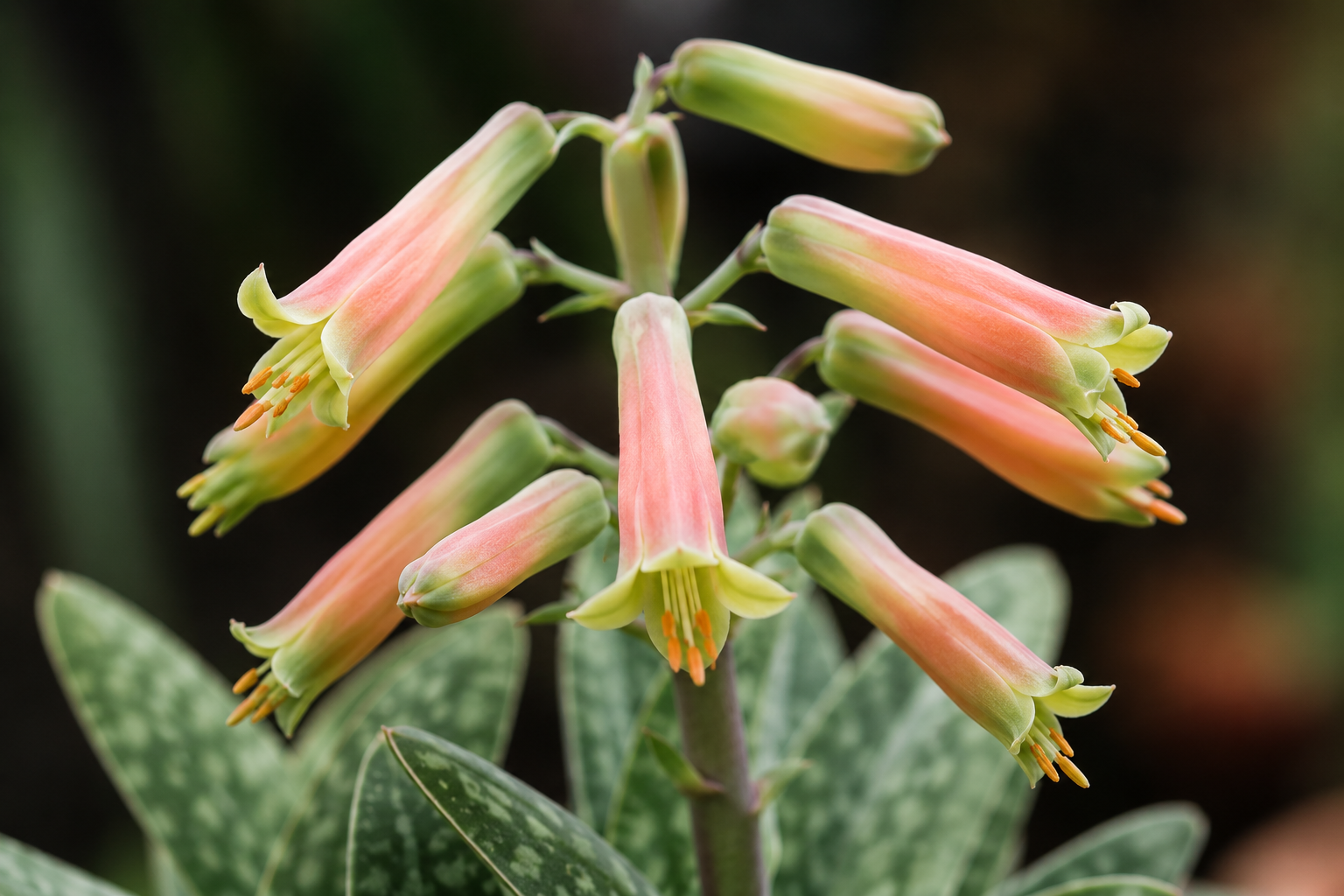
Gasteria / Ox Tongue — India's most shade-tolerant succulent. Even better than Haworthia for dim positions. Non-toxic, pet safe. Crosses with Aloe = Gasteraloe hybrids.
Gasteria / Ox Tongue — India का most shade-tolerant succulent। Haworthia से भी better for dim positions। Non-toxic, pet safe। Aloe से cross = Gasteraloe hybrids।
Gasteria is one of the most underrated and most perfectly suited succulents for Indian indoor conditions — a small, architectural genus of succulents with thick, tongue-shaped or strap-like leaves arranged in distinctive two-ranked (distichous) fans or rosettes, often with attractive white spotted or textured surfaces. Native to South Africa, Gasteria is closely related to Aloe and Haworthia and shares their exceptional tolerance of lower light and neglect — but is even more shade tolerant than Haworthia, making it one of the best succulents for genuinely dim indoor positions. The common name "ox tongue" perfectly describes the thick, rough-textured elongated leaves that characterize most species.
Gasteria — most underrated और most perfectly suited succulents for Indian indoor conditions। Thick tongue-shaped leaves in distinctive two-ranked fans। White spotted या textured surfaces। South Africa native — Aloe और Haworthia से closely related। Haworthia से भी more shade tolerant — genuinely dim indoor positions के लिए best। Common name "ox tongue" — thick rough-textured elongated leaves।
🌵 What is Gasteria? — Complete Information
| 🔬 Scientific Name | Gasteria spp. (23 species) |
| 🌿 Common Names | Gasteria, Ox Tongue Plant, Lawyer's Tongue, Cow Tongue Cactus |
| 🇮🇳 Hindi Name | गैस्टेरिया (Gasteria) — known by English name |
| 👨👩👧 Plant Family | Asphodelaceae (same as Aloe and Haworthia) |
| 🌍 Origin | South Africa — Eastern and Western Cape, dry rocky regions |
| 📏 Size | 5–30 cm — compact slow-growing |
| 🌱 Type | Perennial succulent — distichous or rosette forming |
| ✅ Toxicity | Non-toxic — safe for cats, dogs and children |
🌵 Gasteria vs Haworthia vs Aloe — India Guide
| Feature | Gasteria | Haworthia | Aloe Vera |
|---|---|---|---|
| 🌑 Shade Tolerance | ✅✅✅ Best — very deep shade | ✅✅ Good shade tolerance | ✅ Prefers more sun |
| 💧 Watering | Every 14-21 days | Every 14-21 days | Every 14-21 days |
| 🌡️ Heat Tolerance | Good — 15-38°C | Good — 15-35°C | Excellent — 15-40°C |
| 📏 Size | 5-30 cm — compact | 5-15 cm — very compact | 60-100 cm — larger |
| 🐾 Pet Safe | ✅ Non-toxic | ✅ Non-toxic | ⚠️ Toxic (latex layer) |
| 💊 Medicinal | Limited use | Limited use | Extensively medicinal |
| 🌱 Difficulty | Very Easy | Very Easy | Easy |
💧 Gasteria Care — India Specific
- Most shade-tolerant succulent for India: Gasteria can survive in light levels that would cause all other succulents to etiolate and decline — a north-facing windowsill, a position several meters from a window, or under artificial office lighting are all viable. This makes it uniquely practical for Indian homes and offices with limited natural light.
- Avoid direct afternoon sun in India: While Gasteria tolerates more shade than other succulents, it should still avoid direct harsh Indian afternoon sun (12-4 PM) which can scorch its thick leaves leaving permanent bleached patches. Morning sun or dappled light throughout the day is ideal.
- Offset propagation: Gasteria produces offsets freely from the base — separate when 1/3 of parent size. Gasteria also crosses readily with Aloe and Haworthia producing natural hybrids (Gasteraloe, Gasterhaworthia) — some of these natural hybrids are highly ornamental and increasingly available in Indian plant markets.